Introduction
Petrol prices in India just hit a four-year high. Following the ₹3/litre hike on May 15, 2026, riders in Mumbai are now paying ₹106.68/litre, while Hyderabad has crossed ₹110/litre. With 89.4% of India's crude oil imported, pump prices will keep tracking global volatility — riders have no control over that number.
Riders do control how much of that price they actually pay each month.
A delivery partner covering 60–80 km daily on a petrol scooter spends roughly ₹3,000–4,500 on fuel alone, before maintenance, insurance, or EMIs. One ₹200 refill barely registers — but by month-end, the total stings.
This guide covers where those costs come from, which habits compound them, and how switching to an EV rental can put a meaningful chunk of that money back in your pocket.
Key Takeaways
- Petrol costs build gradually through small refuelling transactions, not as one visible monthly bill
- The biggest cost drivers are vehicle type, riding behaviour, and total kilometres covered
- Switching to an EV rental like Bounce Daily removes petrol costs entirely — fuel, maintenance, and upfront capital all drop to zero
- Smooth riding, correct tyre pressure, and route planning can reduce consumption for those staying on petrol
- Cutting kilometres on petrol through metro, carpooling, or batched trips multiplies savings further
How Petrol Costs Typically Build Up for Indian Riders
Nobody feels a ₹200 fuel top-up as a significant expense. That's exactly the problem.
Most two-wheeler riders refuel three to five times a week, each transaction small enough to feel negligible. Over a month, those transactions add up to ₹3,000–4,500 in fuel for a delivery rider, or ₹2,000–3,500 for a daily commuter. The figure rarely gets tracked against a monthly budget, so the actual spend exceeds what riders estimate.
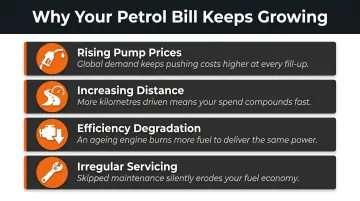
Several forces make this worse over time:
- Rising pump prices — the May 2026 hike was the first retail increase in four years, but it added ₹90–100/month overnight for a typical rider
- Increasing distance — gig workers expanding delivery zones ride more kilometres without noticing the proportional fuel increase
- Efficiency degradation — clogged air filters, worn spark plugs, and low tyre pressure erode real-world mileage over months
- Irregular servicing — skipped maintenance cycles mean the vehicle performs below its rated efficiency for months at a stretch
That gap between estimated and actual petrol spend is often ₹500–1,000/month. For a gig worker covering 100+ km per day, it tends to run even higher.
Key Cost Drivers for Petrol Spending in India
Vehicle Type Sets Your Cost Floor
The most fundamental driver is the vehicle itself. At current Mumbai prices (₹106.68/litre), a Honda Activa returning its owner-reported 47 kmpl costs approximately ₹2.27 per kilometre just in fuel. A rider covering 70 km/day pays around ₹4,750/month in fuel — before touching maintenance or insurance.
Even careful riding won't move that number much — the vehicle's efficiency ceiling is fixed. ARAI-rated mileage for popular scooters ranges from 45–59 kmpl, but real-world urban figures consistently run 7–15% lower due to traffic, load, and road conditions.
Riding Behaviour Compounds the Gap
Your riding style is the second lever — and it's the one you can actually control. Research confirms that aggressive riding directly increases motorcycle fuel consumption and emissions compared to moderate patterns; the difference between 45 kmpl and 38 kmpl often comes down to habit. Behaviours that raise consumption include:
- Hard acceleration from a standstill at traffic signals
- Riding at sustained high speeds above the efficient range
- Frequent hard braking that wastes momentum already paid for in fuel
- Extended idling at railway crossings and delivery stops
Other Trip Factors That Raise Your Costs
Beyond vehicle and behaviour, the context of each trip shapes fuel spend significantly:
- Short cold-engine runs consume disproportionately more fuel per kilometre than longer continuous trips
- Peak-hour traffic forces more stop-and-go cycles, pushing real mileage down
- Carrying extra load — heavy delivery bags or passenger weight — increases engine demand throughout a shift
- Separate errands done individually versus combined in one trip multiply fuel consumption unnecessarily
Cost-Reduction Strategies for Petrol Spending in India
Petrol savings come from three distinct levers: the vehicle you ride, how you ride it, and how many kilometres you cover on petrol in the first place. Addressing all three produces the biggest gains — and the vehicle decision has the highest individual impact.
Strategies That Change Your Vehicle and Fuel Decisions
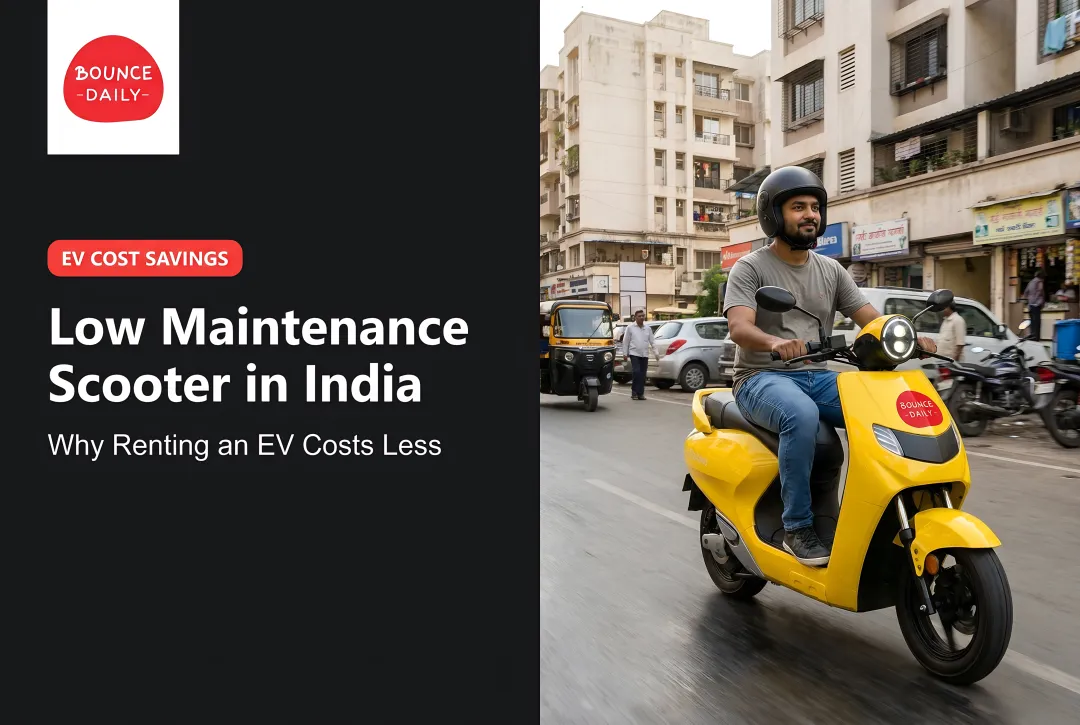
Switch to an EV rental. This is the single highest-impact move available. Replacing a petrol scooter with an electric one removes the per-litre cost entirely. For delivery riders spending ₹3,000–4,500/month on fuel alone, this one change eliminates that cost category — not reduces it.
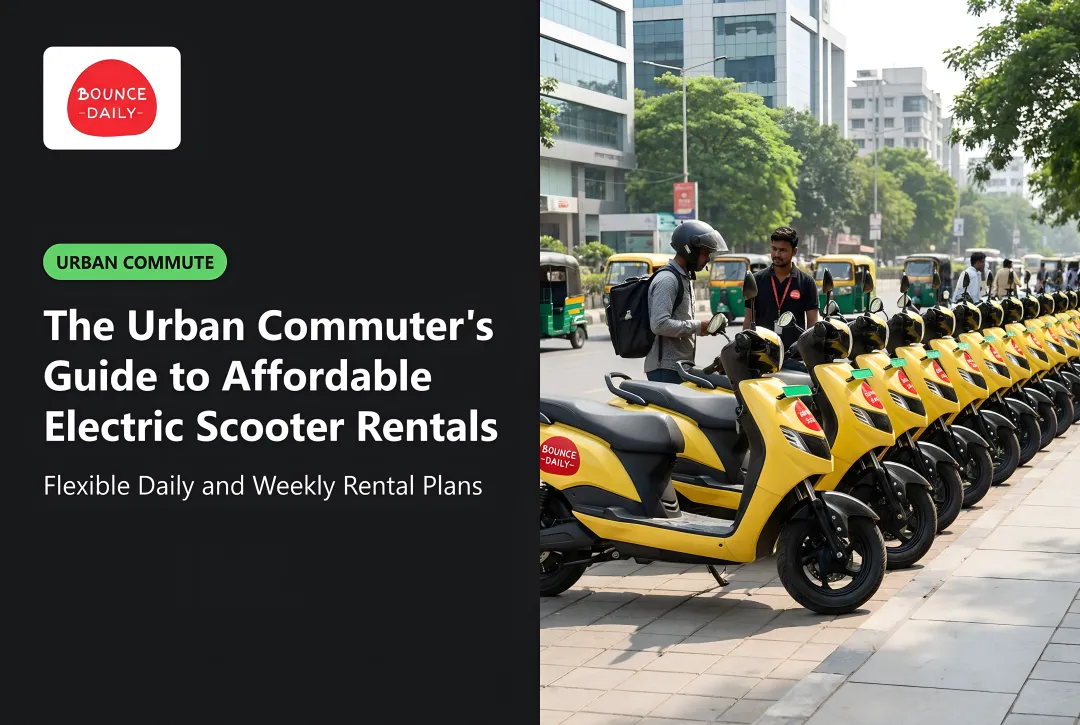
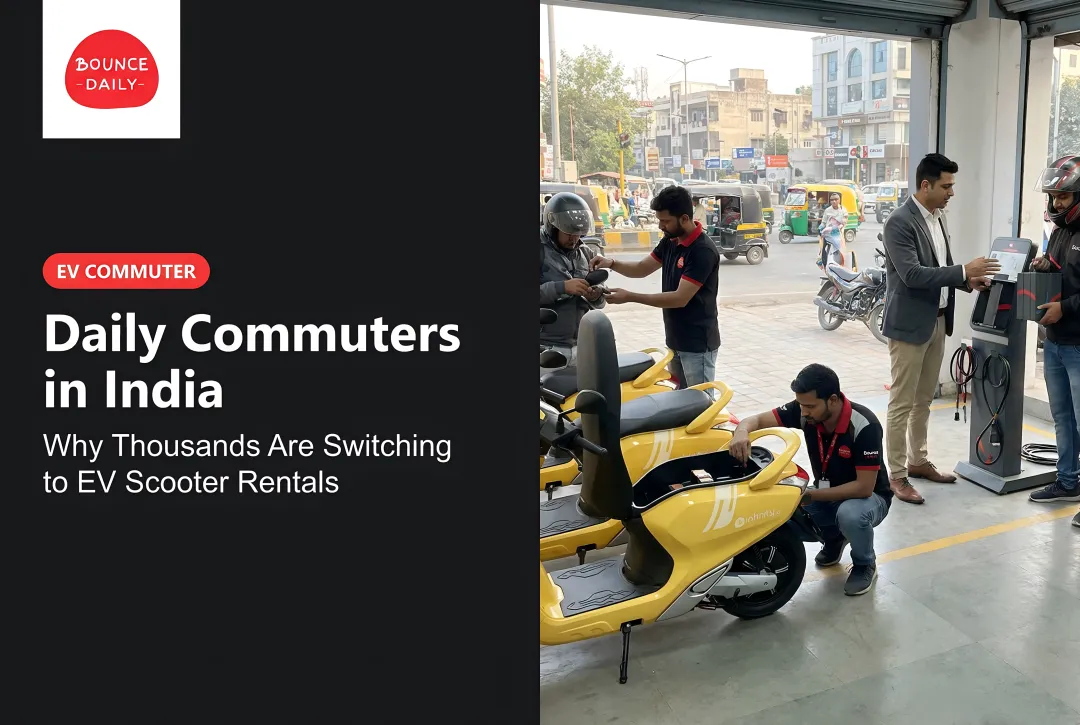
Bounce Daily makes this transition accessible without the barrier of purchasing a scooter outright. Riders pay a single rental fee that covers electricity (via battery swap at Bounce hubs), maintenance, insurance, breakdown recovery, and GPS tracking. There's no upfront capital, no EMI, and no servicing exposure.
Delivery partner Karanbir Das, who has used Bounce Daily for over a year, puts it plainly: "Way more cost-effective than petrol bikes, and I've never faced any issues with the battery."
Bounce Daily offers two variants:
| Variant | Top Speed | Range | Licence Required | Best For |
|---|---|---|---|---|
| High Speed | 55 km/h | 70 km | Yes (two-wheeler DL) | Gig workers, long-shift delivery |
| Low Speed | 25 km/h | 85 km | No | Students, hyperlocal delivery |
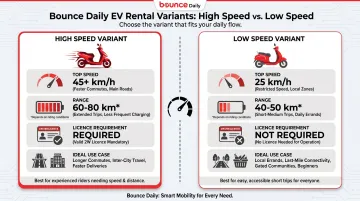
Both variants support swappable batteries — riders swap a depleted battery for a fully charged one at a Bounce hub in minutes, eliminating charging downtime during long delivery shifts.
For riders still running on petrol, two habits move the needle immediately:
- Use 91 RON petrol. Most Indian scooter engines are designed for this grade. Upgrading to 95 or 98 RON without an engine requirement adds per-litre cost without measurable efficiency gain.
- Consolidate multiple short errands into a single outing to reduce cold-engine starts. A cold engine burns more fuel per kilometre than a warm one — five separate runs cost meaningfully more than one combined trip covering the same distance.
Strategies That Change How You Ride and Maintain Your Vehicle
Smooth acceleration saves more fuel than slowing down. The efficiency loss from aggressive riding comes less from speed and more from the rate of acceleration and frequency of speed changes. Gradual acceleration from stops and anticipating traffic to avoid hard braking keeps fuel consumption closer to the rated figure.
Check tyre pressure weekly. Under-inflated tyres increase rolling resistance, forcing the engine to burn more fuel to maintain speed. Research on two-wheelers confirms that tyre inflation pressure directly affects fuel consumption — keeping tyres at the manufacturer-specified pressure is one of the cheapest efficiency habits available.
Service the vehicle on schedule. A clogged air filter, degraded engine oil, and a worn spark plug each add measurable resistance. Combined over months of deferred servicing, these push real-world mileage 10–15% below the vehicle's potential — which at ₹100+/litre translates to hundreds of rupees in unnecessary monthly spend.
Switch off at long stops. For delivery partners making 20–30 stops per shift, idling at railway crossings and apartment gates adds up. Switching off the engine at stops longer than 30–45 seconds eliminates fuel burn that generates zero forward movement.
Strategies That Reduce Total Kilometres on Petrol
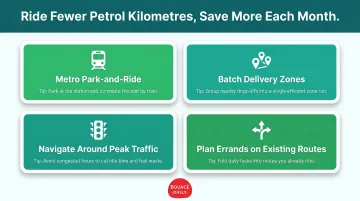
Even with efficient riding habits and a well-maintained vehicle, the total kilometres ridden on petrol remains the multiplier for all other costs. Reducing that figure directly reduces spend:
- Ride 3 km to a metro station and use rail for the longer commute segment — covering 15 km by train instead of scooter cuts daily fuel spend significantly.
- Batch delivery zones. For gig workers, accepting orders concentrated in adjacent zones rather than scattered ones reduces dead kilometres between drops — same earnings, less fuel.
- Use navigation to route around peak-traffic corridors during high-congestion hours, cutting both distance and stop-and-go cycles per trip.
- Plan errands on existing routes. Daily commuters who handle stops along their regular route avoid separate cold-engine runs for tasks that could be done in passing.
Conclusion
Reducing petrol spending is not about finding one trick — it's about identifying which layer of the cost is driving your specific situation and addressing that root.
With petrol at ₹97–110/litre and rising, a delivery partner spending ₹3,000–4,500/month on fuel is locked into a cost that goes up every time the government revises prices. For most daily commuters and gig workers, the clearest fix is switching away from petrol entirely — no riding habit adjustment comes close to that saving.
EV rental services like Bounce Daily now make the switch to zero-petrol riding accessible without owning a scooter, taking on an EMI, or managing maintenance. The Bounce Daily app handles onboarding in minutes using Aadhaar — riders can be on an electric scooter the same day. For a delivery partner previously spending ₹3,500/month on petrol, switching to an EV rental plan means that money stays in their pocket — starting from day one.
Frequently Asked Questions
How to save money on petrol in India?
The highest-impact options are switching to an EV or EV rental to eliminate fuel costs entirely, adopting smooth riding habits to reduce per-kilometre consumption, keeping the vehicle serviced, and combining trips to cut total kilometres ridden.
Does driving at 60 km/h save fuel?
Maintaining a consistent speed around 60 km/h does reduce fuel consumption compared to frequent acceleration and braking cycles. The efficiency gain comes as much from avoiding speed fluctuations as from the speed itself — steady throttle at moderate speed keeps engine load lower than erratic riding at any speed.
Which petrol octane rating should I use: 91, 95, or 98?
Use whichever grade the vehicle manufacturer recommends — for most Indian scooters, that's 91 RON regular petrol. Upgrading to 95 or 98 RON in an engine designed for 91 RON adds per-litre cost without delivering a measurable efficiency or performance benefit.
Is renting an EV scooter cheaper than owning a petrol bike in India?
For high-usage riders, yes. A petrol scooter costs ₹4,500–6,500/month all-in (fuel, servicing, insurance, repairs) plus ₹80,000–1,20,000 upfront or ₹2,500–3,500/month in EMIs. An EV rental consolidates everything into one fee with zero capital requirement — net monthly savings typically range from ₹1,000–2,500.
How much can a delivery partner save monthly by switching to an EV rental?
A delivery rider covering 50–80 km/day on a petrol scooter spends approximately ₹3,000–4,500/month on fuel alone. A Bounce Daily EV rental replaces that fuel spend — plus ₹500–1,800 in servicing and insurance — with one predictable fee. Documented net savings run ₹1,000–2,500/month, with ₹200–400 more per shift in daily take-home.