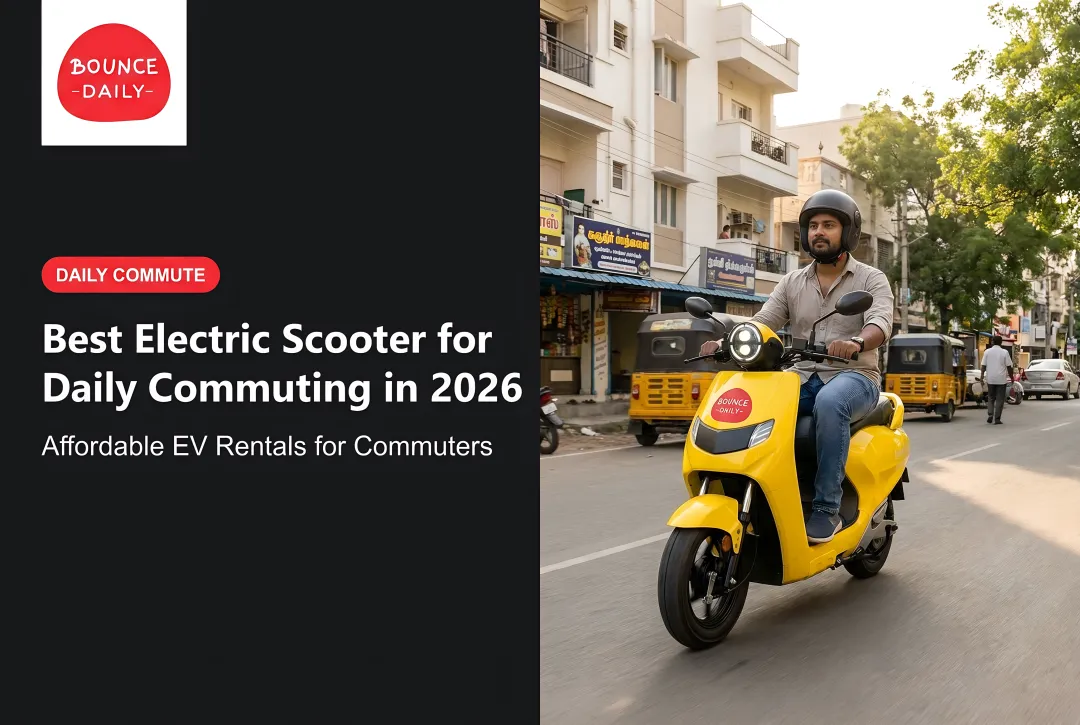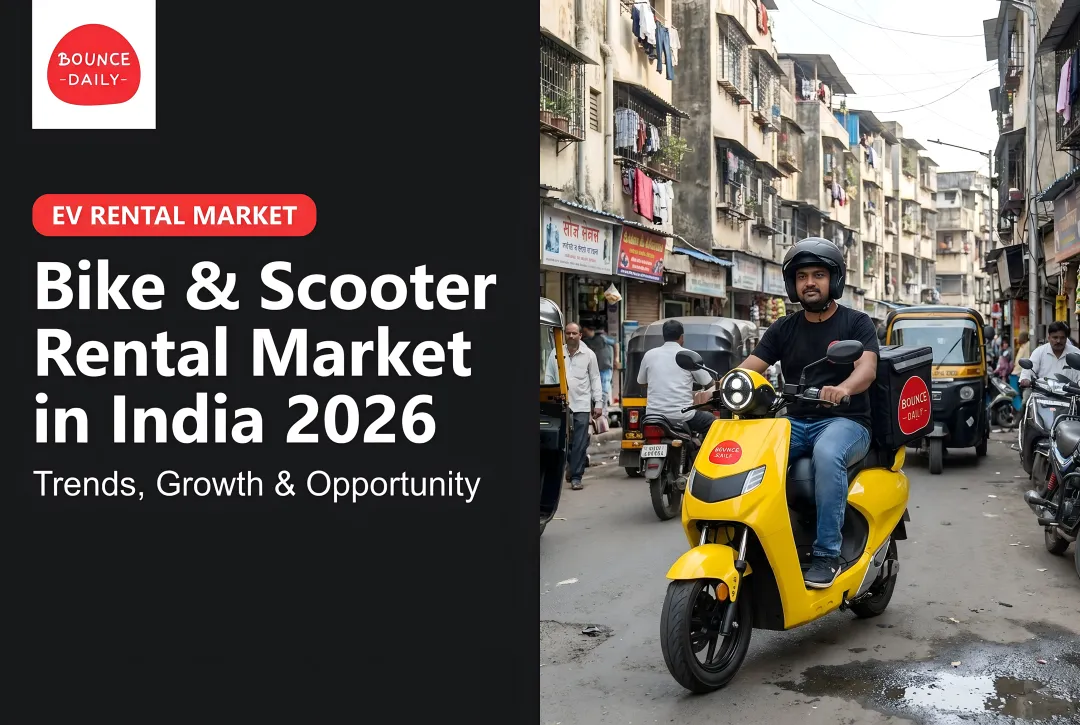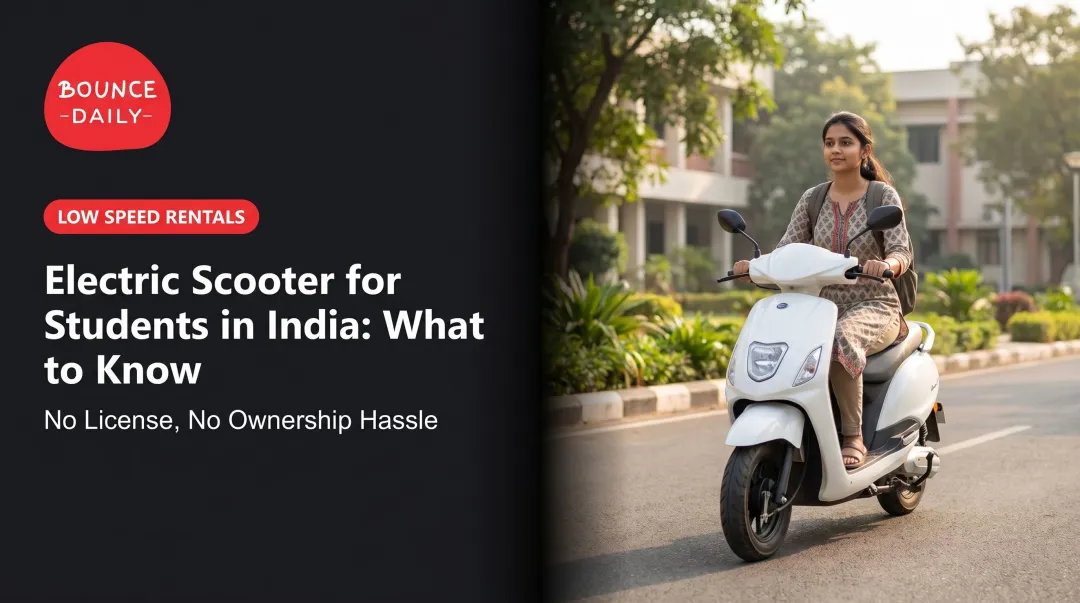
EV rentals are changing this equation fast. India registered over 12.79 lakh electric two-wheelers in CY 2025, an 11.4% jump over 2024, and the rental segment is maturing alongside this growth. In 2026, app-based EV rental platforms are specifically targeting young urban riders with low-documentation onboarding and DL-supported scooter options - visit us or check our app to know more - making ownership feel increasingly unnecessary.
This guide covers the best EV rental options for college students in India, what to compare before you sign up, and how to avoid the common traps.
Key Takeaways
- EV rentals eliminate the ₹70,000–₹1,20,000+ upfront cost and ongoing maintenance burden of owning a scooter
- Low-speed EVs (under 25 km/h, under 250W) (driving licence assistance (available for a nominal ₹200-₹230 fee) at our hub — visit us or check our app to know more)
- Yulu is the most widely available consumer EV rental platform, operating across 7+ cities
- Bounce Daily offers low-speed and high-speed variants, swappable batteries, and same-day Aadhaar onboarding in Bengaluru
- Compare platforms on pricing, real-world range, license requirements, hub proximity to campus, and what's included
Why College Students Are Choosing EV Rentals Over Ownership
The Financial Reality
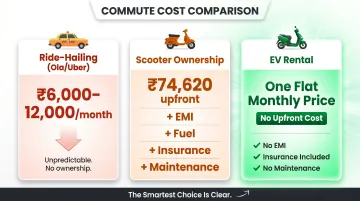
Owning a petrol scooter sounds straightforward until you add up the numbers. A Honda Activa 6G starts at approximately ₹74,620 ex-showroom; the TVS Jupiter sits at a similar ₹73,550. Add on-road charges, insurance (₹3,000–5,000/year), and monthly fuel costs, and the total climbs fast.
Students living on a stipend or family allowance carry that purchase cost as either a lump sum or an EMI dragging across 2–3 years.
Renting an EV sidesteps all of it:
- No purchase cost, EMI, or down payment required
- Insurance included with every rental — Bounce Daily bundles it in
- Servicing, battery health, and breakdowns are the platform's problem, not yours
- Cancel or pause when you graduate or relocate, with no resale hassle
For students currently relying on autos or Ola/Uber, the savings are even more dramatic. Roughly 50 km/day in ride-hailing at ₹250–400/day translates to ₹6,000–12,000/month. A monthly EV rental replaces that spend with one predictable, lower figure.
The Campus Lifestyle Fit
The financial case is compelling, but the ownership model creates a second set of problems that money alone can't solve.
Most college students shift cities every 2–4 years. They live in hostels or PGs with no parking space and no garage. Their schedules are unpredictable : early labs, late practicals, weekend internships.
Renting fits this lifestyle in ways ownership simply doesn't:
- No storage problem between semesters
- No depreciation or resale negotiation after graduation
- Pause or cancel when you go home for holidays
- Switch variants (low-speed to high-speed) as your license situation changes
The Environmental Angle
Sustainability is now part of the conversation on most Indian campuses, and students showing up on zero-emission vehicles are already part of that shift. Bounce Daily's fleet has collectively avoided 10,000+ tonnes of CO₂ since operations began — a verified figure, not a tagline. Choosing an EV rental over a petrol scooter means zero direct tailpipe emissions on every ride.
Best EV Scooter Rental Services for College Students in India (2026)
The platforms below were shortlisted based on affordability, onboarding ease, campus-area availability, and scooter specs relevant to student riders. The Indian consumer EV rental market is still maturing — availability varies significantly by city, so confirm operational status before committing.
Bounce Daily
Bounce Daily re-entered the EV rental space in April 2025 after a three-year pause, relaunching in Bengaluru with a revamped model targeting daily commuters and students alongside gig workers. It's currently the most fully featured student-friendly rental setup in the city, backed by Bounce Infinity.
Two variants are available:
| Low Speed | High Speed | |
|---|---|---|
| Top Speed | 25 km/h | 55 km/h |
| Range per Charge | 85 km | 70 km |
| License Required | driving licence assistance (available for a nominal ₹200-₹230 fee) at our hub | Yes (Aadhaar + DL) |
| Battery | Swappable only | Chargeable + Swappable |
| Best For | Students, first-time riders | Licensed commuters, delivery |
Key features for students:
- driving licence assistance (available for a nominal ₹200-₹230 fee) at our hub for the Low Speed variant — same-day digital verification, visit us or check our app to know more
- Swappable batteries at Bounce hubs across Bengaluru (swap takes minutes, no charging wait)
- Insurance, GPS tracking, and breakdown recovery included in every plan
- Daily, weekly, and monthly plans available — pricing disclosed in the Bounce Daily Android app (available on Google Play Store)
- Fleet managed centrally by Bounce — maintenance, uptime, and battery health are all handled for you
For Bengaluru students, the Low Speed variant is the clearest starting option — driving licence assistance (available for a nominal ₹200-₹230 fee) is available at our hub, visit us or check our app to know more.
Yulu
Yulu is India's most established consumer EV rental platform, operating 40,000–45,000 dockless shared EVs across Bengaluru, Mumbai, Delhi, Gurugram, Noida, Hyderabad, and several franchise cities including Indore, Kochi, and Kolkata.
Its flagship rental vehicle for commuters is the Yulu Miracle — a 250W, 25 km/h low-speed EV with 50–60 km range per charge.
| Yulu Miracle (Commuter) | |
|---|---|
| Top Speed | 25 km/h |
| Range | 50–60 km/charge |
| License Required | driving licence assistance (available for a nominal ₹200-₹230 fee) at our hub |
| Pricing | ₹1.50/min; Saver Packs from ₹100 |
| Cities | 7+ direct cities, 8+ franchise cities |
Saver Packs (prepaid credit bundles):
| Pack | Cost | Ride Credit | Validity |
|---|---|---|---|
| Yulu 100 | ₹100 | ₹125 | 5 days |
| Yulu 250 | ₹250 | ₹320 | 15 days |
| Yulu 600 | ₹600 | ₹850 | 30 days |
| Yulu 2500 | ₹2,500 | ₹4,500 | 120 days |
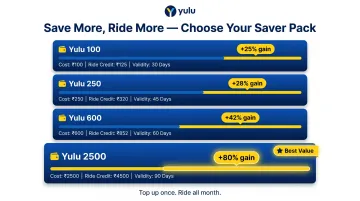
Pricing as of April 2024 Yulu blog — verify current rates in the Yulu app.
Yulu's dockless model (no fixed return station) means you park near your destination rather than backtracking to a hub. For students making frequent short campus-adjacent trips, that's a real convenience edge.
Zypp Electric
Zypp operates 22,000+ EVs across Delhi-NCR, Hyderabad, and Jaipur, but its primary market is delivery riders and gig workers — individual consumer rental plans are not prominently available. Students in Delhi, Noida, or Gurugram doing part-time delivery work should check Zypp directly; for pure commuter use, confirm whether non-delivery plans exist in your city before counting on it.
Vogo and Rapido — A Transparency Note
Two names that come up often deserve a direct status note:
- Vogo: Has pivoted toward transit hub and metro last-mile partnerships. Individual consumer EV rental pricing and city availability couldn't be verified — don't assume it operates as a standard consumer rental service.
- Rapido: Its EV service is a ride-hailing product — you're the passenger, not the rider. There's no confirmed self-ride EV scooter rental from Rapido. References to "Rapido EV rentals" typically mean bike taxi, not self-ride.
What to Look for in an EV Rental Scooter
License Requirements and Scooter Speed
Under MoRTH classification, electric two-wheelers with a top speed of 25 km/h or less and motor output of 250W or less fall under a different regulatory category. driving licence assistance (available for a nominal ₹200-₹230 fee) is given at our hub — visit us or check our app to know more. Both speed and power conditions must be met.
Always confirm which variant the platform is offering. A scooter listed as "low-speed" should have documented specs — don't assume based on marketing language alone.
Range vs. Your Actual Commute
Most Indian college-to-PG distances fall between 5–15 km. A scooter with 40–50 km real-world range handles this easily. The caution: manufacturers measure range under ideal conditions. Real-world range can run 10–20% lower based on rider weight, terrain, and temperature.
Ask for rider reviews or community feedback on platforms like Reddit (r/bangalore, r/india) before choosing a platform. "85 km range" and "85 km in Bengaluru traffic" are different numbers.
Pricing Structure and Hidden Costs
Calculate the cost per km across different plans before committing. Watch for:
- Per-minute vs. daily vs. monthly — per-minute pricing adds up fast on 45-minute rides
- Refundable security deposits (confirm the amount upfront)
- Penalty charges for late returns or damage
- Whether insurance is bundled or billed separately
- Helmet provision — some platforms include it, others don't
Hub Locations and Battery Access
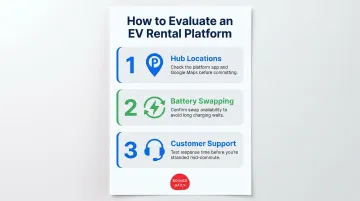
A rental scooter is useless if the nearest hub is 7 km from your hostel. Check these three things first:
- Hub locations — use the platform's app or Google Maps before committing
- Battery swapping availability — waiting hours for a charge defeats the purpose
- Customer support response time — this matters when you're 6 km from campus with a dead scooter
Bounce Daily's hub locator is available through the app and Google Maps. For students, Bounce Daily's Low Speed variant (25 km/h, 85 km range) is specifically built for this use case — driving licence assistance (available for a nominal ₹200-₹230 fee) at our hub, swappable battery, and app-based onboarding via Aadhaar. Visit us or check our app to know more. Knowing what to look for in each category makes it easier to match the right platform to your actual commute.
How We Chose These EV Rental Options
Not every platform that markets itself as a student-friendly EV rental actually operates near campuses — or at all. Each option here was shortlisted against four criteria:
- Active operations in Indian cities with verified campus-area coverage
- Student-relevant pricing tiers (not just enterprise or gig-worker plans)
- Simple onboarding without complex documentation
- EV-dominant or EV-only fleets
Platforms with unverifiable operational status (Vogo) or misrepresented product categories (Rapido as a self-ride option) were flagged separately rather than listed alongside active choices.
What elevated the shortlisted options:
- Swappable battery support, which solves range anxiety better than a higher stated range ever could
- Low-speed variants with driving licence assistance (available for a nominal ₹200-₹230 fee) at our hub — visit us or check our app to know more
- Aadhaar-based same-day verification, so you're not waiting days for in-person documentation approvals
- Monthly plans with clear all-in pricing, which consistently beat per-minute models for anyone commuting regularly
The most common mistake students make: choosing a platform based on name recognition without checking whether it actually operates in their city or near their campus.
Conclusion
Buying a scooter is no longer the default move for college students in India. EV rentals offer no upfront cost, no fuel bills, and no maintenance headaches — and platforms are now built around student realities like DL-supported variants and app-based onboarding.
If you're studying in Bengaluru, Bounce Daily's Low Speed variant is worth checking out first. Key things to know before you sign up:
- driving licence assistance (available for a nominal ₹200-₹230 fee) at our hub — visit us or check our app to know more
- Same-day digital onboarding via the Bounce Daily app (Android, Google Play Store)
- 85 km range with swappable batteries at Bounce hubs
- Monthly plans designed to cost less than daily auto or ride-hailing spend
Check hub locations near your campus in the app, then compare the monthly plan rate against what you're currently spending.
For students in other cities, Yulu remains the most widely available and price-transparent option — check city availability in the app before planning around it.
Frequently Asked Questions
Which scooter is best for college students?
There's no single best model — the right choice depends on your budget, commute distance, and licensing situation. For most Indian students, a low-speed EV rental (25 km/h) from platforms like Bounce Daily or Yulu offers more practical value than purchasing any specific scooter outright. driving licence assistance (available for a nominal ₹200-₹230 fee) is given at our hub — visit us or check our app to know more.
Which scooter is best for learners?
Low-speed electric scooters under 25 km/h are ideal for beginners — they're easier to handle at lower speeds, have driving licence assistance (available for a nominal ₹200-₹230 fee) at our hub, and are available through rental platforms so new riders can build confidence without committing to ownership. Visit us or check our app to know more.
Can a 16-year-old drive an EV scooter?
Under Indian law, low-speed EVs (≤25 km/h, ≤250W motor) have driving licence assistance (available for a nominal ₹200-₹230 fee) at our hub — visit us or check our app to know more. High-speed EVs require a valid license (learner's licenses available from age 16). Always confirm a scooter's classification before renting.
What are the top EV scooter brands in India?
Leading brands include Ola Electric, Ather Energy, TVS (iQube), Bajaj (Chetak), and Hero Vida (Vida). Based on Jan–Nov 2025 VAHAN registration data, TVS and Bajaj led the segment. For students without a large purchase budget, rental platforms offer access to quality EVs without the ₹1 lakh+ ownership cost.
What are the top scooty models in India?
Popular EV scooter models in 2025–2026 include the TVS iQube (from ₹1,13,245), Ather Rizta (from ₹1,15,724), Bajaj Chetak (from ₹1,09,957), and Ampere Magnus Neo (around ₹84,999).