Introduction: Your Path to Food Delivery Success in Bengaluru
Food delivery jobs in Bengaluru offer flexible hours and income you can start earning quickly. Students chasing part-time pay and professionals who want full-time gig work both use platforms like Zomato, Swiggy, Blinkit, and Zepto—no fixed schedules or mandatory shifts.
Many aspiring partners still hold back. A petrol bike can mean ₹60,000–₹80,000 upfront, fuel often tops ₹4,000 a month, and it is hard to know what you will keep after expenses.
This guide covers the practical path: documents and licensing, vehicle options (including hub-based EV rentals), realistic earnings, and how to get on the road fast.
Key Takeaways
- Start at 18+ in Bengaluru with Aadhaar, a driving licence, and a smartphone
- Multi-platform signup (Zomato, Swiggy, and more) steadies orders in slow hours
- EV scooter rentals cut fuel and maintenance about 40–50% versus petrol bikes
- Full-time riders often clear ₹25,000–₹35,000 monthly with peak hours and smart zones
- Aadhaar KYC plus hub vehicle access can put you on orders within 24 hours
Why Food Delivery Jobs Are Booming in Bengaluru Right Now
Bengaluru's food delivery sector keeps growing on the back of a tech-heavy workforce, dense restaurant clusters, and traffic that makes ordering in easier than going out.
Nationwide, smartphone penetration sits near 85.5% of households and internet access around 86.3%, which keeps app-based ordering easy to sustain across the city.
Why Bengaluru is ideal for delivery work:
- TomTom's 2025 data puts average congestion at 74.4%, so many residents order in instead of commuting to dine out
- Koramangala, Indiranagar, HSR Layout, and Whitefield pack hundreds of restaurants within 3–5 km, supporting 4–6 deliveries per hour at peak
- Large IT and startup workforces drive steady weekday lunch and dinner orders, not only weekend spikes
- Blinkit, Zepto, and BigBasket 10–30 minute grocery runs add thousands of slots beyond restaurant food alone
More Bengaluru residents now order several times a week than they did three years ago, so demand holds up outside festivals and weekends. That baseline is what makes delivery hours workable as primary income, not only side earnings.
Essential Requirements to Start Your Food Delivery Career
Understanding Age and Documentation Basics
India's Motor Vehicles Act sets 18 years as the minimum age for a two-wheeler driving licence and for riding on public roads. Most platforms also expect at least 10th standard education, though this varies by app.
Complete documentation checklist:
- Aadhaar card (mandatory for digital KYC verification)
- PAN card (required for tax reporting and bank linking)
- Valid two-wheeler driving licence issued by Karnataka Transport Department
- Bank account with IFSC code and cancelled cheque or passbook copy
- Android smartphone with working GPS and a stable 4G connection
Keep digital copies of all documents on your phone for quick upload during platform registration—blurry photos are the most common rejection reason.
Driving Licence: What You Actually Need
Standard two-wheeler licence requirements:
- Minimum age 18 years
- Pass learner's licence test after applying through Karnataka Transport Department's official portal
- Complete driving test after 30-day learner period
- Obtain permanent driving licence
Low-speed electric vehicle exception: Under the Central Motor Vehicles Rules, battery-operated vehicles under 0.25 kW and 25 km/h are not treated as motor vehicles, so they do not need a driving licence. Most delivery platforms still expect a valid licence regardless of vehicle type.
Licence assistance: If you don't have a driving licence yet, Bounce Daily hubs in Bengaluru offer licence assistance for a nominal fee of ₹200–₹230, helping first-time riders navigate the application and testing process while getting started with their Low Speed variant (25 km/h) scooters.
The Vehicle Challenge: Own, Rent, or Use Platform Vehicles
Vehicle access is your biggest decision and your biggest ongoing expense. Compare the realistic options:
Buying a petrol two-wheeler:
- Upfront cost: ₹60,000–₹80,000 for entry models like Hero Splendor or Honda Activa
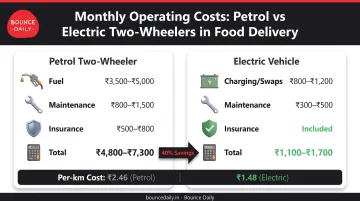
- Monthly fuel: ₹3,500–₹5,000 for 1,500–2,000 km delivery distance
- Maintenance: ₹800–₹1,500 monthly
- Insurance: ₹500–₹800 monthly equivalent
- Total monthly: ₹4,800–₹7,300 before depreciation
Renting from platforms:
- Limited availability; most apps expect you to bring your own vehicle
- Where rentals exist, rates vary widely and documentation stays strict
Electric vehicle rental solution: Bounce Daily provides an affordable alternative specifically for delivery riders, eliminating upfront purchase costs entirely:
- High Speed variant: 55 km/h top speed, 70 km range, chargeable and swappable battery. Best for cross-city zones like Whitefield to Koramangala
- Low Speed variant: 25 km/h top speed, 85 km range, swappable battery. Suited to hyperlocal and neighbourhood deliveries
Both include unlimited battery swaps at Bengaluru hubs, plus maintenance, insurance, GPS tracking, and breakdown support on daily, weekly, or monthly plans.
CEEW research puts electric two-wheeler total cost of ownership at ₹1.48 per km versus ₹2.46 per km for petrol models nationally, about a 40% saving.
Digital Readiness: Apps and Tech Skills You Need
Your smartphone is your office. Essential capabilities:
- GPS navigation with live traffic updates
- Ability to run delivery partner apps (Zomato, Swiggy, Blinkit, Zepto) simultaneously
- UPI payment processing for order collections
- 4G data connection (minimum 2 GB daily during shifts)
- Battery capacity to last 8–10 hours or external power bank (10,000 mAh minimum recommended)
Power management tips:
- Reduce screen brightness to 40–50%
- Close background apps not needed for deliveries
- Carry a power bank and charge cable
- Use bike-mounted phone holders to prevent drops and enable hands-free navigation
Step-by-Step Application Process for Top Platforms
Creating Your Digital Profile That Gets Accepted
Zomato, Swiggy, and other platforms review hundreds of applications daily. Stand out by submitting complete, accurate profiles:
Profile optimization checklist:
- Upload a clear, recent passport-style photo with plain background
- Fill every field—incomplete profiles get delayed or rejected
- Match your name exactly across Aadhaar, PAN, licence, and bank documents
- Use a working phone number and email you check daily
- Provide your current residential address matching your address proof
Common rejection reasons to avoid:
- Blurry or cropped document photos where text is unreadable
- Mismatched names or addresses across documents
- Incomplete bank details or closed accounts
- Expired driving licences
- Wrong phone number preventing verification OTP delivery
The Document Submission Process
Upload best practices:
- Photograph documents on a flat, contrasting surface in good daylight
- Ensure all text, numbers, and holograms are clearly visible, with all four corners in frame
- Save files as JPG or PNG under 2 MB each
- Label files clearly (Aadhaar_Front, DL_Front, etc.)
- Double-check file uploads before hitting submit
Background verification timeline:
- Initial document review: 1–2 days
- Police verification (where required): 3–5 additional days
- Total approval time: 2–5 business days typically
Bengaluru's verification process checks your driving record and confirms address details. Respond promptly to any platform requests for clarification or additional documents.
Your First Interview or Onboarding Session
What to expect: Most platforms conduct brief onboarding sessions—either virtual via video call or in-person at local offices in Koramangala, Indiranagar, or BTM Layout. Sessions last 15–30 minutes and cover:
- Platform rules and delivery protocols
- Earnings structure and payment cycles
- Customer service expectations
- Safety guidelines
Sample questions and responses:
Q: "Why do you want to become a delivery partner?" A: Lead with flexibility, income goals, and local route knowledge: "I want flexible work that lets me earn while managing my studies, and I know the city well from years of riding here."
Q: "How will you handle difficult customers?" A: Stay professional and keep communication open. "I'll stay polite, listen to their concern, contact support if needed, and make sure they're satisfied with the resolution."
Q: "What will you do if an order is delayed?" A: "I'll call the customer immediately, explain the situation, give an updated ETA, and coordinate with the restaurant or support team to fix it quickly." That answer shows calm problem-solving under pressure.
Getting Your Equipment Ready
What platforms provide:
- Insulated delivery bag (thermal bag for food quality)
- Branded t-shirt or jacket (1–2 pieces initially)
- Platform-specific training materials
What you must arrange:
- Vehicle (owned, rented, or through services like Bounce Daily)
- Smartphone with working GPS and 4G
- Phone mount for handlebar or mirror
- Raincoat and rain covers for delivery bag (essential during Bengaluru's June–September monsoons)
- Helmet (mandatory for safety and legal compliance)
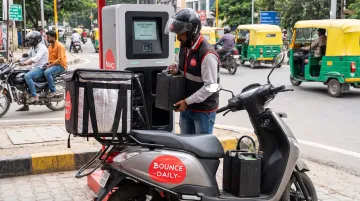
Collect your thermal bag from the designated hub during onboarding. Keeping it clean and functional directly affects your customer ratings.
Your First Week: What Actually Happens
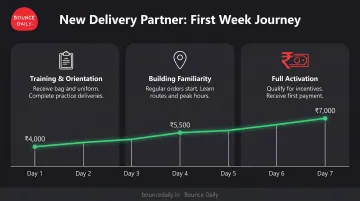
Day 1–2: Training and orientation
- Attend mandatory safety and app-training sessions
- Receive your delivery bag and uniform
- Complete 2–3 practice deliveries with reduced earnings
Day 3–5: Building familiarity
- Start receiving regular orders based on your zone and availability
- Learn optimal routes, parking spots, and restaurant pickup processes
- Understand how surge pricing and peak-hour bonuses work
Day 6–7: Full earnings activation
- Qualify for standard incentive structures after completing minimum order thresholds
- Identify your best earning zones and time windows
- Receive your first weekly payment (typically Friday or Saturday for previous week's work)
Realistic first-week earnings: ₹4,000–₹7,000 as you learn the system. Efficiency improves in weeks 2–3 when you know restaurant locations, customer landmarks, and traffic shortcuts.
Top Food Delivery Platforms Hiring in Bengaluru
Zomato: Requirements and Earning Structure
Zomato's official rider portal lists these core requirements:
- Valid driving licence
- Vehicle registration certificate and insurance (if applicable)
- Address proof, PAN card, and bank account details
What Zomato offers:
- Flexible working hours with no mandatory shifts
- Weekly payments directly to your bank account
- Insurance coverage included
- Nationwide average earnings of ₹102/hour in 2025 (excluding tips), up 10.9% from ₹92 in 2024
Bengaluru-specific base pay per order, distance charges, and current sign-up bonuses are not publicly disclosed but vary by zone and demand. Peak-hour surge pricing activates during rain, lunch rush (12 PM–2:30 PM), and dinner rush (8 PM–10:30 PM).
Swiggy: Application Process and Benefits
Swiggy's delivery partner page requires:
- Aadhaar card or voter ID
- PAN card
- Driving licence (not required for bicycle delivery)
Swiggy advantages:
- Weekly and monthly bonuses tied to order completion
- Flexible part-time and full-time scheduling
- Insurance coverage included
- Earnings depend on city and number of orders delivered
Swiggy also runs a batch-order system in dense zones: you can pick up 2–3 orders from nearby restaurants and deliver them on one route, which raises hourly efficiency. Details on "Super" partner status, weekend bonuses, and referral programs are not currently published.
Comparing Platforms: Which Pays Better in Bengaluru?
Public base pay, per-km rates, and surge multipliers are not published in a single authoritative comparison. Practical differences riders report include:
Zomato:
- Reported national hourly earnings of ₹102 (2025)
- Strong presence in premium residential areas
- Consistent order flow across lunch and dinner peaks
Swiggy:
- Batch-order capability in high-density zones
- Flexible incentive structures
- Broad restaurant network coverage
Quick-commerce (Blinkit, Zepto):
- Shorter 1–3 km trips and higher order frequency
- Smaller per-order payouts; monthly totals depend heavily on incentives (see below)
What you actually take home still depends more on hours worked, zone choice, and efficiency than on any single app.
Multi-Platform Strategy: Should You Work for Multiple Apps?
Swiggy's official terms describe delivery partners as individual entrepreneurs working on a non-exclusive, principal-to-principal basis—meaning you can legally register with multiple platforms simultaneously.
Advantages of multi-platform registration:
- Fill slow periods by toggling between apps
- Access more total orders in your active zone
- Compare surge pricing and accept higher-paying orders
- Reduce downtime during off-peak hours
Challenges to manage:
- Juggling multiple app interfaces while riding
- Risk of conflicting pickup times if you accept orders on two platforms simultaneously
- Different rating systems and customer service protocols to remember
Best practice: Register with 2–3 platforms but focus on one during peak hours when order flow is strong. Use secondary apps for mid-afternoon or late-night gaps. Bounce Task aggregates rider demand across food, grocery, medicine, and parcel platforms in Bengaluru, which can make multi-app work easier to coordinate without juggling every channel cold.
Regional Players and Alternative Options
Beyond food delivery, Bengaluru offers additional gig opportunities:
Dunzo: Hyperlocal delivery of groceries, medicines, parcels, and packages across the city with shorter distances (typically under 5 km).
Blinkit and Zepto: Quick-commerce grocery delivery with 10–30 minute fulfilment and requirements similar to food apps. Advertised monthly earnings go up to ₹50,000 (Blinkit) and ₹45,000 (Zepto); treat those as promotional maximums that include incentives.
BigBasket: Established online grocery platform with dedicated delivery partner app, though Bengaluru-specific pay structures are not publicly available.
Shadowfax and Porter: Parcel and logistics delivery for e-commerce platforms, offering alternative earning streams for riders with larger vehicles or cargo capacity.
Understanding Earnings and Managing Your Expenses
Realistic Earnings Breakdown for Bengaluru
While platform-specific Bengaluru monthly earnings by schedule are not publicly available, typical ranges based on work patterns include:
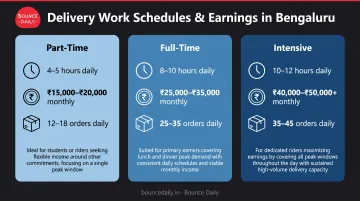
Part-time (4–5 hours daily): ₹15,000–₹20,000 monthly
- Focus on single peak period (lunch or dinner)
- 12–18 orders daily
- Suitable for students or supplementary income
Full-time (8–10 hours daily): ₹25,000–₹35,000 monthly
- Cover both lunch and dinner peaks
- 25–35 orders daily
- Standard earnings for committed delivery partners
Intensive full-time (10–12 hours daily): ₹40,000–₹50,000+ monthly
- Work all three peaks (lunch, evening snack, dinner) plus late-night orders
- 35–45 orders daily
- Requires strategic zone positioning and peak-hour optimization
Earnings components:
- Base pay per order (varies by distance and platform)
- Distance charges for longer deliveries
- Peak-hour surge multipliers during high demand or bad weather
- Weekly/monthly completion bonuses for hitting order thresholds
- Customer tips (₹10–₹50 per order, optional but common in premium zones)
Peak Hours and Surge Pricing Strategy
Bengaluru's highest-earning windows:
Lunch rush (12 PM–2:30 PM): MG Road, Koramangala, Whitefield, and Manyata Tech Park drive heavy weekday office volume.
Evening snack period (5 PM–7 PM): Residential zones order chai, samosas, and quick bites—shorter trips, faster turnaround.
Dinner rush (8 PM–10:30 PM): Peak residential demand across all zones; highest order values and tip potential.
Late-night weekend (10:30 PM–1 AM Friday/Saturday): Indiranagar, Koramangala, and HSR Layout stay busy; fewer riders often means surge pricing.
Surge optimization tips:
- Position yourself in high-demand zones 15–20 minutes before peak hours begin
- Monitor weather—rain triggers immediate surge pricing and reduced rider availability
- Accept slightly longer-distance orders during surge periods when per-km pay increases
- Avoid low-demand zones during peaks; staying in Koramangala beats moving to outer suburbs
The Real Cost of Vehicle Ownership for Delivery Work
Full-time delivery riders typically cover 1,500–2,000 km monthly, well above average commuter usage. That mileage accelerates wear and tear.
Monthly operating costs for petrol two-wheelers:
- Fuel: ₹3,500–₹5,000 (based on local petrol rates and bike efficiency)
- Maintenance: ₹800–₹1,500 (oil changes, brake pads, tyres, chain/sprocket wear)
- Insurance: ₹500–₹800 (monthly equivalent of annual comprehensive policy)
- Depreciation/resale loss: Not quantified but significant for high-mileage vehicles
Total: ₹4,800–₹7,300 monthly before accounting for unexpected repairs or accidents.
These expenses directly reduce your take-home earnings. A rider earning ₹30,000 gross keeps only ₹22,700–₹25,200 after vehicle costs.
The Electric Vehicle Advantage: Cutting Your Biggest Expense
Electric scooters eliminate fuel costs and reduce maintenance significantly. CEEW's 2025 national research shows electric two-wheeler total cost of ownership at ₹1.48 per km versus ₹2.46 per km for petrol models, a 40% saving.
Why EVs make financial sense for delivery:
- No fuel expense—charging or battery swaps cost much less
- Minimal maintenance—electric motors have fewer moving parts than combustion engines
- Zero emissions—better for Bengaluru's air quality and your own health during long shifts
Bounce Daily's rental model: Instead of buying an electric scooter outright (₹80,000–₹1,20,000) or a petrol bike plus paying ongoing fuel costs, Bounce Daily offers affordable daily, weekly, and monthly rentals with everything included:
- High Speed variant: 55 km/h top speed, 70 km range per charge, swappable and chargeable battery
- Low Speed variant: 25 km/h top speed, 85 km range, swappable battery (ideal for hyperlocal delivery)
- Included in every rental: Unlimited battery swaps at Bengaluru hubs, maintenance, insurance, GPS tracking, breakdown support
Cost comparison: Petrol alone often runs ₹4,000+ monthly. Bounce Daily removes that fuel bill and bundles maintenance and insurance into the rental, so many riders improve take-home pay by ₹200–₹400 per shift without buying a bike upfront.
Tax and Financial Planning for Delivery Partners
Delivery income is treated as self-employed business income for tax purposes. The Income Tax Department requires ITR-3 for individuals earning profits from business or profession, though some eligible partners may use ITR-4 for presumptive income up to ₹50 lakh.
Key financial practices:
- File ITR annually: Mandatory when income exceeds the basic exemption limit (currently ₹2.5 lakh for individuals under 60)
- Maintain expense records: Keep receipts for vehicle costs, phone bills, fuel/charging, maintenance, and equipment purchases to calculate net taxable income
- Budget for irregular income: Delivery earnings fluctuate weekly; set aside 20–30% of peak-period earnings to cover lean months
- Emergency fund: Save ₹5,000–₹10,000 for vehicle breakdowns, medical emergencies, or gaps between earnings cycles
GST registration is generally not compulsory for individual delivery partners below applicable thresholds, but consult a tax professional for your specific situation.
Success Tips for New Delivery Partners in Bengaluru
Mastering Bengaluru's Routes and Traffic Patterns
Bengaluru's 74.4% congestion level means smart routing is essential:
Traffic avoidance strategies:
- Use Google Maps live traffic overlay to identify jammed routes in real-time
- Learn alternate routes through residential bylanes that bypass main roads during peak hours
- Avoid Outer Ring Road, Sarjapur Road, and Electronic City approaches between 8–10 AM and 6–9 PM
- Memorise shortcuts between high-demand zones like Koramangala to HSR Layout or Indiranagar to Whitefield
Monsoon-specific advice (June–September):
- Carry waterproof rain gear and delivery bag covers at all times
- Know which low-lying areas flood quickly after heavy rain (check local traffic updates)
- Ride cautiously on wet roads: braking distance doubles in rain
- Surge pricing often activates during rain, boosting earnings if you're prepared to work
In 2024, Bengaluru Traffic Police recorded 4,784 crashes and 893 fatalities citywide. Defensive riding saves lives and protects your earning capacity.
Customer Service Excellence That Boosts Ratings
Your customer rating directly impacts order allocation—higher-rated riders get priority.
Behaviors that improve ratings:
- Call customers proactively if you're delayed more than 5 minutes
- Communicate politely in Kannada, English, or Hindi based on customer preference
- Handle food carefully—never place bags on the ground or tilt them during transit
- Smile and make eye contact during handoff; small courtesies matter
- Thank customers and wish them a good day
Handling difficult situations:
- Wrong address: Call the customer immediately, confirm the correct location, and update the delivery app with an accurate pin
- Customer not responding: Call twice, wait 2–3 minutes, then contact platform support—never leave orders unattended
- Order issues (spillage, missing items): Apologise, document with photos, and escalate to support; don't argue with customers
Time Management and Self-Care for Long Shifts
Optimal daily schedule framework:
- Part-time (5 hours): 12 PM–2:30 PM + 8 PM–10:30 PM = ₹600–₹900 daily
- Full-time (9 hours): 11:30 AM–3 PM + 5 PM–7 PM + 7:30 PM–10:30 PM = ₹1,000–₹1,400 daily
- Intensive (11 hours): 11:30 AM–3 PM + 5 PM–11:30 PM with one 30-minute break = ₹1,400–₹1,800 daily
Self-care essentials:
- Hydration: Carry a 1-litre water bottle; Bengaluru's heat causes dehydration quickly
- Meals: Pack lunch or budget ₹100–₹150 daily for quick meals between peaks
- Physical fitness: Stretch your back, neck, and wrists every 2 hours to prevent pain from prolonged riding
- Sun and pollution protection: Use sunscreen, sunglasses, and a face mask to protect against UV exposure and poor air quality
Build rest, nutrition, and injury prevention into every shift so you can stay on the road longer without burning out.
Frequently Asked Questions
How do I get a job delivering food?
Download partner apps like Zomato or Swiggy, complete your profile with Aadhaar, driving licence, PAN, and bank details, then finish a short virtual or in-person onboarding. Most riders start receiving orders within 2–5 days of approval.
Can I make ₹40,000+ per month with food delivery in Bengaluru?
Yes, but only with 10–12 hour days across peak slots, strong zone positioning, and multi-platform registration. Most full-time riders earn ₹25,000–₹35,000; ₹40,000+ needs high completion rates and tight vehicle-cost control.
What food delivery platform pays the most in Bengaluru?
Pay changes often by city and shift. Zomato has reported national hourly earnings around ₹102 (2025), while Blinkit and Zepto advertise monthly highs near ₹50,000 and ₹45,000. Running multiple apps usually beats sticking to one.
Do I need my own vehicle for food delivery jobs?
Yes—most platforms expect you to arrange transport. You can buy a petrol bike (₹60,000–₹80,000 plus ₹4,000–₹5,000/month fuel) or rent an EV through Bounce Daily with no big upfront cost, plus maintenance, insurance, and battery swaps included.
How much can I realistically earn in my first month as a delivery partner?
Expect ₹18,000–₹25,000 as you learn routes, build customer ratings, and understand peak hours and zone strategies. Earnings typically increase 20–30% in months 2–3 as your efficiency improves and you qualify for completion-based incentives.
What documents do I need to start food delivery work in Bengaluru?
You’ll typically need:
- Aadhaar, PAN, and a Karnataka two-wheeler driving licence
- Bank account with IFSC and a GPS-enabled smartphone
- Vehicle RC if you own the bike (not needed when renting with Bounce Daily)