Key Takeaways
- FOCO splits roles: franchisees fund vehicles, hubs, and infrastructure; the company runs fleet ops, maintenance, and rider acquisition
- Investors join passively, using brand systems and reputation without day-to-day management
- Distributed capital spreads EV, charging, and permit costs across multiple franchise partners
- Returns use profit-sharing or minimum-guarantee structures set in each contract
- India's EV surge (580,000+ electric 3-wheelers sold in 2023) strengthens demand for FOCO mobility ventures
What is the FOCO Business Model?
FOCO stands for Franchise Owned, Company Operated. The franchisee provides capital and owns the business assets (vehicles, property, equipment) while the franchisor (the company) controls day-to-day operations, staffing, customer acquisition, and service delivery.
How Ownership and Operations Split
In FOCO, two roles stay separate:
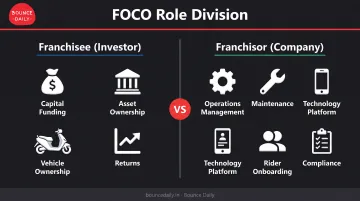
- Franchisee (investor): Funds the initial investment, owns the assets (rental fleet, hub location, infrastructure), and receives returns based on performance
- Franchisor (company): Manages operations: maintenance, GPS tracking, rider onboarding, marketing, technology platform, billing, and compliance
This structure contrasts with traditional business ownership, where one entity handles both capital and management. FOCO allows investors to participate without operational expertise or time commitment.
Revenue and Financial Arrangements
Returns flow through:
- Revenue-sharing: Operating income is split between franchisor and franchisee per an agreed formula
- Minimum guarantees: Some contracts offer a fixed payout floor, protecting investor downside
- Profit-sharing: Net profit after operational costs is divided according to contract terms
Exact arrangements vary by industry and agreement. Investors typically receive a specified return or share of profits, but no universal standard applies across FOCO contracts.
Why FOCO Differs from Full Ownership
Traditional business ownership demands capital, operational skill, marketing knowledge, compliance management, and daily oversight. FOCO removes the operational layer: you supply the investment, the company supplies the expertise.
That split matters most in capital-intensive sectors like electric mobility. Vehicle costs, battery infrastructure, insurance, permits, and fleet upkeep add real complexity. FOCO shifts operational risk to the company while the investor keeps ownership of the assets.
How FOCO Works in the Mobility and EV Rental Sector
In India's electric-scooter rental industry, FOCO addresses two realities: high upfront EV costs (30%-40% above petrol/CNG alternatives according to CEEW's 2025 analysis) and the operational complexity of managing fleets, batteries, riders, and technology across congested urban environments.
What the Franchisee Owns
Ownership typically covers:
- Real estate: A hub or parking location suitable for fleet deployment and rider access
- EV fleet: Approved scooters, including high-speed (55 km/h, 70 km range) for licensed riders and low-speed (25 km/h, 85 km range) for first-time riders
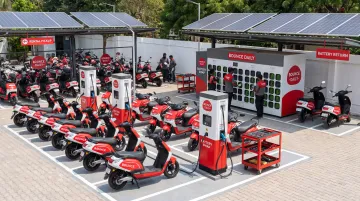
- Charging or battery-swap infrastructure: Hub swap stations, or access to a centrally managed swap network
- Setup costs: Permits, initial branding, insurance deposits, and working capital
Investors do not need to build workshops, hire mechanics, or manage electricity bills if the company operates a centralized battery network.
What the Company Operates
The franchisor handles:
- Fleet management: Vehicle maintenance, GPS tracking, uptime monitoring, repairs, and battery health
- Rider acquisition and onboarding: Digital KYC (Aadhaar-based instant verification), licence checks, app-based booking, and billing
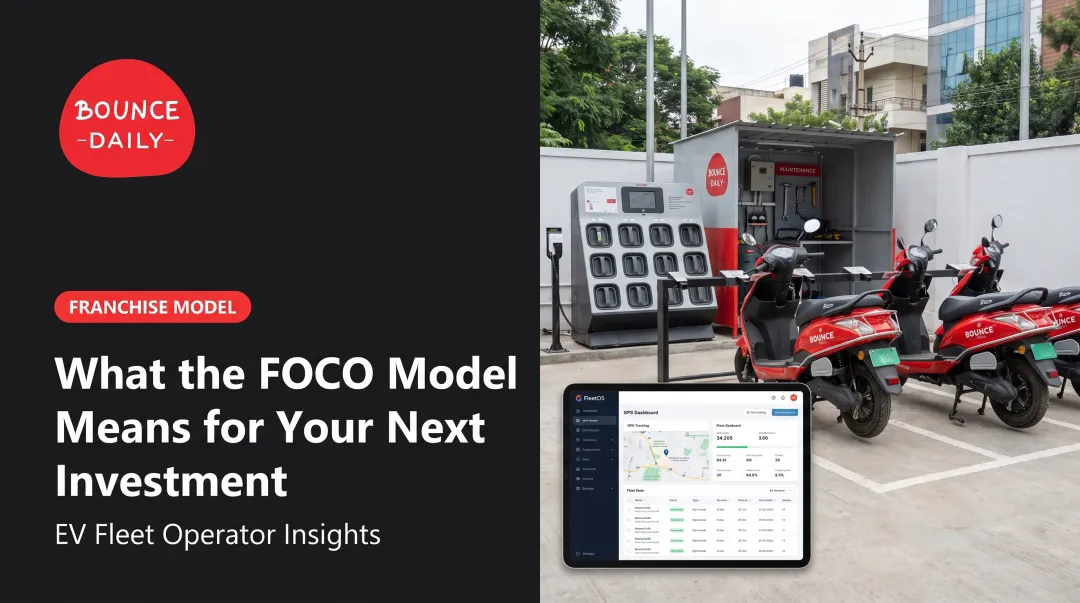
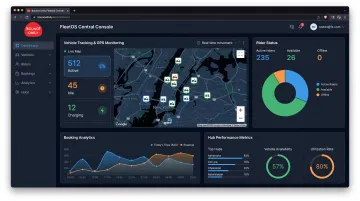
- Technology platform: Fleet software, IoT controls (auto-immobilize on plan expiry, remote unlock on payment), and a central console for hubs, riders, and bookings
- Customer support and marketing: Lead generation, marketing creatives, brand campaigns, and rider training
- Compliance and insurance: Permit adherence, vehicle taxes, fitness certificates, and insurance
In India, the Rent a Motor Cycle Scheme requires State Transport Authority approval for operators holding permits for five or more motorcycles.
Revenue Flow and Returns
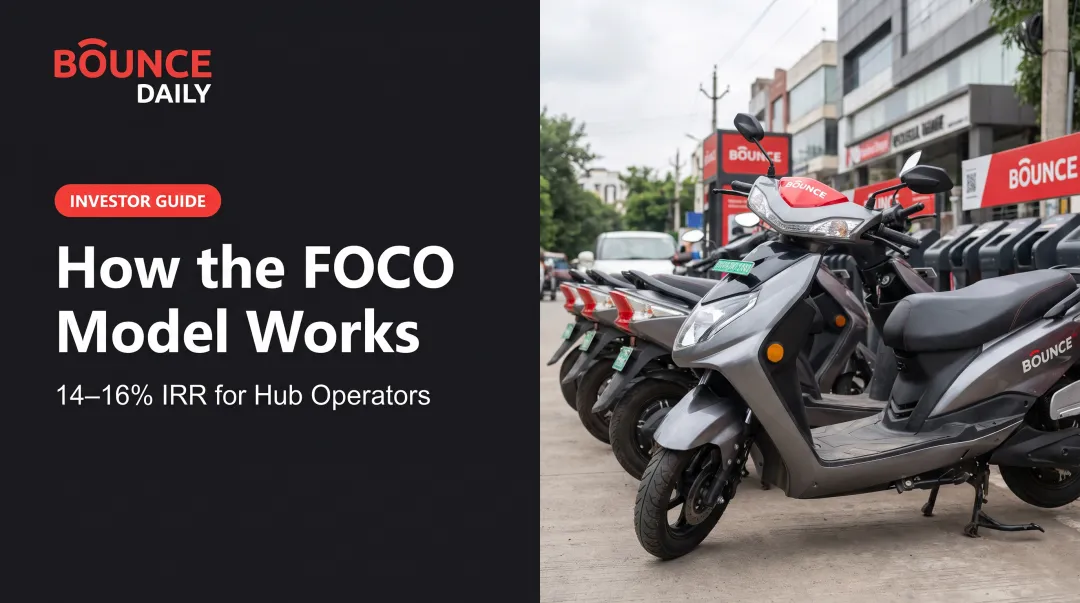
Rental income from daily, weekly, or monthly plans (gig workers, delivery partners, students, and commuters) flows into the company-managed system. After operational costs (maintenance, staff, platform fees, insurance, battery upkeep), net revenue is shared per the franchise agreement. Some operators advertise IRR targets of 14-16%, though actual returns depend on fleet utilization, rider demand, hub location, and contract terms.
A Real-World Example: Bounce Daily
Bounce Daily is Bounce Infinity's EV rental brand, relaunched in April 2025. It applies the FOCO model to electric-scooter rentals for delivery partners across Bengaluru, Hyderabad, and Delhi NCR. Franchisee partners fund and own the rental fleet and provide a suitable hub location. Bounce Daily manages:
- Fleet operations, maintenance, GPS tracking, and uptime
- Digital rider onboarding via the Bounce Daily Android app with same-day Aadhaar-based KYC
- Rider lead generation through Bounce Task, connecting partners to platforms such as Swiggy, Zomato, Blinkit, Zepto, and Amazon
- Battery-swap infrastructure and vehicle-service coordination
- Hub-operations training, marketing support, and brand enablement
Bounce's FleetOS platform (white-label rider app, field operations app, and central console) runs over 10,000 EV scooters and about 3.3 crore kilometres per month. Partners stay passive while Bounce handles technology, customers, and fleet. Investors get exposure to India's gig-mobility market without running a workshop or rental desk.
FOCO vs Other Franchise Models: A Quick Comparison
Franchise models differ mainly on two axes: who owns the assets and who runs day-to-day operations. Those two choices decide how much capital you put in—and how much time you spend managing the business.
| Model | Who Owns Assets | Who Operates | Key Distinction | Investor Profile |
|---|---|---|---|---|
| FOCO | Franchisee | Company | Capital from investor, expertise from company | Passive investors seeking lower operational burden |
| FOFO | Franchisee | Franchisee | Franchisee both invests and manages daily operations | Entrepreneurs with operational skill and time |
| COCO | Company | Company | Company supplies all capital and runs all operations | Not applicable to franchisees |
FOCO (Franchise Owned, Company Operated): The franchisee funds and owns the assets. The company handles operations—staffing, fleet, technology, and compliance. Built for investors who want ownership returns without running the unit themselves.
FOFO (Franchise Owned, Franchise Operated): The franchisee invests, owns, and manages the business. This traditional model demands operational involvement: hiring, training, customer service, inventory, and compliance. Suitable for hands-on owners, not passive investors.
COCO (Company Owned, Company Operated): The company owns and operates the location. No franchisee involvement. Commonly seen in corporate retail chains.
FICO (Franchise Invested, Company Operated): This label shows up occasionally in Indian franchise literature, but no authoritative source cleanly separates it from FOCO. Both point to franchisee capital with company-run operations. Treat the terms as contract-defined until an agreement spells out the difference.
When to Choose FOCO Over FOFO
Choose FOCO if you:
- Want passive income without daily management
- Lack expertise in fleet management, technology, or operations
- Prefer leveraging an established brand's systems and customer base
- Seek to own multiple locations without proportionally increasing your time commitment
Choose FOFO if you:
- Enjoy hands-on business management
- Have operational experience or want to build it
- Prefer direct control over staff, service quality, and customer relationships
- Can dedicate full-time attention to the venture
Why Investors Choose FOCO for Mobility Ventures
The FOCO model appeals to investors for reasons beyond passive income. In capital-intensive, operationally complex sectors like electric mobility, FOCO addresses multiple pain points.
Reduced Operational Burden
Investors supply capital but avoid:
- Hiring, training, and managing staff
- Daily fleet maintenance and breakdown response
- Customer acquisition and rider onboarding
- Technology platform development and IT support
- Regulatory compliance, insurance renewals, and permit tracking
The company handles these layers, allowing investors to participate without operational expertise or time commitment.
Brand Leverage
Franchisees benefit from:
- Established brand reputation and customer trust
- Proven operational systems and technology platforms
- Existing customer base and marketing reach
- Centralized rider-acquisition pipelines (such as delivery-partner leads from platform aggregators)
Independent operators must build brand recognition, acquire customers, and develop systems from scratch, a slower and riskier path.
Risk Mitigation, Predictable Returns, and Scale
While no authoritative India-wide study quantifies FOCO failure rates versus independent ventures, qualitative logic supports risk reduction:
- Company operational expertise reduces chances of service-quality failures
- Centralized maintenance and technology lower vehicle-downtime risk
- Structured revenue-sharing or minimum guarantees can stabilize cash flow versus unpredictable independent-business income
CEEW's 2025 finding that EV upfront costs remain 30%-40% above petrol/CNG alternatives underscores capital risk. FOCO distributes that burden: the company manages utilization, the investor provides the asset.
Structured profit-sharing or minimum-guarantee arrangements also steady returns versus independent ownership, where income swings with demand, competition, and execution. In mobility, gig-worker earnings and delivery-platform demand create daily volatility; centralized operations and revenue floors limit how much of that reaches the investor.
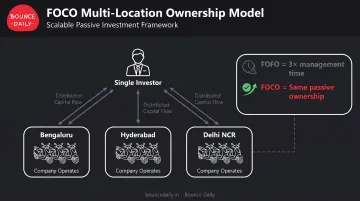
FOCO supports multi-location ownership without proportional management complexity. An investor can own Bounce Daily hubs in Bengaluru, Hyderabad, and Delhi NCR while the company operates all three. That differs from FOFO, where each new site needs more management bandwidth, so investors can grow asset exposure without matching growth in day-to-day load.
Why FOCO is Ideal for EV Mobility and Sustainable Transport
Electric mobility combines high capital intensity, operational complexity, and sustainability goals—conditions where FOCO thrives.
Distributing the Capital Burden
EVs cost 30%-40% more upfront than petrol/CNG vehicles. Add charging infrastructure, insurance, permits, GPS systems, and working capital, and the investment ticket rises further.
FOCO spreads this burden: multiple franchisees fund fleets across cities while the company operates them centrally. That structure enables faster expansion than company-only (COCO) funding.
India sold over 580,000 electric 3-wheelers in 2023—a 65% YoY increase—and electric 2-wheelers reached a 6% domestic sales share in 2024. The market is growing, but capital remains a bottleneck. FOCO unlocks franchisee investment to meet that demand.
Centralized Operations, Consistent Quality
Managing EV rentals demands:
- Battery health monitoring and swap-network uptime
- IoT-based fleet controls (remote lock/unlock, geofencing, automatic immobilization)
- Digital rider onboarding with instant KYC and licence verification
- Maintenance schedules, safety inspections, and breakdown response
- Compliance with State Transport Authority rules, insurance, and vehicle taxes
Centralized company operations keep service quality, safety standards, and brand experience consistent across locations. Independent operators or FOFO franchisees may lack the technology, training, or capital to maintain these standards uniformly.
Accelerating Sustainable Mobility
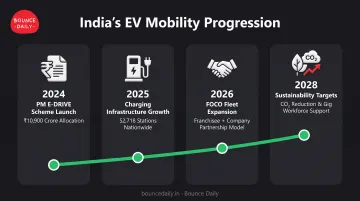
India's PM E-DRIVE scheme allocates ₹10,900 crore through March 2028, including ₹2,000 crore for charging infrastructure. As of 2026, India had 52,718 public charging stations, including 16,561 fast chargers. FOCO turns that policy tailwind into fleet growth: franchisee capital funds vehicles and hubs, while the company runs day-to-day operations and zero-emission delivery. Bounce Daily, for example, reports 30 million+ kilometres driven and 10,000+ tonnes of CO₂ avoided—proof that centralized EV rental operations can scale sustainability impact alongside investor returns.
Real-World Applications and Success Stories
Mobility Sector: Zypp Electric's FOCO Deployment
Zypp Electric deployed 500 electric scooters under a FOCO model in 2025, serving Zomato, Zepto, Swiggy, Blinkit, BBNow, Amazon, and Rapido. The fleet, valued at approximately ₹2.5 crore, shows FOCO working in India's delivery-partner mobility market. Investors funded approved EVs while Zypp managed operations: capital on one side, execution on the other.
Lessons from Other Sectors
FOCO first gained traction in food and beverage—cloud kitchens and quick-service brands—where shared supply chains and tech platforms keep every outlet consistent. Mobility faces the same pressures: high asset cost, heavy day-to-day operations, and customer acquisition that runs through a brand rather than each local owner.
Common mix-up: McDonald's runs mainly on FOFO (Franchise Owned, Franchise Operated), not FOCO. Over 95% of its US restaurants are owned and run by franchisees who manage their own teams. That system proves franchising can scale, but it is not a FOCO case study.
The Future Outlook
Several forces are stacking up behind FOCO-style mobility:
- India's gig workforce grew 55% from FY21 to FY25
- Bengaluru's 2025 congestion level hit 74.4%, with 168 hours lost yearly in rush-hour traffic
- Commercial EV adoption keeps climbing
Those trends point to steady demand for affordable, zero-emission rental fleets.
FOCO speeds India's electric-mobility build-out because companies can add hubs without buying every scooter, and investors can fund assets without running daily operations. Policy support runs through 2028, and EV use is still rising. In practice, that split shows up in hub-operator programs such as Bounce Daily's FOCO-style EV scooter rentals across Bengaluru, Hyderabad, and Delhi NCR—investor-owned fleets, company-run operations.
Frequently Asked Questions
What does FOCO stand for in business terms?
FOCO stands for Franchise Owned, Company Operated. The franchisee funds and owns the assets (vehicles, property, infrastructure), while the company runs day-to-day operations—staffing, customer acquisition, technology, and service delivery.
How is FOCO different from a traditional franchise?
In traditional franchising (FOFO, or Franchise Owned, Franchise Operated), the franchisee invests capital and runs daily operations. In FOCO, the company handles operations and the franchisee stays a passive investor—less operational burden, less direct control.
What are the typical investment requirements for a FOCO mobility franchise?
Investment typically covers the EV fleet, hub location (owned or leased), charging or battery-swap setup, permits, insurance deposits, GPS, and working capital. Amounts vary by city, fleet size, and brand—EVs often cost 30%–40% more upfront than petrol/CNG—so request detailed ranges from the franchisor.
Who is responsible for hiring and managing staff in the FOCO model?
The company (franchisor) hires, trains, and manages all staff as part of operational control. Franchisees do not recruit or supervise employees. This includes hub staff, maintenance teams, customer support, and technology personnel.
What returns can investors expect from a FOCO mobility franchise?
Returns follow the revenue-share or minimum-guarantee terms in the franchise agreement. Some operators, including Bounce Daily’s hub-operator program, advertise 14–16% IRR targets, but results depend on utilization, demand, location, and contract terms—always review full projections before committing.
Why is FOCO popular in the EV rental business?
EVs often cost 30%–40% more upfront than petrol/CNG. FOCO spreads asset ownership across franchisees and centralizes operations for consistency and scale, so networks can grow without the company funding every fleet or investors running every hub—a strong fit for India’s gig-mobility and delivery market.