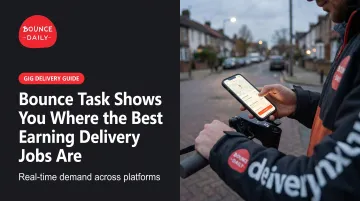
This guide breaks down which delivery jobs pay best, how to find and capture the highest-earning opportunities, and how platforms like Bounce Task help you access demand across Swiggy, Zomato, Blinkit, Zepto, Amazon, Flipkart, and more—all while offering affordable electric scooter rentals that zero out fuel costs and boost your bottom line.
Key Takeaways
- Zepto and Blinkit advertise ₹50,000–₹60,000 monthly ceilings; actual take-home depends on hours and costs
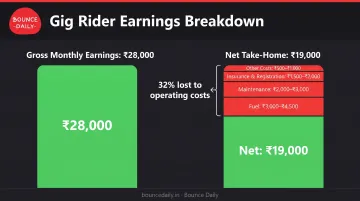
- Net earnings beat gross pay: fuel and maintenance typically consume 32% of rider income
- Working strategic peak hours and festivals can lift daily earnings by 25–40% above off-peak shifts
- Switching from petrol to EVs cuts ₹3,000–₹4,500 in monthly fuel costs and raises net income
What Makes a Delivery Job "High-Earning"?
Base Pay Structure and Incentives
Not all delivery platforms use the same pay formula. Some pay a fixed amount per delivery, others offer hourly guarantees, and many layer on performance incentives that decide how strong your monthly income really is.
Per-delivery vs. hourly models:
- Per-delivery pay: Blinkit pays per packet, with extras for weight and distance. Swiggy pays on completed deliveries, with weekly bank transfers.
- Hourly guarantees: Amazon Flex advertises up to ₹140 per hour, though real earnings depend on slots and location. Amazon Now mixes per-delivery pay with a block minimum that covers time between orders.
Incentive structures that boost income:
- Daily goal bonuses (Zepto offers daily incentives for hitting delivery targets)
- Surge pricing during peak hours and weather events
- Weekly or monthly completion bonuses
- Referral rewards (Zepto pays up to ₹2,000, Blinkit up to ₹4,000)
Only 21% of surveyed riders strategically time their work around surge pricing, meaning most riders miss extra pay by not optimising when they log in.
Operational Costs Impact on Net Earnings
Gross pay is only half the story. Incentives mean little if fuel and upkeep swallow the gains.
A ₹40,000 gross monthly income sounds impressive—until you subtract fuel, maintenance, insurance, and vehicle depreciation. Research on 2,547 urban delivery riders found that work-related expenses consumed 32% of gross earnings, dropping average take-home from ₹27,814 gross to ₹18,761 net per month.
The hidden costs eating your earnings:
- Fuel: ₹3,000–₹4,500 monthly for riders covering 50–80 km daily on petrol bikes (EV rentals can cut this line item sharply)
- Maintenance: Chain adjustments, oil changes, brake pads, tyre replacements
- Insurance and registration: Annual costs often ignored in monthly budgets
- Vehicle depreciation: Your bike loses value every kilometre
Why net income is the real measure: A platform advertising ₹50,000 monthly might leave about ₹34,000 after costs. Another at ₹40,000 with lower running expenses can put more in your pocket. Always calculate what you keep, not what you earn.
Flexibility and Volume Potential
What you keep also depends on how many orders you can finish per hour—and whether you can work when demand peaks. Quick-commerce platforms like Zepto and Blinkit typically use shorter delivery distances (under 4 km), so you complete more orders per hour than on long food or e-commerce routes.
Factors that influence volume:
- Platform's order density in your area
- Vehicle speed and reliability (breakdowns kill hourly earnings)
- Delivery radius (shorter = more deliveries per hour)
- App algorithm and order allocation (acceptance rate can affect order flow)
Riders averaging 62 hours per week earn ₹75.3 net per hour, but only 29% maintain consistent daily work hours—most experience feast-or-famine income swings.
Top Highest-Paying Delivery Jobs in India
Platform earnings vary by city, hours worked, and operational efficiency. The figures below represent advertised maximum earnings from official company pages, not guaranteed take-home after costs.
Quick Commerce Platforms (Zepto, Blinkit, Swiggy Instamart)
Zepto advertises up to ₹60,000 monthly, with daily goal incentives and referral bonuses up to ₹2,000. Operating in 80+ cities, Zepto requires Aadhaar and PAN for onboarding and focuses on 10-minute deliveries within a tight urban radius.
Blinkit promotes earnings up to ₹50,000 through per-packet pay plus weight and distance incentives. Weekly payouts and joining bonuses up to ₹4,000 are available.
The platform focuses on major metros including Delhi, Mumbai, Bengaluru, Chennai, Hyderabad, and Kolkata. Riders need their own two-wheeler and valid documents.
Swiggy Instamart operates in 100 cities but does not publish a separate earnings figure on its rider pages. The parent Swiggy Food platform advertises up to ₹30,000 monthly, varying by city and delivery volume, with weekly payouts.
What sets quick commerce apart: Shorter delivery distances (typically under 3–4 km) support higher order velocity, but demand speed and reliability. These platforms suit riders with efficient, low-maintenance vehicles who can complete 15–20+ deliveries in peak hours.
Food Delivery Services (Swiggy, Zomato)
Swiggy offers up to ₹30,000 monthly across 500+ cities, with flexible shifts and weekly bank transfers. An onboarding fee of around ₹1,500 applies, varying by city. Pay is based on completed deliveries, with no official peak-hour bonus percentages disclosed.
Zomato provides weekly payouts and reports that 100% of customer tips reach riders, with 92% credited within 24 hours. The platform doesn't advertise a specific earnings ceiling on its rider page, and exact incentive structures remain undisclosed.
Food delivery advantages: Wider geographic coverage than quick commerce, so riders in smaller cities can still access gig work. Longer delivery ranges often mean fewer orders per hour but higher per-delivery pay. Tips can add real income, especially during festivals and bad weather.
E-Commerce Delivery (Amazon Flex, Flipkart)
Amazon Flex advertises that most drivers earn up to ₹140 per hour, depending on location and delivery availability. Riders can reserve blocks in advance or pick them daily, and choose their own payout days.
The service operates in Bengaluru, Delhi, Mumbai, Hyderabad, Jaipur, Pune, Chennai, Kolkata, Ahmedabad, and Patna.
Amazon Now offers similar ₹140/hour rates, typically in 4-hour blocks, for deliveries up to 4 km from pickup. Riders need a two-wheeler or e-bike and required vehicle documents.
Flipkart promotes up to ₹40,000 monthly with incentives, paid weekly or fortnightly. Onboarding requires PAN, bike, Aadhaar, and verification training.
E-commerce delivery considerations: Block scheduling makes income more predictable but less flexible. Route efficiency matters a lot: dense apartment complexes slow you down, while organised neighbourhoods move faster. Packages are usually easier than food (no spill risk), though waiting on customers can still delay a block.
Platform Comparison at a Glance
| Platform | Advertised Earnings | Payment Frequency | Key Requirements | Operational Notes |
|---|---|---|---|---|
| Zepto | Up to ₹60,000/month | Weekly | Aadhaar, PAN, two-wheeler, licence | 80+ cities; daily goal incentives; tight delivery radius |
| Blinkit | Up to ₹50,000/month | Weekly | Own two-wheeler, documents | Metro focus; per-packet + weight/distance pay |
| Swiggy | Up to ₹30,000/month | Weekly | Two-wheeler, documents, ~₹1,500 onboarding | 500+ cities; flexible shifts |
| Zomato | Not disclosed | Weekly | Two-wheeler, documents | 100% of tips reach riders |
| Amazon Flex | Up to ₹140/hour | Rider chooses | Two-wheeler/e-bike, documents | Block scheduling; 10 cities |
| Flipkart | Up to ₹40,000/month | Weekly/fortnightly | PAN, bike, Aadhaar, training | E-commerce packages; route-dependent |
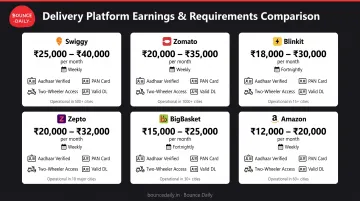
Important context: These are promotional ceilings, not verified average net incomes. Independent research found that no major platform could demonstrate paying all workers a local living wage after costs. Actual take-home still hinges on hours, city, and running costs.
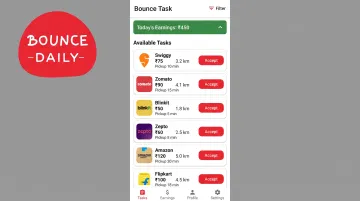
In Bengaluru, Hyderabad, and Delhi NCR, Bounce Task helps riders compare demand across food, grocery, and parcel platforms in one place before they commit a shift.
How to Maximize Your Delivery Earnings
Work Strategic Hours and Locations
Peak demand windows offer more orders per hour and often include surge bonuses. Time your shifts around these windows to lift orders per hour and catch surge pay when it hits.
High-earning time windows:
- Lunch rush: 12:00–2:30 PM weekdays
- Dinner peak: 7:00–10:00 PM daily
- Weekend surge: Friday dinner through Sunday evening
- Weather premiums: Heavy rain and extreme heat often trigger surge pricing
- Festival periods: Major holidays and regional celebrations (see festival section below)
Location strategy: Position yourself near high-order-density zones: office complexes during lunch, residential areas during dinner, and popular restaurant clusters during peak hours. Use your platform's heat maps (if available) to identify demand hotspots in real time.
Multi-Platform Strategy
Registering on multiple platforms fills gaps between orders and captures diverse demand. While one app is slow, another might be surging.
How to multi-app effectively:
- Keep 2–3 apps active simultaneously
- Accept orders from the platform offering the best pay-to-distance ratio
- Avoid double-booking deliveries that risk late penalties
- Track which platforms perform best during specific hours and adjust accordingly
Bounce Task connects riders to demand across Swiggy, Zomato, Blinkit, Zepto, BigBasket, Amazon, Flipkart, Shadowfax, Porter, and Dunzo in one place. You spend less time idle and pick up food, grocery, medicine, parcel, and hyperlocal work without separate onboarding on every app.
Reduce Operational Costs with Smart Vehicle Choices
Fuel is the single largest operational expense for delivery riders. With Delhi petrol at ₹102.12 per litre as of July 2026 and riders typically covering 50–80 km daily, monthly fuel costs reach ₹3,000–₹4,500 for petrol bikes averaging 40–45 km per litre.
The electric vehicle advantage: Switching to an electric scooter eliminates fuel costs entirely, directly improving daily take-home by ₹200–₹400 per shift. Over 51,000 active delivery partners already use EVs on platforms like Zomato and Blinkit, recognizing the net-income benefit.
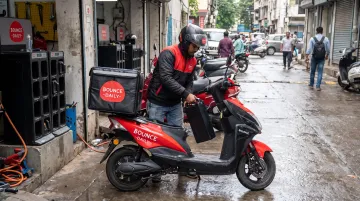
Bounce Daily offers affordable EV scooter rentals specifically designed for delivery workers in Bengaluru, Hyderabad, and Delhi NCR. With two variants, High Speed (55 km/h, 70 km range) and Low Speed (25 km/h, 85 km range), riders can choose the right scooter for their delivery radius. Both variants feature:
- Swappable batteries that exchange in minutes at Bounce hubs across the city
- Zero fuel costs (electricity and swaps included in rental)
- Maintenance, insurance, GPS tracking, and breakdown support included
- Daily, weekly, or monthly rental plans with same-day digital onboarding
Real rider experience: Karanbir Das, a Bounce Daily delivery partner for over a year, says the service is "way more cost-effective than petrol bikes" with zero battery issues. After fuel and maintenance savings (minus rental), many riders improve monthly take-home by roughly ₹1,000–₹2,500 versus running a petrol bike.
Track and Optimize Your Performance
Most platforms provide analytics on acceptance rate, average delivery time, and earnings per hour. Use these metrics to identify improvement areas.
Key performance indicators to monitor:
- Acceptance rate: Low rates may reduce order flow on some platforms
- Delivery speed: Faster completions can unlock more orders during peak hours
- Earnings per hour: Track by time of day to identify your most profitable windows
- Cancellation rate: High cancellations hurt future order allocation
Leverage Seasonal and Festival Demand
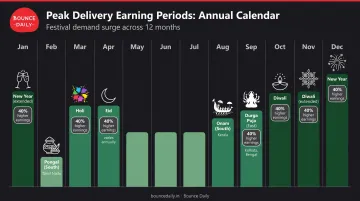
Major festivals create surge opportunities with higher order volumes and often premium pay. Prepare by ensuring your vehicle is reliable, you're registered on multiple high-demand platforms, and you're ready to work extended hours.
Top earning periods:
- Diwali week (October/November)
- New Year's Eve and New Year's Day
- Holi (March)
- Eid celebrations
- Regional festivals (Durga Puja in eastern India, Onam in Kerala, Pongal in Tamil Nadu)
- Major sporting events and concerts
During these periods, quick-commerce and food delivery volumes can double or triple, with some riders reporting daily earnings 40% above their normal average.
Common Challenges Delivery Workers Face (And Solutions)
High Fuel and Maintenance Costs
Rising petrol prices directly cut net income. A few rupees more per litre adds up fast, and many riders watch fuel alone climb by hundreds of rupees a month with no matching rise in per-order pay.
Solution: Switch to an EV and drop fuel spend to zero. Bounce Daily rents High Speed and Low Speed scooters on daily, weekly, or monthly plans—the fee is fixed and includes maintenance and insurance—so your largest variable cost becomes predictable.
Inconsistent Income During Off-Peak Hours
Gig work is variable. Only 29% of riders maintain consistent daily work hours, with most experiencing unpredictable feast-or-famine income swings.
Solution:
- Multi-app across platforms to capture more orders during slow periods
- Choose platforms offering minimum hourly guarantees (like Amazon's block system)
- Schedule your availability around documented peak windows
- Use off-peak time for vehicle maintenance, rest, or skill-building
Physical Demands and Weather Conditions
Eight- to twelve-hour delivery days take a physical toll. Monsoon rains and summer heat make the work harder and sometimes unsafe.
Solution:
- Choose a comfortable, reliable vehicle that reduces fatigue (poor suspension and frequent breakdowns compound physical strain)
- Plan breaks during natural lulls in demand
- Invest in quality rain gear and sun protection
- Pick a Low Speed electric scooter for hyperlocal radii; lighter handling cuts fatigue over long shifts
Goutam Behera, a Bounce Daily rider, puts it simply: "The build quality is top-notch, and the bikes run smoothly every day."
Frequently Asked Questions
What are the highest paying delivery jobs?
Quick-commerce platforms like Zepto and Blinkit advertise up to ₹60,000 and ₹50,000 monthly in metros; Amazon Flex and Flipkart offer around ₹140/hour or up to ₹40,000 monthly. Actual take-home depends on hours and costs, so judge jobs by net income after fuel and maintenance.
How can I find the best delivery job opportunities in my area?
Check each platform’s official rider page for your city, and ask local WhatsApp or Telegram rider groups for real net-earnings feedback. Trial a week on each app and compare take-home pay. Bounce Task also links you to demand across Swiggy, Zomato, Blinkit, Zepto, Amazon, Flipkart, and more via one onboarding flow in Bengaluru, Hyderabad, and Delhi NCR.
What factors determine how much delivery workers earn?
Earnings hinge on platform, city and zone, peak vs off-peak hours, vehicle type, acceptance rate, and speed, plus weekends and festivals. Costs matter as much as pay: EV riders usually keep more than those spending ₹3,000–₹4,500 a month on petrol.
How can delivery workers reduce their operational costs?
Service your vehicle on schedule, keep tyre pressure right, and ride smoothly to cut fuel use. Switching to an EV removes the biggest cost: Bounce Daily rentals include maintenance, insurance, and battery swaps, and can improve take-home by ₹200–₹400 per shift versus petrol bikes.
Which delivery platform pays the most in India?
Advertised ceilings are highest on quick-commerce apps in metros, while Amazon Flex’s ₹140/hour rate is easier to benchmark but blocks can be scarce. No platform guarantees strong pay after costs for every rider, so prioritise peak hours, the right zones, and lower operating costs over headline maximums.
What are the requirements to become a delivery partner?
Most platforms want you 18+, with a valid driving licence, smartphone and data, a two-wheeler, Aadhaar, a bank account, and a clean background check. Some add PAN or fees (Swiggy is about ₹1,500). Bounce Daily’s Low Speed scooter needs only Aadhaar KYC, with optional hub licence help for ₹200–₹230.
Ready to raise your delivery take-home? Bounce Task connects you to demand across major Indian delivery platforms, and Bounce Daily EV rentals cut your largest expense: fuel. Download the Bounce Daily app, finish same-day digital onboarding, and keep more of what you earn.