The FOCO model stands for Franchise Owned, Company Operated, where you provide the capital and own the outlet while the brand handles all daily operations. It's designed for investors seeking brand association and steady returns without operational involvement. However, passive doesn't mean risk-free, and the model's suitability depends on the franchisor's track record, the profit-sharing agreement, and your own investment goals.
Key Takeaways
- Own the outlet while the franchisor runs staffing, inventory, and daily operations (passive investment)
- Differs from FOFO (you operate) in control, risk split, and profit-sharing
- Common in food, retail, and mobility; lower involvement often means lower margins after fees
- Best when you trust the franchisor and prefer limited operational control
What Is the FOCO Franchise Model?
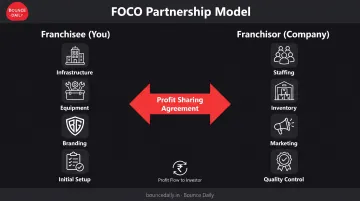
FOCO stands for Franchise Owned, Company Operated. Under this arrangement, you invest the capital to own the outlet: setup, equipment, branding, and licensing. The franchisor runs the business end to end, including staffing, inventory, marketing, and quality control.
You earn returns through profit-sharing or revenue-based royalties, without day-to-day operational burden.
FOCO differs from closely related models:
- FOFO (Franchise Owned, Franchise Operated): You own and run the outlet yourself
- FOCM (Franchise Owned, Company Managed): The company manages operations; you keep light oversight
- COCO (Company Owned, Company Operated): The parent company owns and runs outlets with no franchisee
FOCO is common in quick-service restaurants, retail chains, cloud kitchens, and EV rentals.
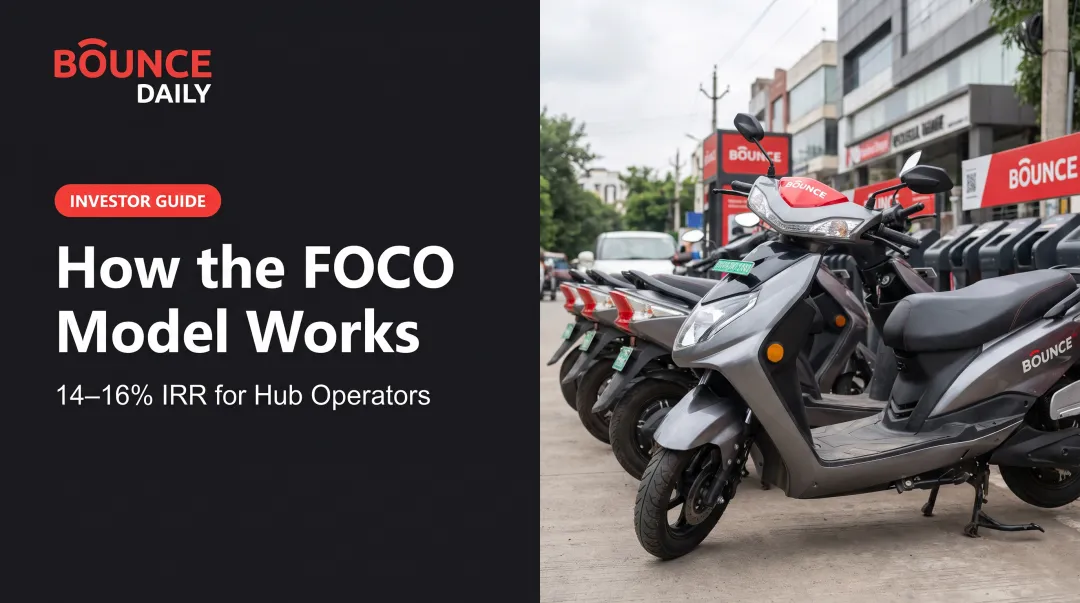
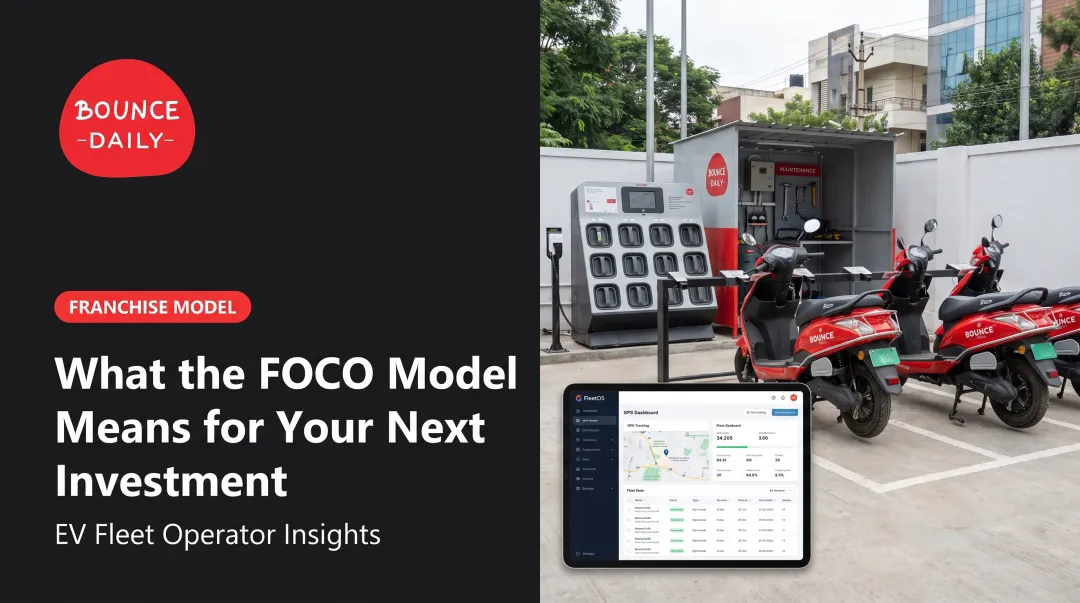
For example, Bounce Daily runs a FOCO-style hub model in electric scooter rentals. Investors fund the fleet and hub; Bounce handles daily operations, maintenance, GPS tracking, rider onboarding, and marketing for India's gig and last-mile delivery workforce.
How Does the FOCO Franchise Model Work?
FOCO splits roles cleanly. You fund the setup; the franchisor runs the business.
Your capital typically covers:
- Infrastructure, interiors, and equipment
- Branding and licensing fees
- Initial setup costs
The franchisor brings brand systems, standard operating procedures (SOPs), and hired staff it trains and manages. Day-to-day, it handles:
- Procurement and inventory
- Staffing and customer service
- Compliance and quality assurance
Those controls sit in the franchise agreement—operational guidelines, profit-sharing ratios, audit rights, and brand standards. You earn passive income; the brand grows without putting its own capital at risk; customers get a consistent experience across locations.
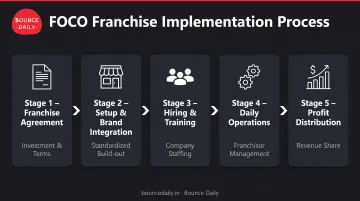
Step 1: Franchise Agreement and Investment
You sign a franchise agreement that sets the investment amount, profit-sharing terms, operational control, and brand obligations. Initial capital usually covers setup, licensing, interiors, and equipment.
Treat the agreement as your main protection. Read audit rights, termination conditions, and revenue-sharing formulas carefully before you commit.
Step 2: Setup and Brand Integration
The franchisor builds out the location with standardized designs, equipment, signage, and tech systems so it matches brand and ops standards. Your capital becomes a ready-to-run site—you don’t manage contractors or vendors.
Step 3: Hiring and Training by Franchisor
The franchisor recruits, trains, and manages all staff against brand protocols and service standards. You stay out of hiring, performance management, and payroll; that stays with the company.
Step 4: Daily Operations and Monitoring
The franchisor runs daily operations: inventory, vendors, marketing, and customer engagement. You receive regular performance reports—dashboards, monthly statements, or audit meetings—as defined in your agreement.
Step 5: Profit Distribution
Profits follow the agreement. Common structures include:
- A fixed percentage of revenue
- A profit share after operating costs
- A minimum guaranteed return
Your real returns depend on the formula. Know how costs are calculated and which expenses come out before profit is shared.
FOCO vs Other Franchise Models (Comparison for First-Time Investors)
First-time investors often confuse FOCO with FOFO, FOCM, COCO, COFO, and FICO. Use this side-by-side view of ownership, operations, risk, and hands-on demand before you commit capital:
| Model | Who Owns | Who Operates | Investor Involvement | Risk Level | Profit Potential | Ideal For |
|---|---|---|---|---|---|---|
| FOCO | Franchisee | Franchisor | Low (passive oversight) | Moderate | Moderate (after fees) | Passive investors wanting brand-run ops |
| FOFO | Franchisee | Franchisee | High (daily control) | High | High (minus royalties) | Hands-on operators with sector experience |
| FOCM | Franchisee | Franchisor-led, franchisee input | Medium (hybrid) | Moderate | Moderate to high | Owners who want oversight, not full ops |
| COCO | Company | Company | None | Company-borne | Company keeps profit | Not a franchisee path |
| COFO | Company | Franchisee | High (ops only) | Low capital, high ops risk | Lower | Operators who cannot buy assets |
| FICO | Investor funds (title varies) | Company | Low (capital only) | Moderate to high | Contract-based | Return-seekers without ownership |
FOCO (Franchise Owned, Company Operated)
You own the outlet; the franchisor runs day-to-day operations. Your role stays closer to capital and light oversight than staffing or inventory. Returns usually sit in the moderate range after management fees, which suits investors who want brand-backed income without running the floor.
FOFO (Franchise Owned, Franchise Operated)
You own and operate the outlet. Staffing, inventory, service quality, and compliance sit with you. Operational risk is higher, but so are autonomy and upside, because you keep profits after royalties instead of paying a separate management fee.
FOCM (Franchise Owned, Company Managed)
You own the outlet while the company leads management and you retain defined input rights. It sits between FOCO and FOFO: more voice than a pure passive FOCO, less daily load than FOFO. Choose it if you want visibility without full-time operations.
Other Models
- COCO (Company Owned, Company Operated): Parent company owns and runs outlets. No franchisee role—so not an investor franchise path.
- FICO (Franchise Invested, Company Operated): You fund the outlet and the company operates it, but unit title is contract-dependent. Treat it as a financial placement, not classic franchise ownership.
- COFO (Company Owned, Franchise Operated): Company keeps the assets; you run staff, sales, and local marketing. Expect heavy ops involvement without owning the outlet.
Who Should Choose the FOCO Franchise Model?
FOCO fits investors who want returns without running day-to-day operations.
Investor profiles that align with FOCO:
- Those seeking passive income without daily involvement
- Busy professionals who lack time for operations
- Investors with capital but no operational experience in the sector
- Individuals wanting diversification without managing multiple businesses hands-on
Scenarios where FOCO is ideal:
- The brand has strong, proven operational capabilities and a track record
- You trust the franchisor's expertise and execution standards
- The sector requires specialized knowledge—such as food safety compliance, technology integration, or logistics coordination—that you lack
- You want exposure to a growing sector without building internal operational infrastructure
Sectors where FOCO thrives in India:
According to Franchise India, FOCO is common across:
- Quick-service restaurants and cloud kitchens
- Retail chains, salons, and diagnostics
- Coworking spaces
- Mobility services such as EV rentals
Bounce Daily’s FOCO-style hub operator program is one example in EV mobility. Investors fund scooter fleets for delivery riders on platforms like Swiggy, Zomato, Blinkit, Zepto, and Amazon. Bounce handles maintenance, rider onboarding, GPS tracking, and daily operations.

Benefits and Challenges of the FOCO Model
FOCO trades day-to-day control for a more passive role. For first-time investors, the decision usually comes down to whether that trade-off still leaves an attractive return.
Benefits of FOCO for Investors
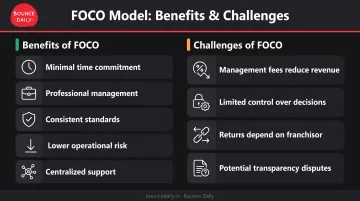
If you want brand equity without running the floor, FOCO typically offers:
- Minimal time commitment: No need to manage staff, inventory, or daily customer issues
- Professional management: Experienced teams run operations, so you carry less execution risk
- Consistent brand standards: Centralized control keeps quality and customer experience uniform
- Lower operational risk: You skip the learning curve and early mistakes common in owner-operated models
- Centralized support: Franchisor-led supply chains, marketing, and tech platforms cut your workload
Challenges and Limitations of FOCO
Those upsides come with limits that affect returns and control:
- Management fees paid to the franchisor reduce your share of revenue
- You cannot change staffing, pricing, or inventory decisions on your own
- Returns rise or fall with the franchisor’s execution, not your personal effort
- Disputes can surface over financial transparency, brand rules, or decision rights
When FOCO May Not Be Appropriate
Skip FOCO—or negotiate much harder—when:
- You want hands-on control over operations and decision-making
- Fees leave margins too thin for the return you need
- The franchisor cannot show a proven operating record or clear reporting
- You already know the sector and can run the unit more efficiently yourself
Common Misconceptions About the FOCO Model
First-time investors often hear oversimplified claims about FOCO. These three misconceptions can lead to weak due diligence if you take them at face value.
Myth: FOCO is completely hands-off
Daily operations sit with the franchisor, but you still monitor performance, review financial reports, check agreement compliance, and use audit rights when needed. Passive income still requires active oversight.
Myth: FOCO always guarantees profits
Returns depend on location, brand strength, market conditions, and franchisor efficiency. A weak site or underperforming operator can produce losses even under FOCO.
Myth: FOCO and FICO are the same
FICO (Franchise Invested, Company Operated) is largely investment-based and often lacks a clear ownership stake in the outlet. FOCO explicitly involves owning the outlet, with operations run by the franchisor. That difference affects asset ownership, exit rights, and legal protections.
Conclusion
The FOCO model lets you own a franchise outlet while the brand runs day-to-day operations. For first-time investors in India, that setup fits if you want steady returns without managing the business yourself.
Understanding FOCO helps you set realistic expectations, lower operational risk, and put capital toward passive income—on terms that match how hands-off you want to stay. Choose it based on your investor profile and the franchisor’s ability to deliver, not brand appeal or marketing promises alone.
Before you commit, check:
- The franchisor’s operating track record
- Your familiarity with the sector
- Profit-sharing formulas in the agreement
- Audit and reporting rights
- Exit terms and fee clarity
Review those points carefully so the deal matches both your risk tolerance and your involvement level.
Frequently Asked Questions
What is the FOCO franchise model?
FOCO means Franchise Owned, Company Operated: you fund and own the outlet; the franchisor runs staffing, inventory, and day-to-day service. It is a passive, brand-backed investment without hands-on management.
Is the FOCO model a good franchise model?
FOCO suits investors who want passive income without running operations, but only if the franchisor’s track record, profit-share terms, and reporting match your goals. Strong brands with transparent unit economics fit best.
What is the difference between FOCO and FOFO franchise models?
In FOCO, the franchisor operates the business while the franchisee owns it, making it a passive investment. In FOFO, the franchisee both owns and operates the outlet, requiring hands-on daily involvement and higher operational responsibility.
How much can a first-time investor earn from a FOCO franchise?
Returns vary by sector, brand, location, and profit-share terms—there is no single India-wide FOCO ROI figure. Some EV rental hub programs advertise about 14–16% IRR; always verify projections, fees, and audited unit economics before you commit.
What are the risks of investing in a FOCO franchise?
Main risks are reliance on the franchisor’s execution, limited operational control, fees that can trim margins, and disputes over reporting or brand rules. Your returns follow the company’s performance, not your day-to-day decisions.
Which sectors in India commonly use the FOCO franchise model?
FOCO is popular in quick-service restaurants, retail chains, cloud kitchens, salons, diagnostics, and emerging sectors like EV rentals and mobility services. According to industry reports, sectors requiring operational expertise and centralized quality control are particularly suited to the model.