India's franchise market is expanding rapidly, particularly in mobility and quick-commerce sectors. With gig-worker numbers projected to reach 62 million by 2047, rental-fleet businesses like Bounce Daily are leveraging the FOCO structure to scale. But what does FOCO actually mean, and how does it compare to other franchise models?
Key Takeaways
- FOCO means you own the outlet or fleet, the company operates it, giving you passive income with less day-to-day involvement
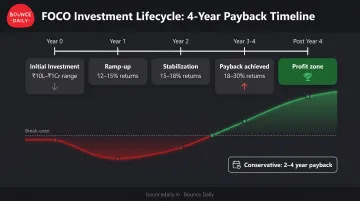
- Investment ranges from lakhs to crores depending on sector; typical payback is 18-40 months
- You trade operational control for professional management and predictable returns
- Revenue share or minimum guarantees can protect downside; contract terms still vary widely
- Vet brand track record, unit economics, and exit clauses before committing capital
What is the FOCO Model?
Definition and Core Structure
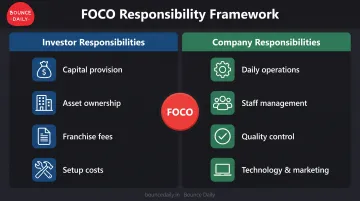
FOCO stands for Franchise Owned, Company Operated. The investor owns the physical outlet, fleet, or hub and provides the capital for setup, while the franchisor handles daily operations—staff management, inventory, customer service, maintenance, and quality control.
This structure splits responsibilities clearly:
Investor side:
- Provides capital for premises, fit-outs, equipment, inventory
- Owns the underlying asset (outlet, fleet, or hub)
- Pays franchise fees, security deposits, and setup costs
Company side:
- Manages day-to-day operations and staffing
- Handles inventory procurement and quality assurance
- Oversees customer acquisition, service delivery, and brand standards
- Provides technology platforms, training, and marketing support
Revenue-Sharing Arrangement
FOCO investors typically receive income through one of two structures:
Percentage-based revenue share: A fixed percentage of monthly revenue, regardless of profit margins. This offers predictability but doesn't scale with exceptional performance.
Minimum guarantee with profit share: The company commits to a minimum monthly payment, with additional profit-sharing if performance exceeds targets. This protects your downside while allowing upside participation.
Franchise India notes that FOCO deals use either a specified return/profit share or a set revenue share/ROI, though no standard percentage applies across all sectors.
Real-World FOCO Examples in India
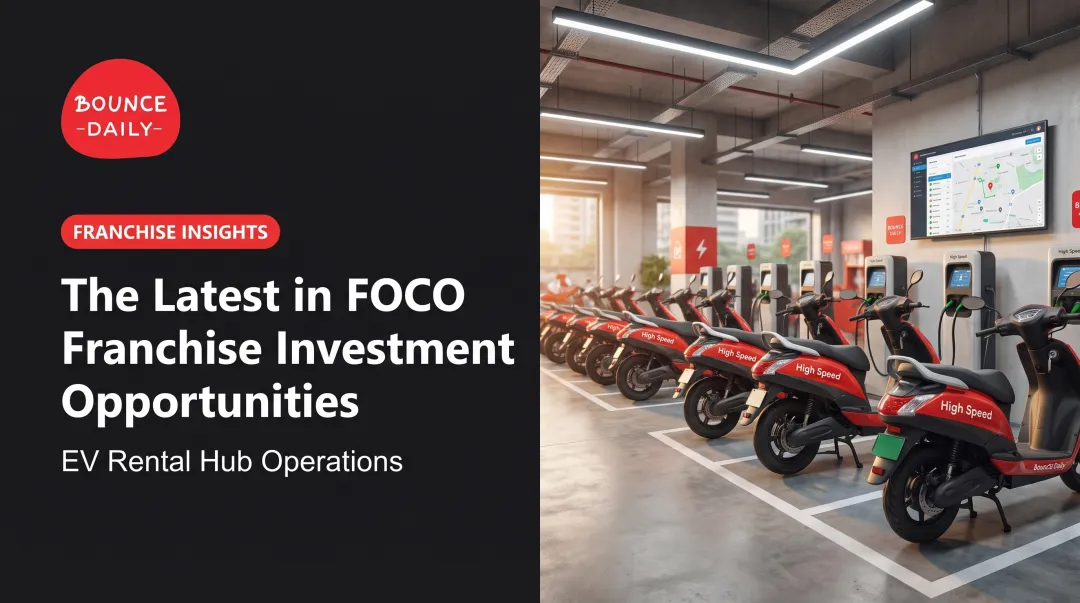
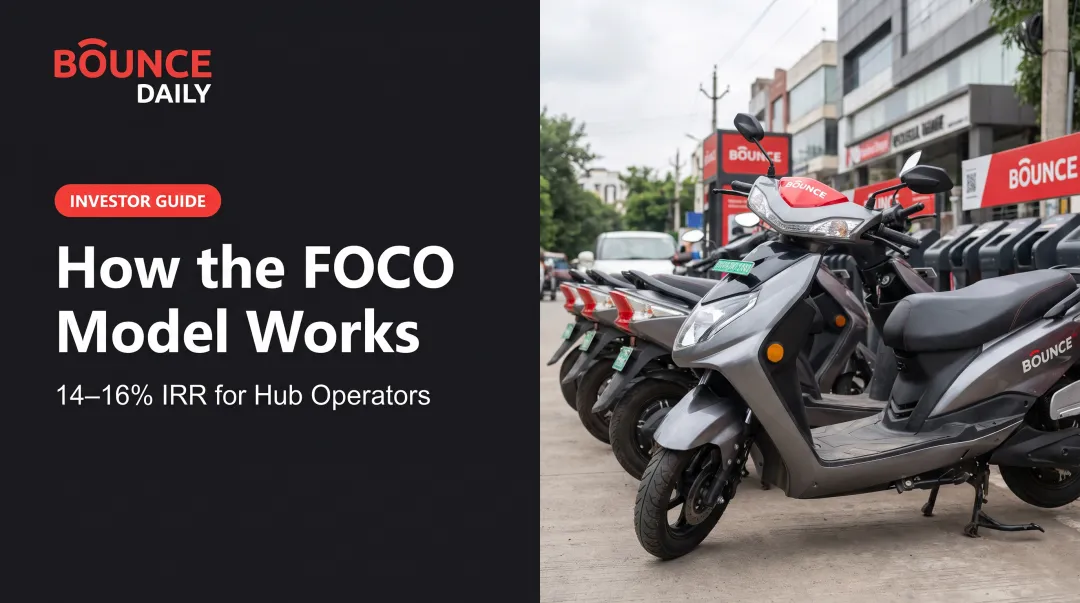
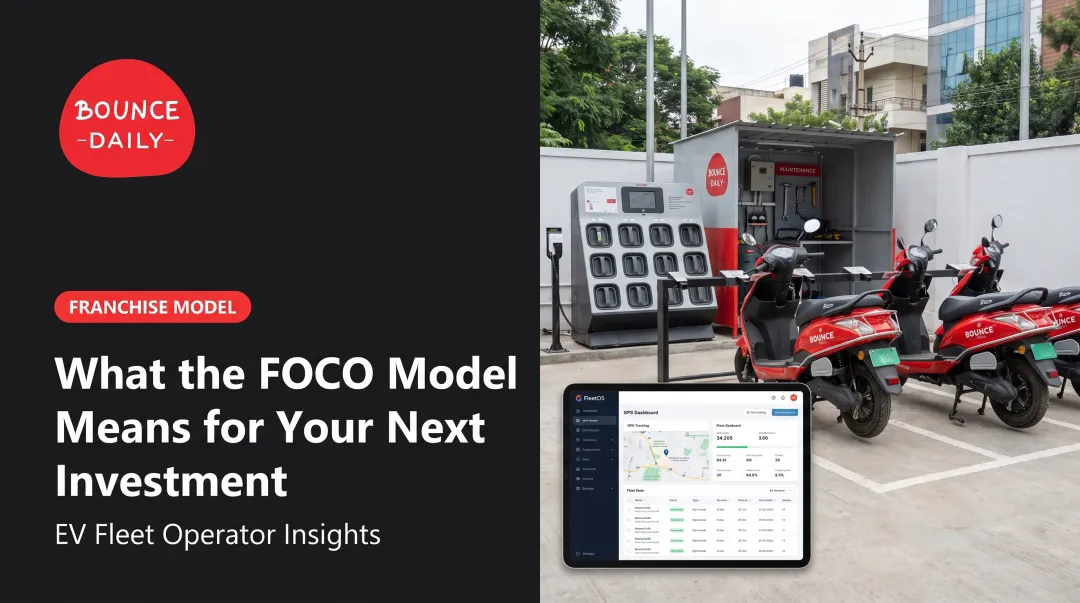
Bounce Daily (EV Mobility): Investors fund electric-scooter rental fleets and provide hub locations. Bounce runs daily operations: fleet deployment, maintenance, GPS tracking, rider onboarding, battery-swap infrastructure, and marketing. The company advertises 14-16% IRR for hub operators, along with training, verified rider leads, and technology platforms.
BLive (EV Fleet): Franchisees own the electric two-wheeler fleet (typically 30-40 vehicles at approximately ₹30 lakh investment), while BLive manages operations, drivers, maintenance, clients, and deployment. The company advertises rental income of ₹5,000-6,000 per vehicle with approximately two-year break-even.
Zypp (Last-Mile Delivery): Investors own EV fleets; Zypp operates them with real-time tracking, predictive maintenance, rider allocation, insurance, and operations management. Their calculator shows 10 scooters at ₹4.10 lakh total investment delivering ₹6.19 lakh total returns over three years (51% ROI).
FOCO vs Other Franchise Models: A Comparative Analysis
FOCO sits between full company control and a traditional franchise. The differences in ownership, operations, and risk decide whether it fits your capital and involvement goals.
Model Comparison Overview
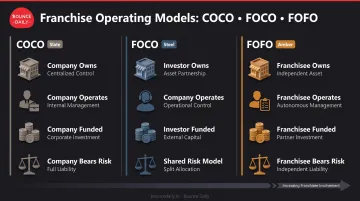
| Model | Ownership | Operator | Capital Source | Risk Allocation |
|---|---|---|---|---|
| COCO (Company Owned, Company Operated) | Company | Company | Company funds the unit and retains full control | Company bears all financial and operational risk |
| FOCO (Franchise Owned, Company Operated) | Investor/Franchisee | Company | Investor supplies capital; company controls operations | Investor takes capital risk; company takes operational execution risk |
| FOFO (Franchise Owned, Franchise Operated) | Franchisee | Franchisee | Franchisee supplies capital and manages operations | Franchisee bears both capital and operational risk |
Ownership Structure Differences
COCO: The brand owns the property, equipment, and inventory. External investors hold no stake, so this path is not an investment route for you.
FOCO: You own the outlet, hub, or fleet. Assets sit in your name, while the company runs day-to-day operations under the franchise agreement.
FOFO: Ownership and operations both sit with you. That is the classic franchisee role—full control paired with full responsibility.
Operational Control Comparison
COCO: The company keeps full control over hiring, pricing, vendors, marketing, and daily decisions.
FOCO: Company teams handle staff, inventory, and quality. Your role stays light: track performance and results, not shift-level execution.
FOFO: Every operating call is yours—hiring, training, scheduling, inventory, local marketing, and customer service.
Investment and Risk Allocation
COCO: No capital from you. The company funds the unit and keeps the profits.
FOCO: You fund setup; the company carries most operating risk. Fixed or minimum-guaranteed returns limit how much day-to-day execution misses hit your income.
FOFO: You fund setup and absorb operating risk. Returns track your execution—more upside if you run well, more downside without strong ops skill.
Which Model Fits Which Investor
- COCO: Not available to outside investors; useful only as a baseline for how brands run owned units.
- FOCO: Suited to investors who want asset ownership and passive or semi-passive income without running operations.
- FOFO: Suited to hands-on operators who want control and can manage staffing, service quality, and local demand.
Why Investors Choose the FOCO Model
Passive Income Advantage
The primary appeal is simple: you earn returns without running the business. No hiring, no inventory management, no customer complaints, no daily decision-making. The company handles operations while you monitor financial performance and collect revenue share.
This suits investors with full-time jobs, retirees seeking steady income, or entrepreneurs managing multiple businesses who can't dedicate time to hands-on operations.
Brand Strength Benefits
You tap into an established brand's reputation, systems, and customer base without needing operational expertise. The company brings:
- Proven operating procedures and quality standards
- Established supply chains and vendor relationships
- Marketing and customer acquisition systems
- Technology platforms for booking, payments, and fleet management
- Training programs and ongoing support
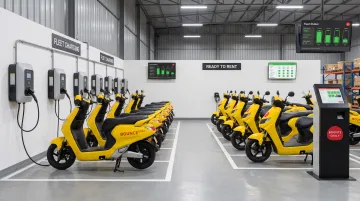
For example, Bounce Daily provides FleetOS technology, battery-swap infrastructure, GPS tracking, verified rider leads, and marketing support. Building those systems alone would take years and significant capital.
Reduced Operational Risk
Company operational expertise cuts execution risk for investors. As Franchise India notes on franchise business models, franchisors refine operations across multiple locations, learning from mistakes and tightening processes. Professional management reduces poor hiring, inventory waste, quality lapses, and customer-service failures that often hit new operators.
However, this also creates dependency: your returns rely entirely on the company's operational quality and strategic decisions. If the brand's market positioning weakens or management execution deteriorates, your investment suffers—with limited ability to intervene.
Investment Considerations and Financial Structure in FOCO
Typical FOCO Investment Components
FOCO investments generally include four categories:
- Franchise fee: Upfront, usually non-refundable payment for brand rights, training, and initial setup support
- Setup costs: Premises, interiors, equipment, fit-outs, signage, and opening inventory—varies widely by industry and location
- Working capital: Buffer for rent, utilities, insurance, and other fixed costs until revenue stabilizes
- Security deposit: Refundable sum held by the franchisor; often forfeited if you breach the contract
Investment Ranges by Sector
Franchise India reported many FOCO examples in a roughly ₹10 lakh–₹1 crore band, with payback in 18–40 months. Treat those as editorial benchmarks, not guarantees. Capital-heavy categories can sit well above that mid-market span:
- Food & QSR: ₹50 lakh–₹3.5 crore; typical payback 2–4 years, driven by kitchen equipment, licensing, and location premiums
- EV mobility / rentals: ₹4 lakh–₹30 lakh for fleet-based models; lower fixed-cost base than retail, with fleet size setting the total
- Retail: ₹15 lakh–₹80 lakh, depending on store size, location, and inventory
Revenue-Sharing Models Explained
- Percentage-based: You receive a fixed share of monthly revenue. Simple and transparent, but the rate does not reflect profitability—you earn the same cut whether the outlet is strong or struggling
- Minimum guarantee with upside: A floor monthly payment plus profit share above a threshold. Protects slow months while still letting you participate in strong ones
Caution on "guaranteed" returns: SEBI advises investors to be highly suspicious of guaranteed high-return opportunities. Check how any guarantee is secured, whether payments sit in escrow, and what happens if the company hits financial trouble.
ROI Expectations and Payback Periods
Realistic expectations:
- Conservative ROI: 12-18% annually
- Aggressive projections: 20-30% annually
- Payback period: 2-4 years in most sectors
These depend heavily on location, brand strength, market demand, and operational execution. Always request audited unit economics from existing franchisees, not just company projections.
Contractual Terms Investors Must Understand
- Duration: Most FOCO agreements run 5–10 years. Shorter terms limit commitment but may cut into payback time
- Renewal rights: Automatic, performance-based, or at the company’s discretion—and what fees apply
- Exit clauses: Resale rights, franchisor first refusal, buyback duties, and any exit payment formula
- Performance obligations: Minimum revenue, quality standards, reporting rules, and remedies if you miss them
- Post-termination obligations: Non-compete limits, branding removal, and equipment return
Indian law does not supply automatic renewal or termination compensation; everything turns on your contract.
Financial Due Diligence Guidance
Questions to ask before investing:
- What are the audited unit economics of existing franchises in similar locations?
- What percentage of franchisees achieve the projected returns?
- How many franchisees have renewed contracts versus exiting?
- What are the monthly operating costs (management fees, technology fees, marketing contributions)?
- How are disputes resolved, and what is the track record of franchisee-franchisor conflicts?
- Is there escrow or security backing minimum guarantees?
Speak with at least 3-5 current franchisees and 2-3 former franchisees. Ask about support quality, transparency, profitability, and challenges. Recurring complaints are red flags.
Risks and Challenges in FOCO Investments
Limited Operational Control
You cannot intervene if operations deteriorate. If the company hires poorly, cuts corners on maintenance, or fails to generate customer demand, your revenue suffers, but you have no authority to fix the problem.
According to Franchise India, FOCO investors have little operational control and depend on franchisor management. Fixed returns can be steadier, but you usually miss extra upside if the outlet significantly outperforms.
Revenue Variability Concerns
Even with minimum guarantees, several factors affect your income:
- Market demand: Seasonal trends, economic downturns, or shifting consumer preferences can reduce revenue
- Utilization rates: In fleet models like EV rentals, downtime, maintenance delays, or low rider demand cut earnings
- Fee pressure: Management, technology, and marketing fees reduce net profit if they rise faster than revenue
- Location performance: Weak sites may never hit projections, and relocation is rarely an option
Brand Performance Dependency
Your returns are tied to the company's market positioning and strategic decisions. If competitors gain share, the brand's reputation weakens, or the company makes poor strategic choices, your investment value declines, regardless of your own diligence.
- Company solvency: If the franchisor hits financial trouble, minimum guarantees may not be honoured—and without escrow or security, you rank as an unsecured creditor
- IP and brand ownership: Lost IP rights or a rebrand can leave your franchise agreement with little practical value
- Regulatory shifts: Rules that affect the sector (such as EV subsidy changes, battery or charging norms, or city permit requirements) can raise costs or weaken demand
How to Evaluate a FOCO Opportunity as an Investor
A FOCO pitch can look clean on a deck and still fail basic investor tests. Run the checklist, scan for red flags, then score the deal before you commit capital.
Due Diligence Checklist
Brand track record:
- How long has the company operated FOCO franchises?
- What is the brand's market reputation and customer reviews?
- Are there audited financial statements for the parent company?
- Has the brand faced legal disputes, regulatory issues, or negative press?
Existing unit performance:
- What are the average revenues, costs, and profits of existing FOCO units?
- What percentage of franchisees achieve projected returns?
- How many units have closed, and why?
- What is the renewal rate among existing franchisees?
Legal documentation:
- Is the franchise agreement clear, fair, and legally reviewed?
- Are revenue-sharing terms, fees, and obligations specified in writing?
- Are dispute-resolution mechanisms defined?
- Does the contract include exit clauses, buyback terms, or transfer rights?
Market positioning:
- Is the sector growing or mature?
- How strong is competition in your target location?
- Does the company have a differentiated value proposition?
- What are the barriers to entry for competitors?
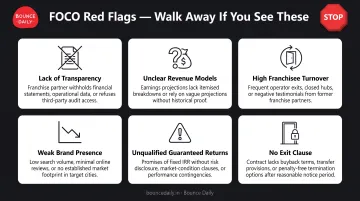
Red Flags to Watch
Slow down or walk away if you hit any of these:
- Lack of transparency: Won't share unit economics, existing franchisee contacts, or audited financials
- Unclear revenue models: Vague on how revenue share is calculated, what fees apply, or how minimum guarantees are secured
- Weak brand presence: Limited recognition, poor reviews, or no real customer base—you'd be funding brand-building, not leveraging a brand
- High franchisee turnover: Frequent exits, non-renewals, or closures; ask former franchisees for unfiltered insight
- Unqualified guaranteed returns: Claims of 25%+ annual returns with "zero risk" or "assured income" and no clear security. SEBI explicitly warns against such claims
- No workable exit clause: No transfer rights, buyback obligation, or exit payment formula if the relationship sours
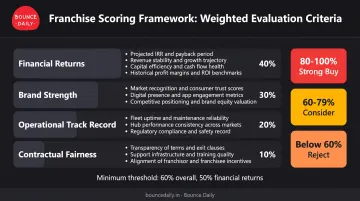
If the opportunity clears those filters, score it with a simple weighted framework.
Evaluation Framework
Financial returns (40% weight):
- Projected ROI vs. verified existing-unit performance
- Payback period and cash-flow timeline
- Sensitivity to utilization, demand, and cost assumptions
- Security backing minimum guarantees
Brand strength (30% weight):
- Market reputation and customer loyalty
- Competitive positioning and differentiation
- Operating track record and unit count
- Management team quality and experience
Operational track record (20% weight):
- Support quality reported by existing franchisees
- Technology platform maturity and reliability
- Supply chain and vendor relationships
- Quality-control systems and compliance
Contractual fairness (10% weight):
- Clarity of terms and fee structures
- Exit and transfer provisions
- Dispute-resolution mechanisms
- Renewal and performance conditions
Score each dimension, weight them, and compare across opportunities. Any opportunity scoring below 60% overall or below 50% in financial returns should be rejected.
Frequently Asked Questions
What is the FOCO franchise model?
FOCO (Franchise Owned, Company Operated) means you invest capital to own the outlet or fleet, while the company manages daily operations, staffing, and execution. You receive a share of revenue without hands-on involvement.
How much investment is typically required in FOCO?
Investment varies widely by industry and brand. Franchise India reported a range of ₹10 lakh to ₹1 crore, with QSR setups reaching ₹3.5 crore. EV fleet models like Bounce Daily or Zypp start at ₹4-30 lakh.
What are the main advantages of FOCO for investors?
You get passive income with minimal operational burden, established brand systems, and professional management. Execution risk is lower than running the business yourself, and you can monitor performance without daily involvement.
How is FOCO different from FOFO model?
In FOCO, the company runs day-to-day operations; in FOFO, you run them yourself. FOCO means more passivity and less control; FOFO means full control and full responsibility. Choose FOCO for income without a time commitment, or FOFO if you want hands-on involvement.
What are the key risks in FOCO investments?
Key risks include dependency on the company's operational quality, limited control over execution, and revenue swings from market or utilization factors. You are also exposed to brand performance and franchisor solvency, since returns rest on the company's decisions.
Is FOCO suitable for investors without business experience?
Yes. The company handles daily management, so you do not need operational expertise. You still need strong skills to assess brand quality, unit economics, and contract fairness. Financial due diligence matters regardless of your background.