Introduction
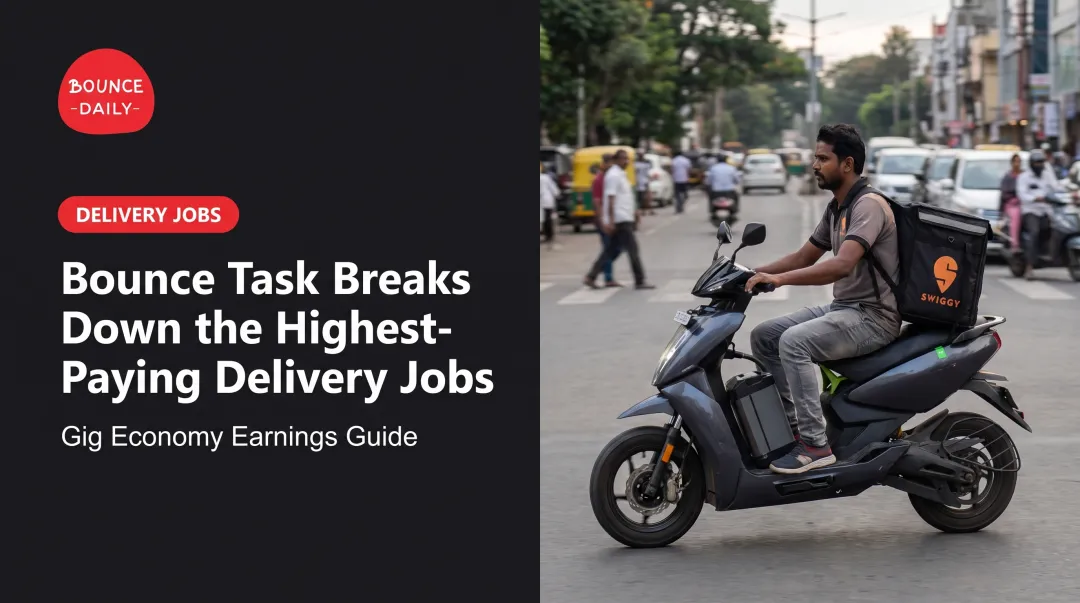
Picture this: Rajesh rides his delivery scooter for 10 hours every day across Bengaluru, yet his monthly earnings barely cover rent and fuel. He accepts every order that pops up, some paying ₹20 for a 5-km ride, others offering ₹60 during peak hours.
Without a clear strategy, he burns hours on low-paying off-peak tasks while riders who pick jobs more carefully take home more each month.
Not all delivery jobs pay the same. A lunch-hour order in a commercial tech park can pay 30% more than a mid-afternoon run to a quiet residential area. Peak dinner slots often command premium rates, while early-morning tasks barely move the needle.
The problem? Most delivery workers have no simple way to spot which zones, times, and platforms pay best right now.
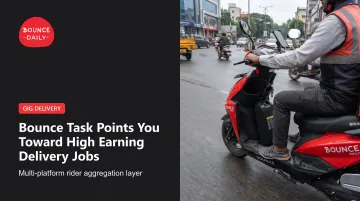
Bounce Task helps close that gap. It connects delivery partners to high-demand opportunities across Swiggy, Zomato, Blinkit, Zepto, BigBasket, Amazon, and more, so you can show up in the right place at the right time.
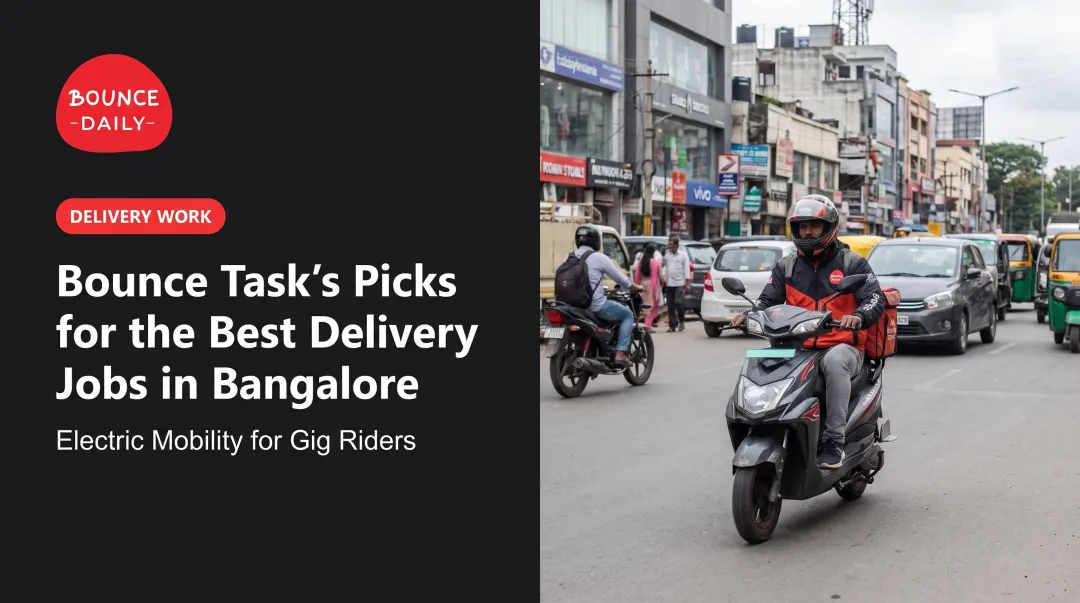
Pair that with Bounce Daily’s affordable electric scooter rentals, which can cut daily fuel costs by ₹150–₹250, and you keep more of what you earn. Below, you’ll see how to target higher-paying slots, zones, and platforms without stretching your shift.
Key Takeaways
- Bounce Task links you to high-earning gigs on Swiggy, Zomato, Blinkit, Zepto, BigBasket, Amazon, and more—in one place
- Top Bengaluru partners earn ₹1,200–₹1,800/day by working peak hours and picking platforms strategically
- Switch to EVs to save ₹150–₹250 daily on fuel—₹4,500–₹7,500 more take-home each month
- Multi-platform access plus lunch and dinner peaks can lift monthly earnings 30–40%
Why Delivery Jobs Are Booming in India's Gig Economy
India's delivery workforce has grown fast in recent years. According to an NCAER study released in December 2025, direct food-delivery platform jobs grew from 1.08 million in 2021–22 to 1.37 million in 2023–24, a 27% increase in just two years. The sector's gross output reached ₹1.2 lakh crore in 2023–24.
Quick-commerce has been the real accelerator. Bain & Company's 2026 report found that e-grocery penetration increased fivefold after quick-commerce launched in 2020. By 2025, quick-commerce gross merchandise value (GMV) hit USD 10–11 billion, doubling annually since 2023. Bain projects the market will reach USD 65–70 billion by 2030, creating hundreds of thousands of additional delivery jobs across Indian cities.
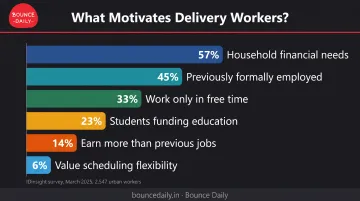
Why are so many people choosing gig delivery work? A March 2025 survey of 2,547 urban two-wheeler delivery workers by IDinsight revealed diverse motivations:
- 57% cited household financial needs as their primary driver
- 23% were students using delivery work to fund education or personal expenses
- 14% earned more than in their previous jobs
- 6% valued scheduling flexibility as their main reason for staying
- 33% worked only in free time, treating delivery as supplemental rather than full-time income
- 45% had previously held formal full-time employment, showing that gig work attracts experienced workers seeking autonomy
Post-COVID consumer habits keep that demand high. Swiggy reported 20.2% year-on-year growth in gross order value (GOV) for FY2025–26, reaching ₹34,593 crore across 714 million orders.
Quick-commerce platforms now compete directly with traditional grocery stores, with Zepto and Blinkit fulfilling millions of orders each month. For workers, that means steady order flow—above all in metros like Bengaluru, Hyderabad, and Delhi NCR, where delivery density is highest.
Understanding High-Earning Delivery Opportunities in Bengaluru
What Defines a "High-Earning" Delivery Job
Earnings vary dramatically. A ₹800 daily gross can become ₹1,200 with the right strategy, or drop to ₹600 when overhead is ignored. True earning potential depends on:
- Base pay per order: Platforms typically pay ₹15–₹40 per delivery depending on distance
- Distance-based pay: Longer trips add ₹5–₹15 per additional kilometre
- Peak hour bonuses: Lunch and dinner slots often trigger surge multipliers
- Incentive targets: Completing 10, 15, or 20 deliveries in a day unlocks bonus payouts
- Customer tips: Can add ₹500–₹1,500 monthly, especially for polite, fast service
- Platform-specific promotions: Weekend campaigns or festival bonuses stack on top of base rates
Key insight: A rider earning ₹50 per delivery during peak hours can complete 4–5 orders in two hours (₹200–₹250), while off-peak orders paying ₹25 each might yield only ₹100 in the same time. Strategic timing matters more than total hours worked.
Peak Hours and High-Demand Zones
Real-world data shows clear demand patterns. Swiggy's 2025 platform data found that dinner orders were nearly 32% higher than lunch orders. While exact hourly windows vary by neighbourhood, most delivery partners see:
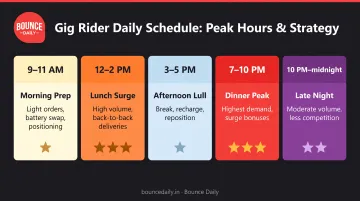
- Morning prep (9–11 AM): Light order flow, good for battery swaps and positioning
- Lunch surge (12–2 PM): High volume from office clusters and residential areas
- Mid-afternoon lull (3–5 PM): Sparse orders, ideal for breaks or repositioning
- Dinner peak (7–10 PM): Highest demand, premium rates, back-to-back deliveries
- Late night (10 PM–midnight): Moderate volume in urban zones, fewer riders competing
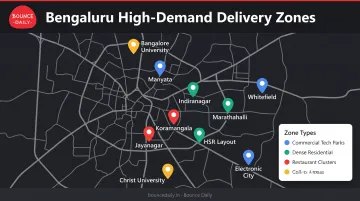
High-demand zones share common traits:
- Commercial tech parks: Whitefield, Electronic City, Manyata Tech Park, home to thousands of office workers ordering lunch
- Dense residential complexes: Marathahalli, HSR Layout, Indiranagar, where families order dinner
- Restaurant clusters: Koramangala, Jayanagar, where proximity to multiple kitchens means faster order flow
- College neighbourhoods: Near Bangalore University and Christ University, with strong student demand for budget meals and snacks
Zepto's official partner page explicitly lists "surge bonuses during peak hours," while Zomato's app highlights "high-demand peak payouts." Positioning yourself in the right zone at the right time directly impacts how many high-paying orders you receive.
Salary Ranges Across Major Platforms
Official platforms advertise monthly ceilings, but actual earnings depend on hours worked, efficiency, and strategic choices:
| Platform | Advertised Monthly Ceiling | Daily Estimate (8–10 hrs) | Notes |
|---|---|---|---|
| Swiggy | Up to ₹30,000/month | ₹800–₹1,200 | Weekly payout, no fixed hours |
| Zomato | Up to ₹30,000/month | ₹800–₹1,200 | Per-delivery pay plus peak bonuses |
| Zepto | Up to ₹60,000/month | ₹1,000–₹1,500 | Quick-commerce surge incentives |
| Blinkit | Up to ₹50,000/month | ₹1,000–₹1,400 | Per-packet plus weight/distance pay |
| Amazon Flex | No published amount | Variable by block | Block-based scheduling |
Reality check: IDinsight's survey found that full-time delivery workers averaged ₹27,814 gross monthly, or about ₹75 per hour after expenses. Top performers who strategically chase peak hours, multi-app, and minimize downtime can exceed ₹40,000 monthly. Part-timers working 4–5 focused hours during peaks often earn ₹500–₹800 daily.
Factors that push you higher in the range:
- Working 25+ days per month consistently
- Maintaining ratings above 4.5 stars
- Accepting 80%+ of offered orders (platform algorithms reward availability)
- Choosing quick-commerce (Zepto, Blinkit) over food delivery during peak periods
- Using multi-platform access to avoid idle time between orders
Understanding Gross vs Net Earnings
What delivery apps display as "earnings" is gross income, before you subtract the real costs of doing the work. Many riders are surprised when they calculate what they actually take home.
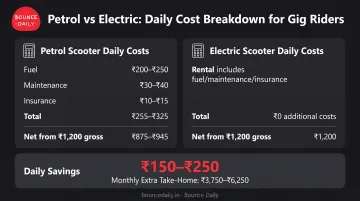
Sample calculation for a petrol scooter rider earning ₹1,200 gross daily:
- Fuel (80–100 km at 40 km/l, petrol at ₹100/l): ₹200–₹250
- Phone data (unlimited 4G plan): ₹15–₹20
- Maintenance reserve (tyres, brake pads, oil): ₹30–₹40
- Insurance & registration (annualized daily): ₹10–₹15
- Total daily deductions: ₹255–₹325
Net daily take-home: ₹875–₹945 (a 21–27% reduction from gross)
Over a month (25 working days), that's ₹6,375–₹8,125 lost to operating costs—money that never reaches your pocket. For riders who purchased their scooter on EMI, add another ₹3,000–₹5,000 monthly, further squeezing take-home.
Electric scooters cut these costs sharply. Bounce Daily's battery-swap system eliminates daily fuel spend. Hub-based swaps are included in the rental, maintenance is managed centrally, and insurance is bundled.
Riders using Bounce EVs report saving ₹150–₹250 daily compared to petrol, or ₹3,750–₹6,250 extra take-home monthly. When delivery margins are tight, controlling operating costs is the fastest way to raise net earnings.
What Bounce Task Is and How It Helps You Earn More
Connecting You to Multiple Platforms Through One Ecosystem
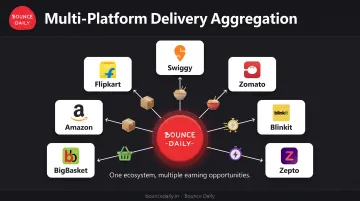
Bounce Task is a multi-platform layer that connects delivery partners to earning opportunities across food, grocery, quick-commerce, e-commerce, and logistics, all in one place. Instead of relying on a single app's order flow, Bounce Task gives you access to demand from:
- Food delivery: Swiggy, Zomato, Dunzo
- Quick-commerce: Blinkit, Zepto, BigBasket
- E-commerce last-mile: Amazon, Flipkart
- Logistics & courier: Porter, Rapido, Shadowfax, Delhivery, Ecom Express
Why this matters: when Swiggy's lunch orders dry up at 2:30 PM, Zepto may be surging with grocery demand. When Zomato's dinner peak ends at 10 PM, Amazon Flex night blocks may just be starting. You can switch platforms on purpose and cut the idle time that drains daily earnings.
Behind the scenes, Bounce Task tracks live order flow and demand across partner platforms so work is easier to find when one app goes quiet.
For you, that means steadier earning windows across the day instead of long gaps between orders on a single app.
Strategic Positioning and Demand Visibility
Traditional delivery apps simply push the next available order to you, often with little clarity on whether it is a high-value task or a low-paying filler. You accept blindly, complete the delivery, and hope the next one is better.
Bounce Task takes a different approach by helping you understand where demand is concentrated and which opportunities offer better returns. It does not add a separate scoring dashboard. Multi-platform access is the visibility: when one app is slow, you pivot to one that is busy, which cuts dead zones and idle stretches.
Practical example: You're near Marathahalli at 1 PM. Swiggy has steady lunch orders, but Zepto is offering surge incentives for grocery deliveries in the same area. With both available through Bounce Task, you can pick the higher immediate payout. Single-app riders cannot make that call.
Bounce Task also supports faster onboarding, dedicated support teams, and rider incentives designed to keep you active and earning. The aim is simple: less time waiting, more time delivering.
How Bounce Task Differs from Standard Delivery Apps
Most delivery apps operate in isolation. You log in to Swiggy, accept orders from Swiggy's demand pool, and earn what Swiggy's algorithm decides to offer. If demand drops, you wait. If another platform is surging, you don't know. Even if you did, switching means juggling multiple apps yourself.
Bounce Task aggregates demand across platforms, so you tap a wider order pool with dedicated onboarding and support instead of watching five apps at once.
- Multiple demand sources in one workflow
- Live ops signals that help cut cancellations and empty stretches
- Productivity patterns that show which platforms and hours pay you better
- Rider incentives and assistance built for delivery partners
Standard apps pay you to stay loyal to one brand. Bounce Task pays you for strategic flexibility: take the best-paying work available in the moment, whichever partner offers it.
That flexibility pairs with Bounce Daily's EV rental. You get an affordable electric scooter with unlimited battery swaps, GPS tracking, insurance, and maintenance included, so fuel and breakdown costs stop eating your net pay.
Real-World Impact: How Delivery Partners Benefit
Multi-platform access helps raise what you can earn per hour. Pairing it with a Bounce Daily EV protects what you keep after costs. Riders using Bounce Daily often call out cost and reliability first:
- Karanbir Das (1+ year): "way more cost-effective than petrol bikes," with solid battery performance
- Goutam Behera: "top-notch build quality" and smooth day-to-day running
- Champalal: rental was "quick and simple"; the scooter "saved battery and ran efficiently throughout the day"
The fleet has covered 30 million+ kilometres and avoided 10,000+ tonnes of CO₂, with strong uptake among gig workers in Bengaluru, Hyderabad, and Delhi NCR.
Cost models show petrol-to-EV shifts can lift daily take-home by ₹200–₹400 per shift, or about ₹1,000–₹2,500 monthly after rental versus petrol running costs. With Bounce Task choosing stronger orders and Bounce Daily cutting fuel spend, you improve both what you earn and what you keep.
Maximizing Your Delivery Earnings: Practical Strategies
Plan Your Day Around Peak Demand Windows
Start your work day with a clear strategy, not random orders. Check which platforms are active and where demand is concentrated.
Position yourself in high-demand zones before peak hours hit. Arriving at Electronic City at 11:45 AM means you're ready when the lunch surge starts at noon, not scrambling after orders are already flowing to other riders.
Recommended daily structure:
- 9–11 AM: Light morning orders, use this time to swap batteries, grab breakfast, and position near your first target zone
- 12–2 PM: Full focus on lunch orders—stay in commercial or dense residential areas, accept back-to-back deliveries
- 3–5 PM: Mid-afternoon lull—take a break, recharge (yourself and your scooter), or reposition for dinner zones
- 7–10 PM: Peak dinner window—maximize availability, prioritize platforms offering surge bonuses
- 10 PM–midnight (optional): Late-night orders in urban areas with fewer competing riders
Key principle: Working 6–7 strategically timed hours during peaks can often match or exceed the earnings of 10 unfocused hours spread across low-demand periods.
Use Multi-Platform Access to Avoid Idle Time
Experienced delivery partners rarely rely on one app. By registering with 2–3 platforms and using Bounce Task's aggregation, you can:
- Switch platforms mid-day when one slows down
- Compare real-time incentives (such as Zomato offering ₹100 bonus for 5 deliveries vs. Zepto's ₹150 for 8)
- Avoid penalties for low acceptance rates by spreading activity across apps
Example strategy: Log in to Swiggy and Zepto simultaneously in the morning. Accept Swiggy's steady lunch orders until 2 PM, then pivot to Zepto's grocery surge from 3–6 PM. Return to food delivery (Zomato or Swiggy) for the 7–10 PM dinner peak.
Caution: Some platforms penalize riders who frequently toggle between apps mid-order or have very low acceptance rates. The key is to commit to one platform during active periods and switch during natural lulls or after completing incentive targets.
Leverage Weekend and Festival Surge Opportunities
Demand spikes predictably during weekends, public holidays, festivals, and bad weather. Platforms respond with enhanced incentives to keep riders active during these high-volume periods.
High-earning windows include:
- Weekends: Family orders increase, restaurants get busier, and fewer riders work Sundays
- Festivals: Diwali, Holi, Raksha Bandhan, and Eid see order surges with special platform bonuses
- Monsoon days: Rain reduces rider availability while increasing customer orders (but factor in safety and longer delivery times)
- Special events: IPL match days, New Year's Eve, Valentine's Day—predictable demand spikes
Pro tip: Plan your monthly calendar around these high-earning days. Working 12–15 festival and weekend days strategically can contribute 40–50% of your monthly income, even if you work fewer total days than usual.
Track Performance and Refine Your Strategy
Successful delivery partners track a few numbers every week so weak shifts show up fast:
- Earnings per hour: Total daily earnings ÷ hours worked (target ₹120–₹150/hour)
- Earnings per kilometre: How much you make per km traveled (target ₹8–₹12/km)
- Fuel or rental cost percentage: Operating costs ÷ gross earnings (aim to keep below 20%)
- Best-performing zones: Which neighbourhoods consistently deliver high-value orders
- Best-performing times: When your hourly earnings peak
Use your phone's notes app or a simple spreadsheet to log daily earnings, hours, kilometres, and operating costs. After two weeks, patterns will emerge: maybe Whitefield lunch orders pay better than Koramangala, or Zepto's evening surge beats Swiggy's dinner rates.
Adjust your positioning, timing, and platform mix based on what the data shows. Riders who clear ₹1,500+ daily keep refining routes, peak windows, and platform mix until the numbers hold.
The Hidden Cost Factor: Why Your Vehicle Choice Matters
Petrol Costs Are Eating Your Earnings
Fuel is the single largest operational expense for delivery riders, yet many don't track it carefully. Let's break down the real numbers.
Assumptions for a typical delivery scooter:
- Daily distance: 80–100 km
- Fuel efficiency: 40 km per litre (realistic for city stop-and-go riding)
- Daily fuel consumption: 2–2.5 litres
- Petrol price: ₹100 per litre (approximate Bengaluru average)
Daily fuel cost: ₹200–₹250
Monthly fuel cost (25 working days): ₹5,000–₹6,250
That's just fuel. Add:
- Maintenance (oil, brake pads, tyres, chain, periodic servicing): ₹500–₹800/month
- Insurance: ₹150–₹300/month (annualized third-party or comprehensive)
- Repairs (punctures, electrical issues, clutch, engine trouble): ₹500–₹1,000/month average
Total monthly operating cost for a petrol scooter: ₹6,150–₹8,350
Plus EMI (if purchased on loan): ₹3,000–₹5,000/month
If you're earning ₹30,000 gross monthly and spending ₹8,000 on vehicle costs plus ₹4,000 on EMI, your net take-home drops to ₹18,000, a 40% reduction. This is why many delivery partners feel like they're working hard but barely getting ahead.
The Electric Vehicle Advantage
Electric scooters eliminate most of these costs. Instead of filling up at petrol pumps daily, you swap depleted batteries for charged ones at Bounce hubs, included in your rental with unlimited swaps.
Cost comparison per day (80–100 km):
- Petrol scooter: ₹200–₹250 in fuel + ₹30–₹40 maintenance reserve = ₹230–₹290
- Bounce Daily EV rental: Battery swaps included, maintenance managed centrally, insurance bundled = ₹0 additional daily fuel cost
Monthly operating cost difference:
- Petrol: ₹6,000–₹7,500 in fuel and maintenance
- EV rental: Predictable rental fee (view plans in the Bounce Daily app), with no separate fuel, maintenance, or insurance bills
Delivery partner Karanbir Das confirmed this advantage, calling Bounce "way more cost-effective than petrol bikes" after using it for over a year. Those savings show up on every shift.
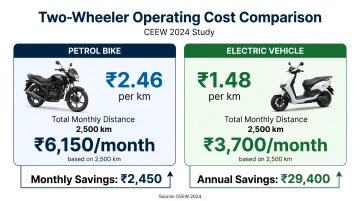
According to the CEEW's 2024 two-wheeler total cost of ownership study, electric two-wheelers cost ₹1.48 per km to operate versus ₹2.46 per km for petrol. Over 2,500 km per month, that's a difference of ₹2,450 that stays in your pocket.
Why Bounce Daily Makes Sense for Delivery Work
Buying an electric scooter outright still requires ₹80,000–₹1,20,000 upfront, plus the hassle of arranging charging at home. Bounce Daily eliminates both barriers:
Key benefits:
- Start earning with no upfront purchase cost
- Swap batteries unlimited times at Bengaluru hubs in minutes
- Pay no separate fuel bill (electricity is in the rental)
- Leave servicing, repairs, and breakdowns to Bounce
- Ride with third-party and own-damage insurance bundled in
- Choose daily, weekly, or monthly plans around your shifts
Two variants to choose from:
- High Speed (55 km/h, 70 km range): Requires a valid two-wheeler driving licence, ideal for experienced riders covering long distances
- Low Speed (25 km/h, 85 km range): No licence required initially; driving licence assistance available at hubs for ₹200–₹230
For delivery riders working 8–12-hour shifts, battery swapping ensures you're never stuck waiting hours for a recharge. Swap a depleted battery in under five minutes, grab a chai, and you're back on the road earning.
For gig and delivery work, that mix of lower running cost and swap-based uptime is what keeps more of each payout in hand.
How to Get Started with High-Earning Delivery Work in Bengaluru
Basic Requirements for Delivery Partnerships
Most platforms share similar baseline requirements:
- Age: 18 years or older
- Driving licence: Valid two-wheeler DL (or access to Bounce's low-speed variant and licence assistance program)
- Smartphone: Android phone with stable internet connection
- Vehicle: Owned or rented scooter (Bounce Daily provides rental EVs)
- Documents: Aadhaar card, PAN card, bank account details, vehicle RC (if using your own)
- Background verification: Platforms conduct basic checks on identity and criminal records
Typical onboarding timeline: Most platforms can activate your account within 3–7 days after document submission, though some advertise faster digital onboarding. For example, Swiggy claims onboarding "within 24 hours", while Zepto's site states "10 minutes". Amazon Flex's background check typically takes 2–5 business days.
Registration Process for Major Platforms
While each platform has its own app and process, the steps are generally similar:
- Download the delivery partner app (Swiggy Rider, Zomato Delivery Partner, Zepto Delivery Partner, Blinkit Delivery Partner, Amazon Flex)
- Submit required documents: Aadhaar, PAN, driving licence, bank details, vehicle RC (if applicable)
- Complete background verification: Platforms verify identity, address, and conduct criminal record checks
- Attend orientation or training: Some platforms require a short training session (online or at a hub)
- Activate account: Once approved, log in and start accepting orders
Platform hubs in Bengaluru: Swiggy, Zomato, Zepto, and Blinkit all operate onboarding and support hubs across the city, though specific addresses aren't publicly listed. Check each platform's app or website for the nearest location.
Getting Started with Bounce Daily and Bounce Task
Bounce Daily onboarding steps:
- Download the Bounce Daily Android app from the Google Play Store
- Upload your Aadhaar card for instant digital KYC verification (completed within minutes)
- Add driving licence (required for High Speed variant; Low Speed riders can access licence assistance at hubs for ₹200–₹230)
- Locate the nearest Bounce hub using the in-app map or Find Stations view
- Choose your scooter variant:
- High Speed: 55 km/h top speed, 70 km range, chargeable and swappable battery
- Low Speed: 25 km/h top speed, 85 km range, swappable battery, no licence initially required
- Select a rental plan (daily, weekly, or monthly) and complete payment via UPI, cards, or wallets
- Pick up your scooter and start riding the same day
Bounce Task access: After Bounce Daily onboarding, you can use Bounce Task to find delivery work across Swiggy, Zomato, Blinkit, Zepto, BigBasket, Amazon, Flipkart, Porter, Rapido, and other apps from one place. Support teams help with platform onboarding, incentives, and day-to-day riding issues.
Advantages of Bounce's approach:
- Aadhaar-based KYC with minimal paperwork and same-day rental
- Support covering training, battery swaps, and breakdown help
- EV rentals that cut roughly ₹200–₹250 in daily fuel costs
- Work demand from multiple delivery apps instead of a single platform
- GPS tracking, anti-theft alerts, and Bounce-managed maintenance so the scooter stays on the road
For questions or assistance, contact Bounce Daily customer support at 08069760700.
Frequently Asked Questions
What is Bounce Task and how does it help delivery partners earn more?
Bounce Task is a multi-platform rider-aggregation ecosystem that connects you with work across Swiggy, Zomato, Blinkit, Zepto, BigBasket, Amazon, Flipkart, Porter, and more. You tap multiple demand sources instead of one app’s order flow, so you can cut idle time and switch to the best opportunity in real time.
Which delivery platforms pay the most in Bengaluru currently?
Quick-commerce platforms typically advertise higher ceilings: Zepto offers up to ₹60,000/month and Blinkit up to ₹50,000/month, while Swiggy and Zomato advertise up to ₹30,000/month. Actual pay depends on hours worked, platform mix, peak availability, and efficiency, not just base rates.
How much can I realistically earn per day as a delivery partner?
Full-time partners working 8–10 hours typically earn ₹1,000–₹1,500 daily; top performers in peak windows hit ₹1,800+. Part-time riders on 4–5 lunch and dinner hours often make ₹500–₹800. Multi-platform access and surge-focused scheduling raise take-home further.
Does using an electric scooter really increase my net earnings?
Yes. Gross pay is similar, but EV riders save ₹150–₹250 daily on fuel versus petrol bikes—about ₹4,500–₹7,500 more per month. Bounce Daily rentals also fold in maintenance, insurance, and breakdown cover, so those costs don’t hit your pocket separately.
What's the difference between gross and net earnings for delivery work?
Gross earnings are what the app shows before expenses. Net is what you keep after fuel (₹200–₹250/day on petrol), maintenance, phone, insurance, and similar costs. Petrol riders often net 20–30% less than gross; EV rental riders keep more because operating costs sit in one rental fee.
Can I work for multiple delivery platforms simultaneously?
Yes. Many partners run 2–3 apps and switch based on demand and incentives. Bounce Task aggregates opportunities across Swiggy, Zomato, Blinkit, Zepto, and others in one ecosystem so you can pick the best-paying work and spend less time idle.