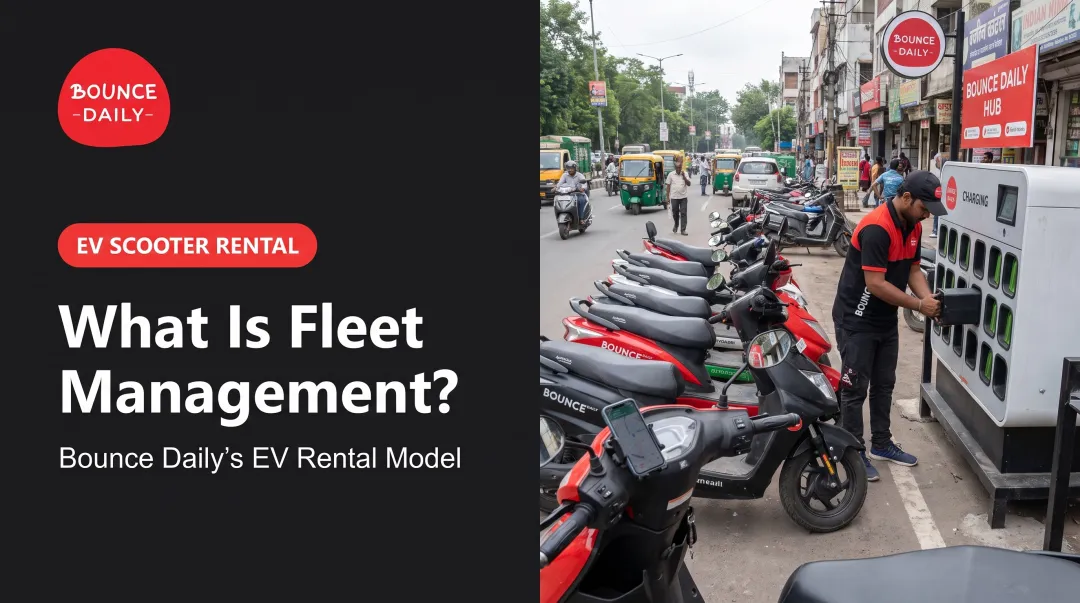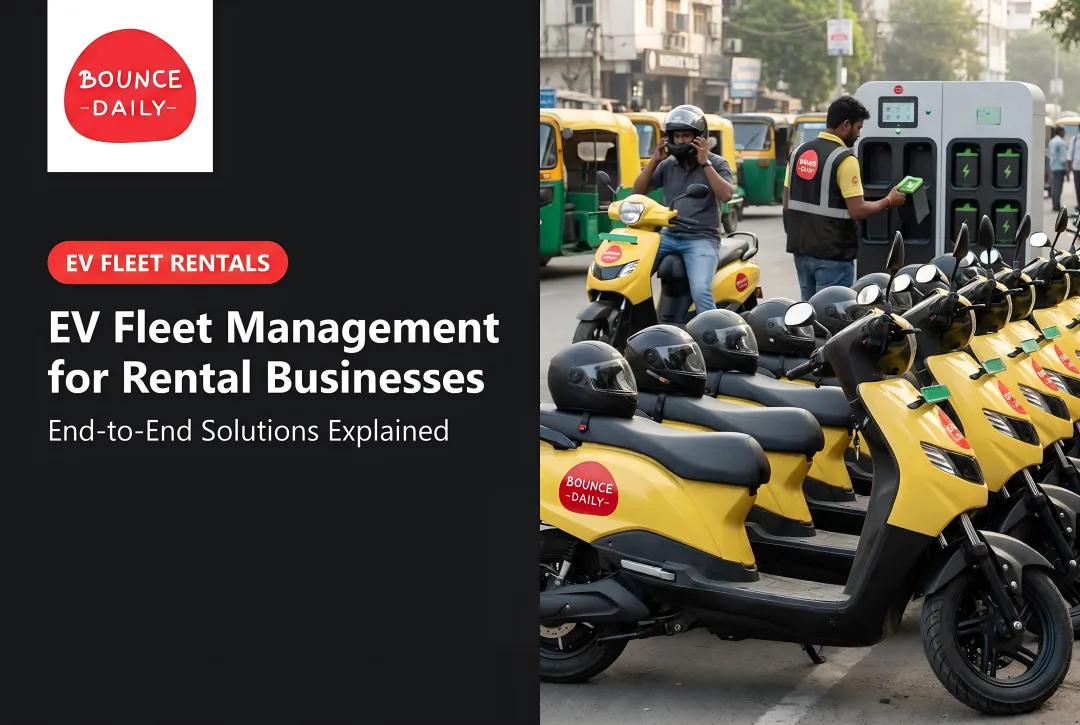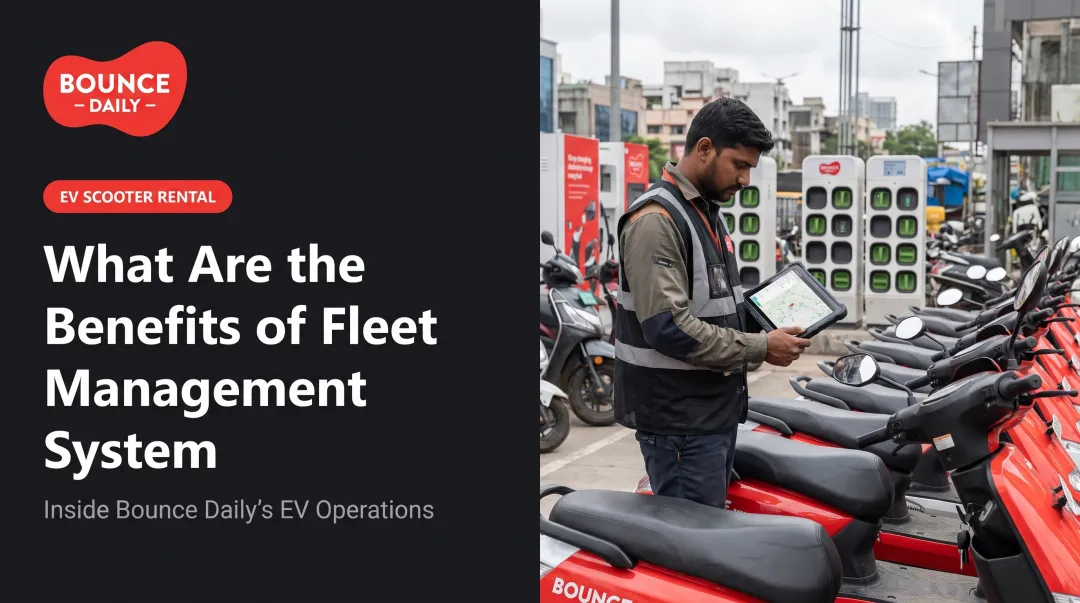
This is daily life for fleet operators relying on manual tracking. Paper logs and spreadsheets can't flag a missed service date or an expired permit before it becomes a problem.
Many gig-economy rental businesses and delivery fleets struggle with exactly this: no real-time view of where vehicles are, whether they're roadworthy, or what they're costing.
A vehicle management system (VMS) solves this by pulling location, maintenance, fuel or battery data, and compliance records into a single platform. This guide covers what a VMS actually does, how it differs from GPS and telematics, and what to look for when choosing one.
Key Takeaways
- A VMS centralises vehicle tracking, maintenance, fuel/battery, and compliance data into one platform
- GPS gives you location; telematics combines that with diagnostics and driver behaviour for deeper insight
- Fleets of every size, including EV rental operations and gig-worker vehicle programs, use VMS to cut costs and downtime
- The right VMS depends on fleet size, vehicle type, and the integrations your business actually needs
What Is a Vehicle Management System?
A vehicle management system is software that organises, tracks, and optimises every vehicle-related task, from location and maintenance to documentation and driver assignment. It replaces the scattered spreadsheets and paper logs that most small fleets still rely on.
Think of it as a digital command centre. Fleet managers access it through a desktop dashboard, tablet, or mobile app, and it updates in real time as vehicles move, refuel, or need servicing.
VMS and fleet management system are often used interchangeably, but the term applies just as well to a single-vehicle rental operator as it does to a 500-truck logistics company. Scale changes; the core function doesn't.
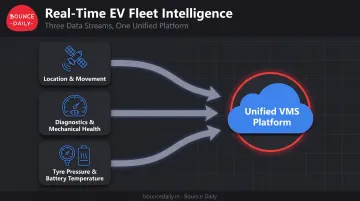
Modern platforms pull data from three main sources:
- GPS for location and movement
- Onboard diagnostics (OBD) for engine and mechanical health
- IoT sensors for everything from tyre pressure to battery temperature
Where EV Fleets Differ
Electric vehicle fleets need something extra: battery health, charging cycles, and swap-station usage tracking. A petrol scooter's "fuel gauge" problem becomes a battery-state-of-charge problem, and that requires different sensors and different alert logic entirely.
That EV layer is one reason demand for these platforms keeps rising. Fleet-management-software revenue was reported at $24.04 billion in 2024, with projections putting it at $28.24 billion in 2025, a 17.5% compound annual growth rate. That growth reflects businesses of every size moving away from manual tracking toward centralised software.
Core Functions & Features of a Vehicle Management System
A VMS delivers value when several interconnected functions work together as one system.
Real-Time Vehicle Tracking & Geofencing
GPS-based tracking shows exactly where every vehicle is at any moment. Geofencing takes this further by alerting managers when a vehicle enters or exits a defined zone, useful for spotting unauthorised trips or confirming a vehicle has returned to its hub.
Bounce Daily's scooters, for example, include GPS tracking and anti-theft alerts as standard. The system can automatically immobilise a scooter once a rental plan expires and unlock it the moment the plan renews, keeping fleet security tied directly to location and status data.
Maintenance Scheduling & Alerts
Instead of relying on someone remembering when a vehicle last saw a mechanic, a VMS automates service reminders based on mileage or time elapsed. It also keeps a digital service history per vehicle, which matters when diagnosing recurring issues.
Bounce runs this through its FleetOS platform: a field operations app logs repairs, exchanges, and photo-verified handovers, while a central console tracks scooters, riders, and hubs together. The setup supports 10,000+ scooters and 3.3 crore kilometres of monthly usage across live cities.
Fuel and Battery Management
Traditional fleets track fuel consumption to control cost and spot inefficiencies. EV fleets face a different challenge: battery health, charging schedules, and swap-cycle tracking.
Bounce Daily illustrates why this distinction matters:
- The High Speed variant (55 km/h, 70 km range) supports both hub-based swaps and plug-in charging as a fallback
- The Low Speed variant (25 km/h, 85 km range) runs on swappable batteries only, so it depends entirely on hub exchanges
- Riders get unlimited swaps during an active rental with no separate fee, and a full swap takes just a few minutes
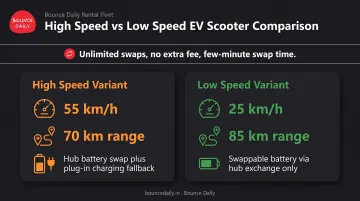
That is a different tracking problem than watching a fuel gauge—which is why EV rental fleets need software built for battery-based operations.
Driver & Document Management
Beyond the vehicle itself, a VMS tracks the person driving it:
- Speeding and harsh-braking behaviour
- Licence validity checks
- Digital storage of registration, insurance, and permits
- Automatic expiry alerts for key documents
Bounce Daily's onboarding shows this in practice: riders upload their Aadhaar card and, for the High Speed variant specifically, a valid two-wheeler driving licence, all verified instantly through the app before they can unlock a scooter.
Reporting & Analytics
Dashboards pull everything together into KPIs like cost-per-vehicle, uptime percentage, and compliance status. This is where the financial case for a VMS becomes concrete.
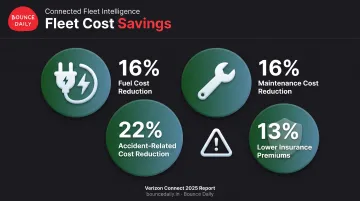
Verizon Connect's 2025 survey of fleet-tracking users found average savings of 16% on fuel costs and 16% on maintenance costs. Those numbers come from self-reported survey data, not a controlled study, but they reflect a consistent pattern: visibility drives savings.
Telematics vs. GPS: What's the Difference?
These two terms get used as if they're the same thing. They're not.
GPS is a location technology. It tells you where a vehicle is, how fast it's moving, and what route it took. That's it.
Telematics is broader. It combines GPS data with engine diagnostics, fuel usage, and driver behaviour, all transmitted through the vehicle's OBD port and cellular connectivity. GPS is one input among several. It is not the whole system.
Here's why this distinction matters when choosing a platform:
| Capability | GPS Alone | Telematics |
|---|---|---|
| Vehicle location | Yes | Yes |
| Route history | Yes | Yes |
| Engine diagnostics | No | Yes |
| Driver behaviour (braking, speeding) | No | Yes |
| Predictive maintenance | No | Yes |
| Remote diagnostics | No | Yes |
A VMS that only offers GPS can tell you where a vehicle went. A VMS built on telematics can tell you why it broke down, whether the driver was braking too hard, and when the next service is likely to be needed.
Most modern platforms lean on telematics because location alone doesn't answer the operational questions fleet managers actually have.
Software & Technology Used in Vehicle Management Systems
Behind every VMS sits a stack of connected technology components:
- GPS tracking for location and movement
- Telematics/OBD integration for engine and diagnostic data
- IoT sensors for battery temperature, tyre pressure, and other physical conditions
- Cloud-based dashboards for centralised reporting
- Mobile apps for field-level access by drivers and technicians
Businesses typically evaluate tools across four categories:
- Fleet tracking platforms
- Maintenance software
- Fuel or expense management tools
- Compliance and document management systems
Few fleets need every category from day one. Growth usually pushes operators to consolidate separate tools into one connected system.
EV-focused operators have an added checklist item: battery diagnostics and charging-network integration. Bounce Daily's FleetOS platform reflects this directly. It combines a central console for scooters, riders, and hubs with DMS integration that manages the job-card lifecycle for parts and service, plus centrally operated battery-swap infrastructure across its hub network.
Why Vehicle Management Systems Matter for Businesses
Manual fleet administration eats time and introduces errors that a spreadsheet simply can't catch in real time. A VMS removes most of that manual burden, letting managers make faster calls on maintenance, routing, and where to allocate vehicles.
The financial upside is well documented. Verizon Connect's 2025 report found surveyed fleet-tracking users saw an average 22% reduction in accident-related costs and 13% lower insurance premiums. Better visibility into driver behaviour and vehicle condition translates directly into fewer incidents and lower claims.
For gig-economy fleets, the stakes are more immediate. A delivery partner with a scooter that won't start has lost income for the day. Bounce Daily's centrally managed approach addresses this directly:
- Every rental includes insurance, breakdown coverage, GPS tracking, and anti-theft alerts as standard
- Battery health, uptime, and replacement are handled centrally rather than left to individual riders
- Depleted batteries get swapped for charged ones in minutes at any hub, keeping riders on the road during long delivery shifts
- The FleetOS platform's central console coordinates scooters, riders, and hub inventory so a ready-to-ride vehicle is available when a partner needs one
Centralised document tracking with expiry alerts reduces the chance of a rider or vehicle operating with lapsed insurance or an expired permit, cutting fines and the liability that comes with them.
Frequently Asked Questions
What is a vehicle management system?
A vehicle management system is software that tracks and manages a vehicle's location, maintenance, documentation, and usage from a single platform. It replaces manual spreadsheets and paper logs with real-time, centralised data.
What is the difference between telematics and GPS?
GPS provides real-time location and movement data only. Telematics combines that GPS data with vehicle diagnostics and driver behaviour information, so managers see diagnostics and behaviour alongside location—not location alone.
What software is used in vehicle management systems?
Common tools include GPS/telematics platforms, maintenance and fuel tracking software, and cloud-based dashboards. EV fleets typically need additional battery-monitoring and charging-network integration on top of these.
How much does a vehicle management system typically cost?
Pricing varies by fleet size, feature scope, and deployment model, whether that's a monthly subscription, a one-time licence, or an open-source setup. Trial a platform against your routes and reporting needs before you sign a long-term contract.
Can small fleets or individual vehicle owners benefit from a VMS?
Yes. Even a handful of vehicles benefit from basic location tracking and maintenance alerts. Most platforms scale as the fleet grows, so a small start rarely forces a rip-and-replace later.
Do electric vehicle fleets need a different type of vehicle management system?
Yes. EV fleets need systems that track battery health, charging or swap cycles, and range planning, on top of the standard tracking and maintenance features a petrol fleet would use.