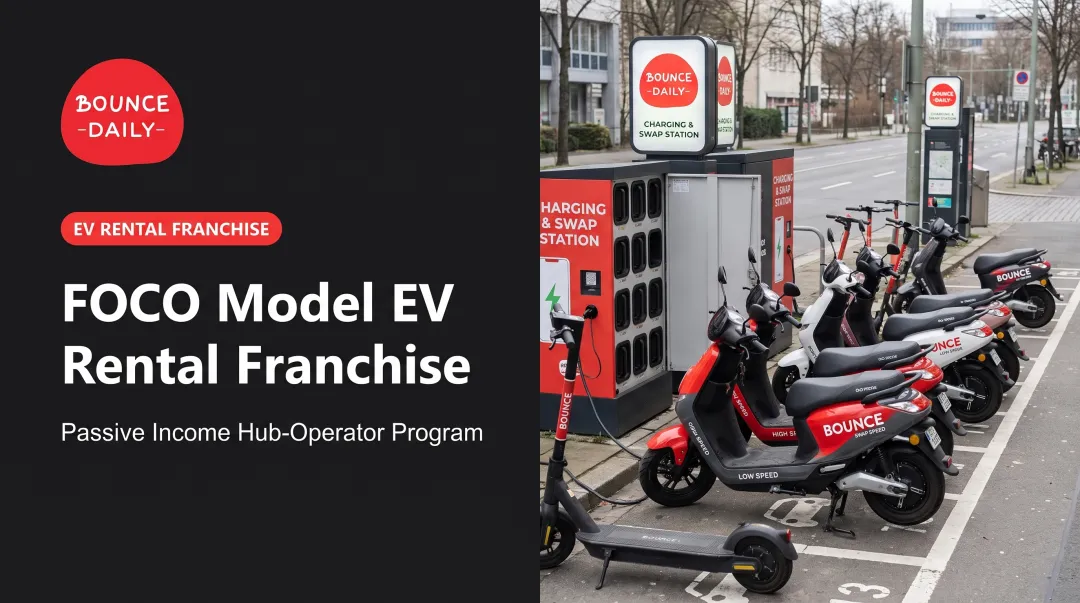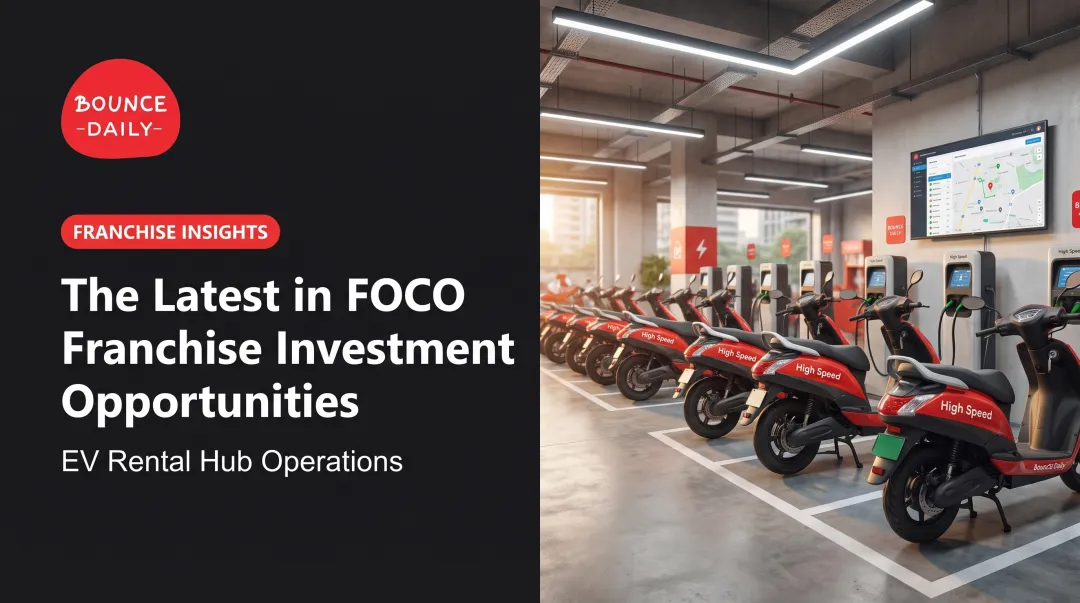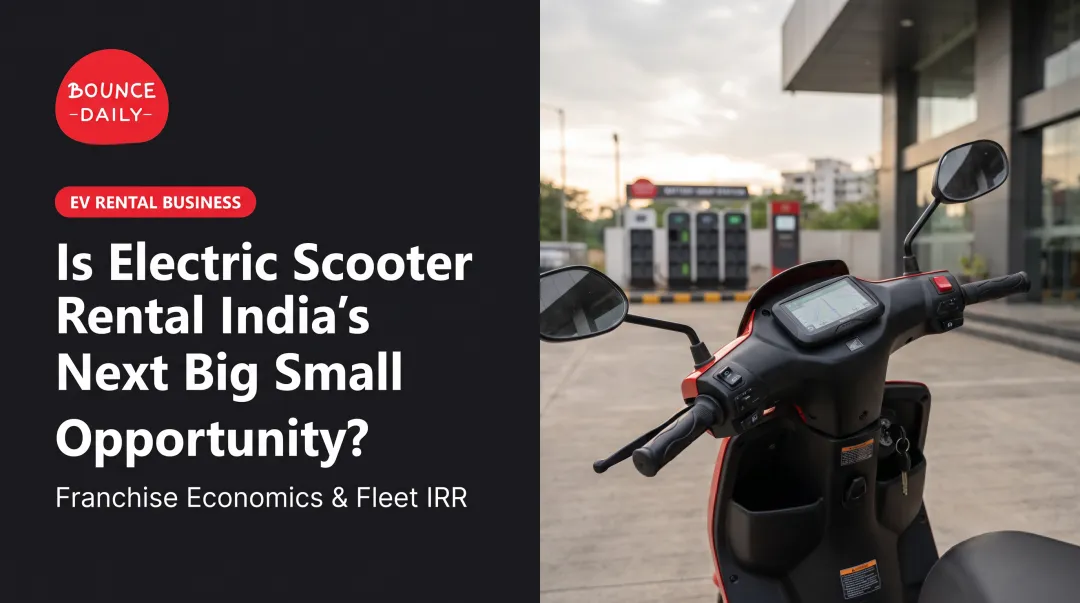
Bounce Daily's FOCO (Franchise Owned, Company Operated) model sits at this intersection, offering investors passive income without the burden of daily operations, fleet management, or customer acquisition—while tapping into India's surging demand for affordable, sustainable mobility among delivery partners and commuters.
Key Takeaways
- FOCO lets investors own assets while Bounce manages operations, delivering 14-16% IRR without hands-on involvement
- India's gig workforce is growing 3x by 2030, creating massive demand for affordable EV rentals
- Bounce has driven 30M+ kilometres and avoided 10,000+ tonnes of CO₂ across live hub operations
- Dual revenue streams: scooter rentals plus ₹200-₹230 licence-assistance fees per Low Speed rider
- Hands-off ops cover included: fleet management, verified rider leads, marketing, and tech platform
Understanding the FOCO Franchise Model
FOCO stands for Franchise Owned, Company Operated. Investors fund and own the business infrastructure; the parent company runs day-to-day operations.
Unlike traditional franchises—where franchisees handle hiring, training, inventory, customer service, and quality control—FOCO keeps operations with the brand while the investor funds setup and infrastructure.
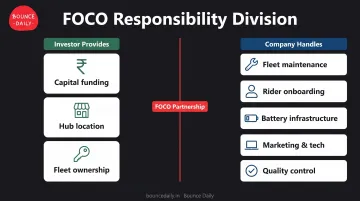
How responsibilities divide:
Investor provides:
- Capital to fund and own the EV fleet or rental hub
- Suitable hub location with parking facilities
- Ownership of the funded fleet and hub assets
Company handles:
- Fleet maintenance, repairs, GPS tracking, uptime
- Rider onboarding, KYC verification, customer acquisition
- Battery-swap infrastructure and energy management
- Marketing, training, technology platform operations
- Quality control, insurance, breakdown support
That split is why FOCO fits asset-intensive businesses like EV rentals, hotels, and logistics, where professional management matters.
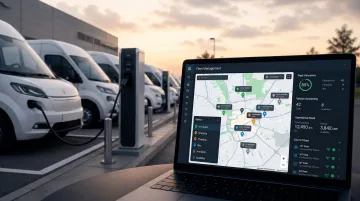
With Bounce Daily, partners don't run a workshop, hire mechanics, or handle daily rider issues. Bounce's FleetOS platform operates 10,000+ EV scooters and manages 3.3 crore kilometres monthly across its operating cities.
Why FOCO is the Smart Choice for Investors in 2025
The FOCO model works for investors because it tackles three problems at once: time commitment, operational complexity, and risk exposure.
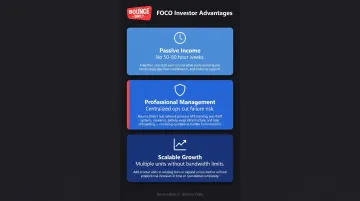
Passive income without the operational burden. Traditional franchises demand 50-60 hours a week on staff, inventory, and customer service. FOCO investors earn returns without that day-to-day grind.
You stay out of the work that usually falls on owner-operators:
- Hiring and managing delivery riders
- Arranging battery swaps at 2 AM
- Handling customer complaints
Bounce Daily runs maintenance schedules, rider lead generation, and hub operations, so you can focus on other ventures or your primary job.
Professional management that cuts failure risk. That hands-off setup only works if operations stay tight. Franchisee mistakes (poor hiring, uneven quality, weak training) are a leading cause of franchise failure. FOCO removes that exposure by centralising operations under proven systems.
Bounce keeps service quality consistent across hubs:
- Automated Aadhaar-based KYC
- IoT-enabled vehicle immobilisation
- Real-time GPS tracking
A verified rider ecosystem also feeds steady demand, so you are not carrying customer-acquisition risk alone.
Scale without burning your bandwidth. Once risk and daily ops are covered, the next limit is how far you can grow. A traditional restaurant franchise often caps investors at 1-2 locations because management time runs out. FOCO investors can hold multiple units across cities without those constraints.
Bounce's centralised FleetOS platform handles bookings, billing, fleet monitoring, and hub management. A successful Bengaluru franchisee can expand into Hyderabad or Delhi NCR as Bounce enters those markets, multiplying income streams without multiplying workload.
Why EV Rental is the Next Big FOCO Opportunity in India
While food and retail franchises saturate tier-1 markets, EV rental offers first-mover advantage in emerging cities.
Built-in demand from gig delivery: Food delivery platforms employed 1.37 million workers in FY2023-24, up from 1.08 million in FY2021-22. Partners on Swiggy, Zomato, Blinkit, Zepto, Amazon, and Flipkart need reliable, affordable two-wheelers every shift.
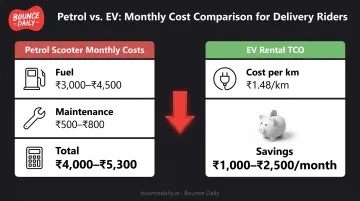
Petrol scooters eat into already thin delivery margins:
- ₹3,000–₹4,500 per month in fuel alone
- ₹500–₹800 more in routine maintenance
Policy support that improves unit economics: Subsidies lower fleet acquisition cost for FOCO partners:
- PM E-DRIVE targets incentives for about 24.79 lakh electric two-wheelers
- Delhi offers ₹5,000 per kWh (capped at ₹30,000 per E2W), plus scrapping incentives up to ₹5,000
CEEW reports electric two-wheeler TCO at ₹1.48/km—well below petrol equivalents. That cost gap is why rider demand keeps shifting to EVs.
Less crowded than QSR or retail FOCO: Better unit economics only matter if the category still has room. QSR and retail franchises already fight hard in metros; EV rental is still early. Tier-2 and tier-3 cities with rising gig work often lack EV rental infrastructure, so open markets remain.
As Bounce expands beyond Bengaluru, early franchise partners can secure share before competitors fill those cities.
Simpler operations than restaurant FOCO: Restaurant FOCO brings perishable inventory, complex supply chains, food-safety rules, and uneven footfall. EV rental is built around durable assets and repeat demand:
- Scooters with 70–85 km range and centralised maintenance
- Recurring gig-worker rentals instead of walk-in traffic swings
- Battery swaps that beat food-prep cycle times
- GPS tracking for real-time fleet visibility hospitality cannot match
What Makes Bounce Daily India's Best FOCO Franchise Investment
Several factors distinguish Bounce from generic EV rental opportunities.
Proven operational track record
Bounce has driven 30 million+ kilometres and avoided 10,000+ tonnes of CO₂. After re-entering the market in April 2025 following a three-year pause, it returned with a refined model aimed at gig workers, the highest-demand segment. Franchisees partner with operators who have already scaled, not an untested startup.
Verified rider ecosystem eliminates acquisition burden
Customer acquisition costs plague most franchises. Bounce Task removes much of that burden with a multi-platform rider aggregation layer for food, grocery, e-commerce, and logistics delivery partners—including Swiggy, Zomato, Blinkit, Zepto, Amazon, and Flipkart.
Franchisees get a steady flow of KYC-verified riders who already need EVs for gig work. Demand is pre-qualified and renews through daily, weekly, and monthly rental plans.
End-to-end fleet management
Bounce handles maintenance, chargeable and swappable battery infrastructure, insurance, breakdown support, GPS tracking, and anti-theft monitoring. FleetOS adds IoT immobilisation when rentals expire and instant unlocking after recharge.
You do not need a workshop, mechanic team, or parts inventory to run the hub.
Dual revenue streams
Primary income comes from recurring daily, weekly, and monthly rental plans on both scooter variants. Secondary revenue comes from the Low Speed variant’s hub-based driving-licence assistance, where riders pay ₹200–₹230—a useful add-on for students and first-time riders that lifts value per rider above base rent alone.
Comprehensive support infrastructure
- Site selection assistance for new hubs
- Training on hub operations, rider onboarding, and customer handling
- Marketing collateral and brand support
- FleetOS CRM: rider app, field operations app, and central console
- Automated Aadhaar-based KYC, billing, and booking management
- Dedicated technical support
Strategic re-entry advantage
Bounce’s April 2025 comeback applies lessons from earlier operations. The refined model sharpens the gig-worker focus, pairs digital-first onboarding with flexible rental plans, and fields two purpose-built variants:
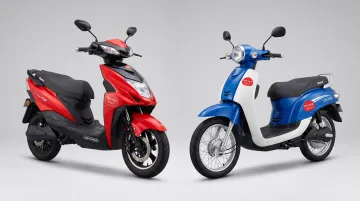
- High Speed: 55 km/h top speed, 70 km range, for licensed longer-distance riders
- Low Speed: 25 km/h top speed, 85 km range, for short trips and riders without a licence
That operating history is what franchisees buy into—not a first-draft rental concept.
Investment, Returns, and Support: The Bounce Advantage
Bounce advertises 14-16% IRR for its FOCO program, though specific investment breakdowns (franchise fee, per-scooter fleet cost, backend setup, working capital) are disclosed during partner onboarding rather than publicly listed.
Typical investment components include:
- Franchise/partnership fee
- Fleet acquisition (number of scooters based on city tier and hub size)
- Hub setup (parking infrastructure, signage, minimal facilities)
- Initial working capital buffer
- Security deposits or operational reserves
Investment and returns vary by city tier, fleet size, utilisation rates, and seasonal demand. High-demand markets like Bengaluru with dense gig-worker populations support faster ramp-up than emerging tier-3 cities.
Cost advantages versus petrol rentals: Delivery riders on petrol scooters spend ₹3,000-₹4,500 monthly on fuel plus ₹500-₹800 on maintenance, or ₹4,000-₹5,300 total. Bounce rentals bundle electricity (unlimited battery swaps during the rental period), maintenance, insurance, and breakdown coverage.
Riders can save ₹1,000-₹2,500 a month. Government subsidies passed through to franchise fleet acquisition further improve partner margins.
Support infrastructure for franchisees:
- Quick digital onboarding and training
- Verified rider lead pipeline
- FleetOS platform managing 10,000+ scooters and 3.3 crore km monthly
- 24/7 fleet monitoring, GPS tracking, uptime management
- Centralised booking, billing, KYC, dues, and cohort management
- Marketing materials and brand assets
- Ongoing operational guidance
Expansion pathway: Successful franchisees can scale to multiple locations or larger fleets within Bounce's network. FleetOS centralisation means additional hubs don't multiply management complexity. As Bounce expands across Indian cities, proven partners get first access to new markets.
Frequently Asked Questions
What is the FOCO franchise model and how does it work?
FOCO (Franchise Owned, Company Operated) means you fund the EV fleet or hub while Bounce Daily runs daily operations: fleet maintenance, rider onboarding, customer service, and battery infrastructure. It suits passive investors who want returns without hands-on management.
Why is Bounce Daily's FOCO model better than traditional franchises?
Traditional franchises often mean 50–60 hours a week hiring staff, managing inventory, handling complaints, and protecting quality. Bounce runs operations, fleet uptime, rider acquisition, and quality control, so you avoid day-to-day franchisee risk while targeting 14–16% IRR.
How much investment is required for a Bounce FOCO franchise?
Investment varies by city tier, fleet size, and hub specifications. Bounce shares full figures (franchise fee, fleet costs, setup, and working capital) during partner onboarding. Budgets typically run from several lakhs to crores depending on scale—ask for Bounce-specific numbers in a partnership discussion.
What returns can I expect from a Bounce FOCO franchise?
Bounce targets 14–16% IRR. Actual returns depend on location, fleet utilisation, local gig demand, and seasonality. Detailed, city-specific projections are shared during partnership discussions.
Do I need experience in EV or rental business to invest in Bounce?
No prior experience required. Bounce trains partners on hub operations, rider onboarding, and customer handling, and manages maintenance, battery swaps, GPS tracking, and insurance. The FOCO model is built for first-time franchise investors.
Can I get a FOCO model franchise in Chennai?
Bounce currently operates in Bengaluru, Hyderabad, and Delhi NCR and is expanding across more Indian cities. Chennai availability is not confirmed in public materials—contact Bounce directly to discuss Chennai and other locations as plans follow market demand.
Bounce Daily's FOCO franchise sits where India's gig economy, EV adoption, and passive-income demand meet. Operations already cover 30M+ km driven and 10,000+ tonnes of CO₂ avoided, with company-run support and an asset-light structure targeting 14–16% IRR.
The EV rental market is still early. As the gig workforce scales toward 2030, partners who enter tier-2 and tier-3 cities early can benefit as electric mobility becomes standard for last-mile delivery.