The FOCO model—Franchise Owned, Company Operated—is gaining traction among investors seeking recurring income without the burden of hiring staff, managing inventory, or troubleshooting day-to-day operations. In sectors like food services, quick-commerce mobility, and retail, FOCO offers a middle path between passive real-estate leasing and full-time business ownership. Understanding how FOCO differs from traditional FOFO and FOCM models is essential before committing capital to your next franchise opportunity.
Key Takeaways
- FOCO shifts day-to-day operations to the franchisor, cutting investor workload versus owner-operated models
- Best for investors with capital but limited time—no prior business experience required
- FOCO, FOFO, and FOCM split ownership, operations, and control differently; match the model to your involvement level
- Used in cloud kitchens, QSR chains, and EV rental hubs, with capital from ₹2–5 lakhs to ₹50+ lakhs
- Vet brand reputation, revenue-share terms, and franchisee satisfaction before you invest
What is the FOCO Model? (Franchise Owned, Company Operated)
The FOCO model assigns financial ownership to the franchise partner while the franchisor manages all operational responsibilities. The investor funds the outlet, provides the premises, and handles brand-standard fit-out and equipment. In return, the franchisor hires staff, trains employees, controls inventory, runs marketing campaigns, and oversees day-to-day customer service.
Operational Structure
Under FOCO, the franchisor manages:
- Staffing and training – Recruitment, onboarding, payroll, and performance management
- Inventory and supply chain – Ordering, stock levels, supplier relationships, and wastage control
- Marketing and customer acquisition – Brand campaigns, local promotions, digital presence, and customer retention
- Daily operations – Opening/closing procedures, quality control, complaint resolution, and compliance
The franchisee's role remains primarily financial. You own the business, but you don't clock in, manage shift rosters, or troubleshoot equipment breakdowns.
Revenue Model
FOCO payouts vary by agreement. The most common structures include:
- Percentage of outlet revenue – The franchisee receives a fixed share of monthly sales
- Profit-sharing arrangement – After deducting operating costs, profits are split per contract terms
- Fixed monthly distribution – A predetermined amount, subject to minimum performance thresholds
No industry-standard payout formula exists. Terms depend on brand, sector, and negotiated agreement. Confirm how revenue and costs are calculated during due diligence.
Contrast with Company-Owned Company-Operated (COCO)
In a COCO model, the company owns and operates the outlet entirely. FOCO introduces external investor capital, so the franchisor can expand without tying up corporate funds. For the investor, FOCO offers:
- Access to a proven brand and operating system without starting from scratch
- Lower operational involvement compared to traditional franchises
The trade-off is clear: returns depend on the franchisor's execution, marketing effectiveness, and market positioning.
Understanding Other Franchise Models: FOFO and FOCM
FOCO is one of several franchise structures. Comparing FOFO and FOCM shows how much control, daily effort, and operating risk you take on with each model.
What is FOFO (Franchise Owned, Franchise Operated)?
FOFO places both ownership and operations in the franchisee's hands. You fund the outlet, hire the team, manage inventory, handle customer service, and drive local marketing—all while adhering to brand guidelines.
Operational responsibilities include:
- Recruiting, training, and supervising staff
- Ordering stock, managing suppliers, and controlling wastage
- Running daily operations, from opening to closing
- Executing local marketing campaigns and managing customer relationships
Support provided by the franchisor:
- Brand training and operating manuals
- Supply-chain access and negotiated vendor pricing
- Marketing templates and brand guidelines
- Ongoing field support and performance reviews
FOFO suits hands-on operators with time, management experience, and a willingness to be involved in daily decision-making. You get more control over execution, and you put in more of the day-to-day work.
What is FOCM (Franchise Owned, Company Managed)?
FOCM is less standardized across the industry. Moti Mahal, for example, defines it as investor-owned with the company handling management, staffing, maintenance, and service quality. That definition overlaps a lot with how many brands describe FOCO.
The distinction between "managed" and "operated" is often agreement-specific rather than industry-wide. Some brands use FOCM to indicate shared oversight, while others treat it as functionally identical to FOCO. Before investing, request clarity on:
- Who makes hiring and firing decisions
- Who controls inventory procurement and pricing
- How profit and revenue are calculated and distributed
- What recourse exists if service standards slip
Don't assume FOCM guarantees more investor input than FOCO. Review the franchise agreement and speak with existing franchisees to confirm the actual division of responsibility.
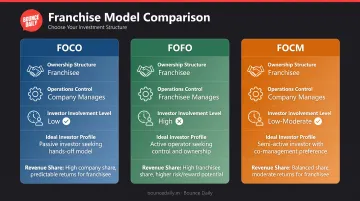
FOCO vs FOFO vs FOCM: Comparison Table
| Aspect | FOCO | FOFO | FOCM |
|---|---|---|---|
| Ownership | Franchisee | Franchisee | Franchisee |
| Operations | Company manages | Franchisee manages | Company manages (agreement-specific) |
| Investor Involvement | Low – primarily financial | High – daily management required | Low to moderate – depends on brand |
| Risk Level | Lower operating risk, higher dependence on franchisor | Higher operating risk, more control over execution | Lower operating risk, clarity depends on contract |
| Capital Requirement | Varies by brand; examples: ₹2.9 lakh (Rolling Plate), ₹20-90 lakh (Moti Mahal FOCM) | Varies; typically includes working capital for 3-6 months | Similar to FOCO; depends on brand and format |
| Revenue Model | Percentage of revenue, profit share, or fixed distribution | Franchisee retains profits after royalty and fees | Typically revenue share or profit share |
| Ideal For | Investors seeking passive income with limited time | Hands-on operators with management experience and time | Lower-involvement investors; verify the management split |
Benefits of the FOCO Model for Investors
Reduced Operational Burden
FOCO eliminates the need to hire and train staff or supervise them day to day. You don't manage shift schedules, customer complaints, equipment failures, or vendor follow-ups. This suits investors who have capital but limited time—or no prior experience running a service business.
Consistent Brand Standards
Centralised operations help maintain uniform customer experience across outlets. The franchisor's systems and quality-control processes reduce variability that can harm brand reputation. For investors, this means less risk of operational failure caused by local mismanagement.
Reduced Execution Risk
While FOCO doesn't eliminate market or demand risk, it shifts execution responsibility to the franchisor. Professional management and established supply chains—backed by centralised marketing—cut failure risk from inexperienced local operators. Investors still remain exposed to:
- Franchisor's ability to drive customer acquisition
- Brand positioning and competitive differentiation
- Economic conditions affecting consumer spending
Access to Established Systems
FOCO investors benefit from the franchisor's technology and supplier relationships, plus operational expertise built over years. Cloud kitchens, for example, use centralised ordering platforms and pre-negotiated supplier contracts. EV rental hubs use GPS tracking, automated KYC, battery-swap infrastructure, and app-based fleet tools.
You gain turnkey access to systems that would take years and significant capital to build independently.
Scalability Potential
FOCO's lower time commitment makes it realistic to own multiple outlets without proportional day-to-day involvement.
That said, no authoritative India-wide study quantifies FOCO-specific multi-unit ownership patterns. The 2023 FranCast report states that 53% of franchised locations are operated by multi-unit franchisees, but this figure includes FOFO, COCO, and other models.
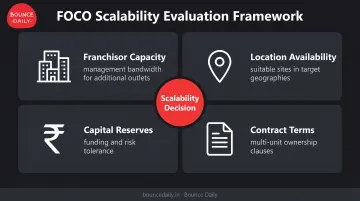
Scalability depends on:
- The franchisor's capacity to manage additional outlets
- Availability of suitable locations in new geographies
- Your capital reserves and risk tolerance
- Contract terms allowing multi-unit ownership
FOCO Model in Practice: Real-World Examples
Cloud Kitchen: The Rolling Plate
The Rolling Plate operates a FOCO cloud kitchen model. The franchisee funds setup costs, while the brand manages kitchen operations, staffing, and daily order fulfillment.
Investment: ₹2.9 lakh for FOCO setup, per the brand’s official page. That’s a lower-capital entry than most traditional restaurant franchises. Revenue-share percentages, outlet revenues, and payback timelines are not disclosed publicly.
Brand-side support includes:
- Kitchen management and staff recruitment
- Order processing and technology integration
- Training and marketing campaigns
EV Rental Hub: Bounce Daily
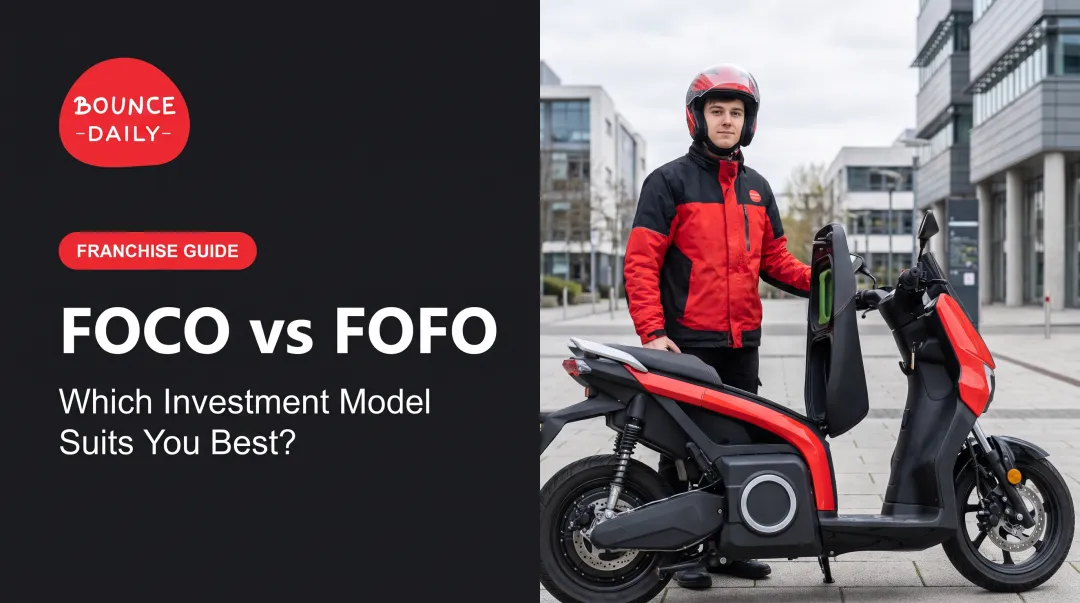
Bounce Daily operates a FOCO-style franchise program in the electric-scooter rental sector. Franchise partners invest in the scooter fleet and provide a suitable hub location. Bounce Daily manages fleet operations, maintenance, GPS tracking, rider onboarding, customer acquisition, and battery-swap infrastructure.
How it works:
- Partner role: Fund the rental fleet and provide parking-ready hub premises
- Bounce Daily role: Maintenance, uptime, rider KYC, verified leads, training, marketing creatives, and FleetOS
- Target customers: Gig and delivery partners (Swiggy, Zomato, Blinkit, Zepto, and other last-mile platforms), students, and daily commuters
FleetOS technology covers:
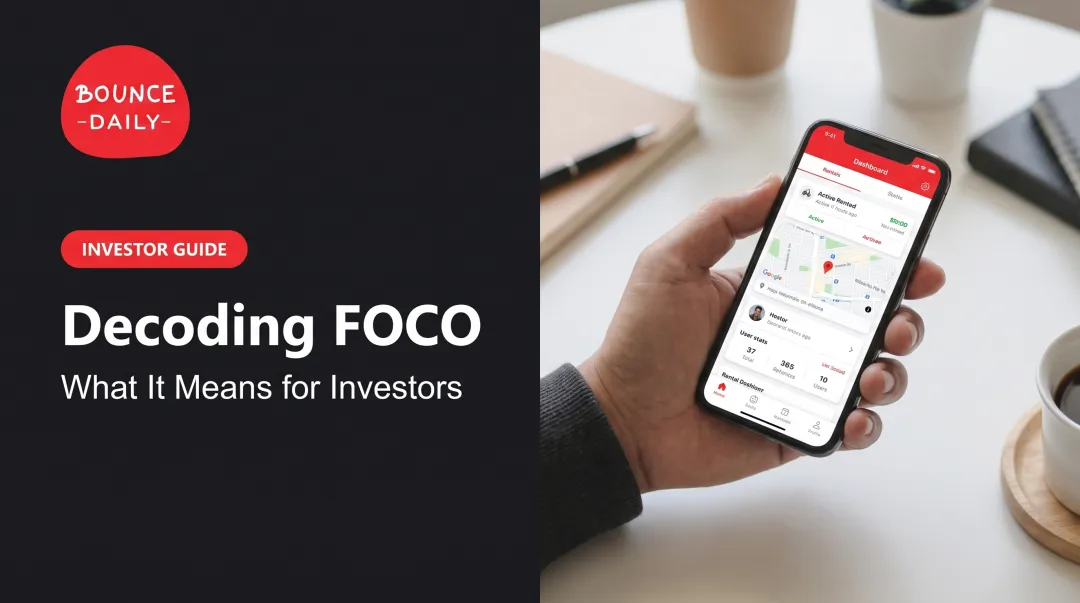
- Rider app for onboarding, KYC, bookings, and payments
- Field app for exchanges, repairs, and handovers
- Central console for bikes, riders, dues, and hubs
- IoT immobilisation when plans expire, cutting manual oversight
Returns: Bounce Daily advertises a 14-16% IRR for partners, built on recurring monthly rental revenue rather than one-time vehicle sales. Investment amounts, fleet sizes, revenue-share splits, and payback periods are shared during partner onboarding.
Operational reach: More than 10,000 EV scooters and about 3.3 crore kilometres per month across live cities. Bounce Daily has driven 30M+ kilometres and avoided 10,000+ tonnes of CO₂.
Partner profile: Suits investors, retired professionals, real-estate owners, mobility businesses, and entrepreneurs who want passive income in EV rentals without running a workshop or daily rental desk.
FOCO lets Bounce Daily grow on partner capital while keeping control of quality, customer experience, and technology. Partners get verified rider demand, brand recognition, and ready-built ops systems.
Returns still depend on rider utilization, local gig-mobility demand, and fleet uptime.

Investment Considerations: Is FOCO Right for You?
FOCO can look appealing if you want brand-backed income without running the floor. Whether it fits comes down to three checks: capital you can lock in, returns you can verify, and how much control you are willing to give up.
Evaluate Capital Requirements
FOCO cheques vary widely by sector and brand. Verified public examples include:
- ₹2–5 lakh: Rolling Plate’s cloud kitchen FOCO advertises about ₹2.9 lakh
- ₹20 lakh–₹1.5 crore: Moti Mahal’s FOCM formats span kiosks through barbecue dining
- Other sectors: EV rental hubs, retail, and services use FOCO-style structures—demand an itemised cost sheet, not a headline figure alone
No India-wide benchmark sets a “normal” FOCO ticket size. Treat every figure as that brand’s offer, not a market average.
Beyond the initial cheque, model:
- Royalty or management fees (unstandardised; deal-specific)
- Marketing contributions or technology charges
- Working capital for the first 3–6 months
- Renewal fees and end-of-term obligations
Assess Expected Returns
No independent study pins down average FOCO ROI timelines or realised returns across brands. Payout designs usually fall into three buckets:
- Fixed monthly distribution: Predictable, but may not rise with stronger sales
- Percentage of revenue: Ties your income to outlet performance
- Profit-sharing: Needs clear cost allocation and expense reporting
Advertised targets are not proof. Some EV rental FOCO-style programs—such as Bounce Daily’s hub-operator model—cite target IRRs around 14–16%. Treat any published return as a projection until current partners confirm actual payouts.
During due diligence, ask for:
- How revenue and profit are calculated, line by line
- Sample monthly payouts from existing franchisees
- Best-, average-, and worst-case return scenarios
- Exit terms and resale rules if you want out
Consider Ideal Investor Profile
FOCO tends to fit investors who:
- Have capital but little time for day-to-day operations
- Prefer not to build or manage ops from scratch
- Want recurring income without starting a standalone business
- Are diversifying beyond real estate or pure financial products
It is a weaker fit if you:
- Want full control over hiring, pricing, and marketing
- Prefer direct customer contact and hands-on work
- Are uncomfortable depending on the franchisor’s execution and brand
- Need guaranteed returns or low-risk fixed income
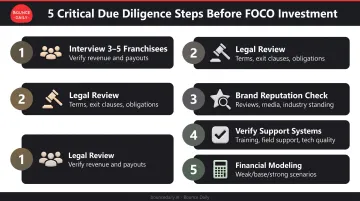
Before you commit:
- Speak with at least 3–5 current and former franchisees about revenue, costs, and real payouts
- Have a lawyer review term length, renewal, exit clauses, and your obligations
- Check brand reputation via customer reviews, media, and industry standing
- Verify training quality, field support, marketing support, and tech reliability
- Build break-even models under weak, base, and strong performance cases
If capital, verified payouts, and control trade-offs still line up after that work, FOCO is worth a serious look. If any of the three fail, walk.
Frequently Asked Questions
What is the FOCO model?
FOCO stands for Franchise Owned, Company Operated. The investor provides capital and owns the business, while the franchisor manages all day-to-day operations including staffing, inventory, marketing, and customer service.
What does FOFO model stand for?
FOFO stands for Franchise Owned, Franchise Operated. The franchisee both owns and operates the business, handling hiring, inventory, daily management, and local marketing while following brand guidelines.
What are the main advantages of FOCO over traditional franchises?
FOCO reduces operational involvement by transferring daily management to the franchisor, making it suitable for investors without prior business experience. Professional management lowers execution risk, though investors remain exposed to market demand and franchisor performance.
How much capital is typically required for a FOCO franchise?
Investment varies by sector and brand. Verified examples range from ₹2.9 lakh for a cloud kitchen (The Rolling Plate) to ₹20-90 lakh for restaurant formats (Moti Mahal FOCM). No India-wide average exists; treat brand-specific figures as individual offers, not benchmarks.
Is FOCO suitable for first-time investors?
FOCO can be ideal for first-time investors due to company-managed operations and access to established systems. However, thorough due diligence is essential. Review the franchise agreement, validate financial projections, and speak with existing franchisees before committing capital.
How do I evaluate a FOCO franchise opportunity?
Assess brand reputation, review the franchise agreement with a lawyer, and validate the revenue model with current franchisees. Calculate ROI under different scenarios and confirm training, field support, and technology quality before investing.