Introduction
Fuel prices keep climbing, delivery windows keep shrinking, and electric vehicles are entering fleets faster than most operations teams can retrain for.
Add gig-economy volumes across food, grocery, and quick-commerce apps, and vehicle-heavy businesses face more pressure than ever to control every rupee and every route.
Fleet management systems (FMS) often get reduced to a feature list: GPS dots on a map, maintenance alerts, a dashboard full of charts. The real value is fewer breakdowns, safer drivers, and costs that stay predictable month after month.
This article skips the vendor pitch. It breaks down what an FMS actually changes in daily operations, and what happens when businesses skip structured fleet oversight altogether.
Key Takeaways
- Real-time visibility cuts wasted miles and keeps delivery windows on track
- Preventive maintenance and fuel monitoring lower operating costs
- Driver behaviour tracking reduces accidents, insurance premiums, and compliance risk
- Skipping fleet oversight leads to reactive firefighting and rising costs over time
- Rental providers such as Bounce Daily bundle fleet oversight into gig-worker rental plans
What Is a Fleet Management System?
A fleet management system combines GPS tracking, telematics, and data analytics into one platform to monitor vehicles, drivers, and costs. It works as a layer across an entire fleet, turning raw location and sensor data into decisions dispatchers can actually act on.
Where it's typically applied:
- Logistics and delivery fleets managing dozens or hundreds of vehicles
- Construction and field-service companies tracking equipment across job sites
- Last-mile delivery operations in e-commerce, food delivery, and quick commerce
Building one from scratch isn't realistic for everyone, though. Individual gig riders and small franchise operators rarely have the budget or technical staff to run their own telematics stack.
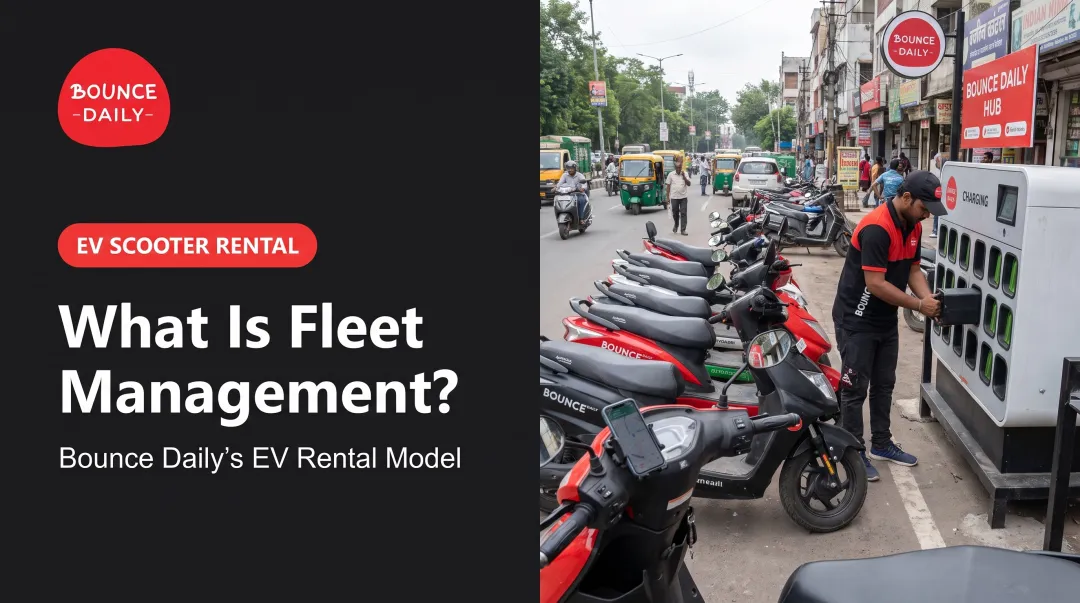
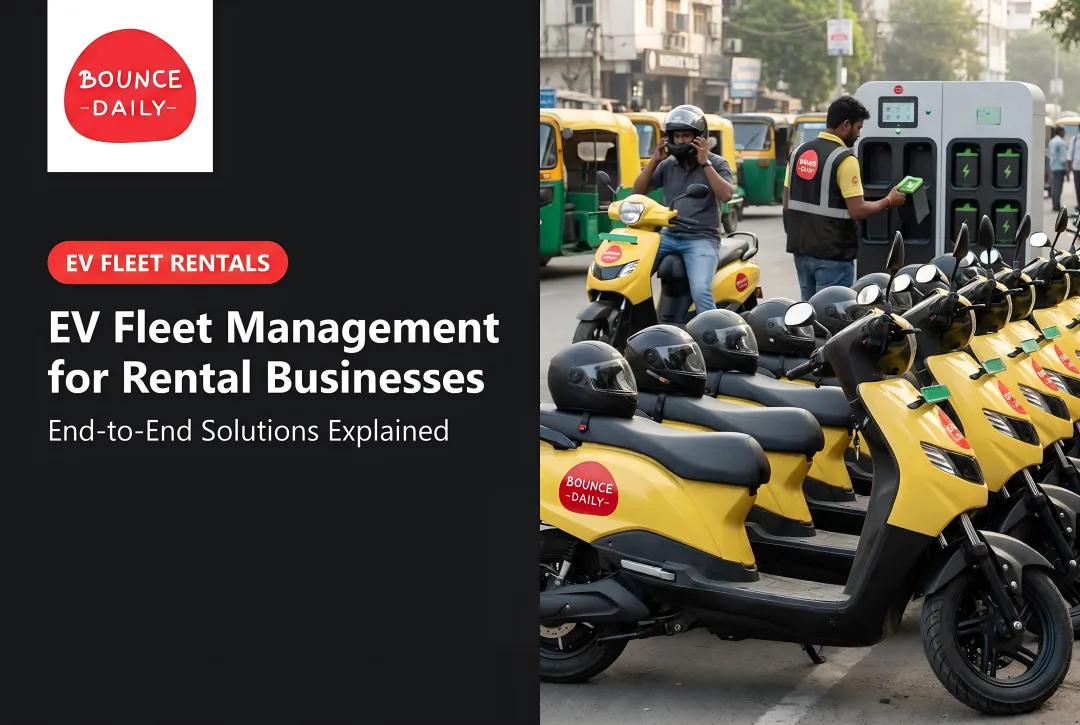
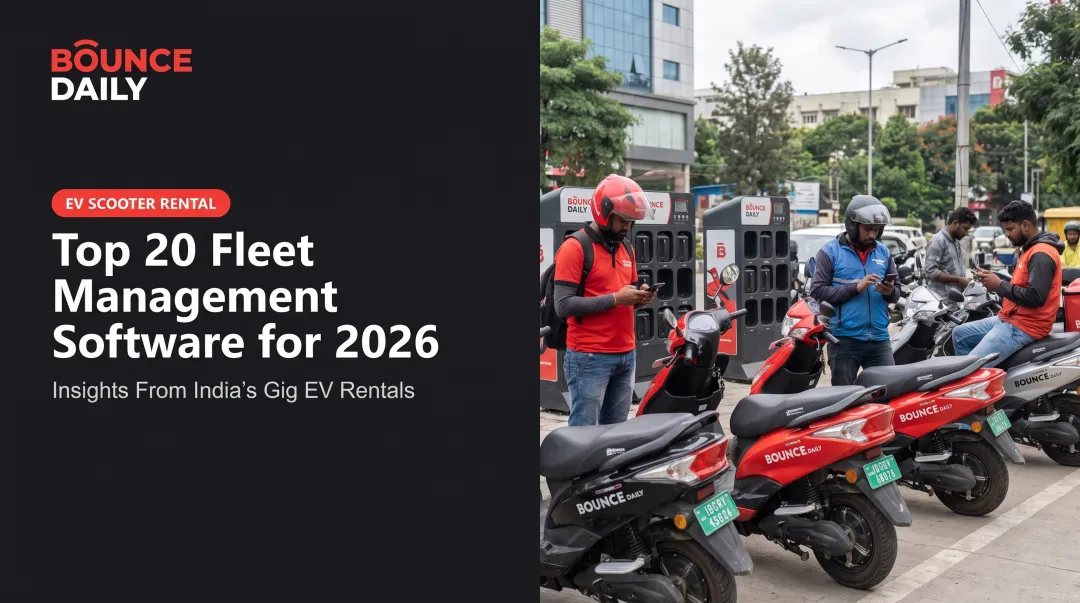
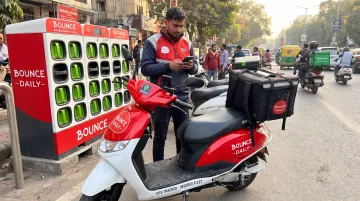
That's where the fleet-oversight burden shifts elsewhere. Bounce Daily, for instance, folds GPS tracking, maintenance, insurance, anti-theft alerts, and hub-based battery-swap access directly into its EV scooter rental plans for delivery partners. Riders get a tracked vehicle, scheduled servicing, and immediate breakdown support without ever opening a fleet dashboard themselves.
An FMS is a means to cost control, safety, and consistency, no matter how the fleet is owned or accessed.
Key Advantages of a Fleet Management System
The benefits below aren't abstract features. Each one maps to numbers most operations teams already track: cost per kilometre, on-time delivery rate, accident frequency. That makes proving return on investment a lot easier than most vendor pitches suggest.
Real-Time Visibility and Route Optimisation
Continuous GPS tracking paired with dynamic route planning gives dispatchers something they didn't have a decade ago: live visibility into every vehicle, all the time.
In practice, a dispatcher sees a road closure or a slow-moving jam the moment it develops and reroutes drivers before delays compound. No waiting for a phone call. No guessing where a vehicle actually is versus where it's supposed to be.
Why this changes operations:
- Wasted and idle kilometres drop sharply when routes adjust live instead of being planned once each morning
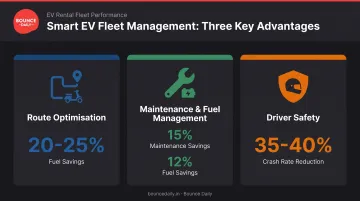
- Smart route optimisation can cut fuel costs by 20-25% through reduced mileage and smarter traffic avoidance, according to Geotab
- Large delivery networks that adopted dynamic routing software have reported measurably shorter average routes per driver, even across tens of thousands of daily stops
- Accurate, live ETAs build customer trust. Nobody enjoys an arrival window that turns out to be a guess
KPIs this advantage moves:
- Fuel cost per kilometre
- On-time delivery rate
- Vehicle utilisation percentage
Multi-vehicle, time-sensitive operations see the strongest payoff here. Think last-mile delivery fleets weaving through dense urban traffic, where every unnecessary kilometre chips away at margin.
Cost Control Through Maintenance and Fuel Management
Automated preventive maintenance scheduling, paired with fuel-usage monitoring, is where fleet management earns its keep on the balance sheet.
Sensors and telematics flag problems before they turn into expensive repair bills: an overdue oil change, tyre pressure slowly leaking, a battery degrading faster than expected. The system schedules service before the vehicle fails mid-route.
The cost impact is measurable:
- Fleets using GPS tracking report average savings of 15% on maintenance, 12% on labour, and 12% on fuel, according to Verizon Connect's Fleet Technology Trends Report
- Coaching drivers on idling and harsh acceleration, informed by that same telematics data, trims fuel consumption further
- Catching issues early avoids unplanned downtime, and downtime on a delivery fleet means missed routes, not just a repair invoice
KPIs impacted:
- Maintenance cost per vehicle
- Downtime days
- Fuel cost as a percentage of total spend
Aging fleets and high-kilometre operations feel this one most on the balance sheet. EV fleets add another layer: battery wear varies with charging habits, so tracking degradation matters as much as tracking distance.
Driver Safety, Compliance, and Risk Reduction
Continuous monitoring of driver behaviour (speeding, harsh braking, fatigue signals), paired with automated compliance recordkeeping, turns subjective judgement ("that driver seems careless") into objective data.
Telematics and dashcams give dispatchers a record they can use for coaching conversations and for regulatory documentation that used to mean paper logs and spreadsheets.
Why this reduces risk:
- Addressing unsafe habits before they cause an incident is far cheaper than dealing with the aftermath of one
- Aggregated data across more than 2,600 fleets found crash rates dropped by roughly 35-40% on average over time, with larger fleets running full AI safety monitoring for 30 months seeing reductions approaching 75%, according to Samsara
- Objective driving records support compliance documentation and reduce exposure during audits or insurance claims
KPIs impacted:
- Accidents per 100 vehicles
- Insurance premium percentage
- Compliance violation count
Large driver pools, regulated fleets, and anyone on high-risk urban or highway routes gain the most. One avoidable accident can undo months of margin.
What Happens When Fleet Management Is Missing or Ignored
Skip structured fleet oversight, and the consequences build gradually, then hit all at once.
- Delivery performance turns inconsistent. Without live visibility, ETAs become guesses, and missed windows chip away at customer trust.
- Fuel and repair costs climb. Reactive maintenance costs more than scheduled servicing, and aggressive driving quietly drains fuel economy.
- Insurance costs creep upward. Poor driver behaviour means more claims, and insurers price that risk into renewal premiums.
- Scaling gets harder. Every added vehicle adds manual tracking work until phone calls and spreadsheets simply break down.
None of this happens overnight. It's the slow accumulation of small inefficiencies until they show up as a much bigger number on next quarter's budget.
How to Get the Most Value from a Fleet Management System
An FMS only pays off when it's applied across the whole fleet, not just a handful of vehicles picked for a pilot programme.
Three habits separate fleets that see real ROI from ones that don't:
- Apply it fleet-wide - partial rollouts create blind spots exactly where problems tend to hide
- Review dashboards regularly, not just collect them - data sitting unread in a report delivers zero value
- Turn insights into action - a flagged speeding pattern should lead to a coaching conversation; a maintenance alert should lead to a service booking, not a note for later
For gig workers, delivery partners, and small franchise operators, building any of this from scratch usually isn't realistic. Buying telematics hardware, setting up dashboards, and training someone to review them is a lot of overhead for a handful of vehicles.
This is where rental providers that bundle fleet oversight into the service itself remove that barrier. Bounce Daily's EV scooter rentals for delivery partners, for example, include GPS tracking, insurance, anti-theft alerts, and centrally managed servicing as standard.
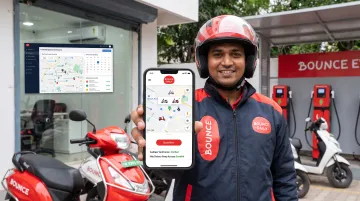
A rider books through the Bounce Daily app, completes Aadhaar-based verification the same day, and rides. Hub battery swaps keep vehicles on the road in minutes, while maintenance scheduling, breakdown support, and tracking run in the background—managed by Bounce Daily, not the rider. That's the same fleet-management value larger operators pay for, without software to install or a dashboard to check.
Conclusion
Fleet management gives you control over an operation that would otherwise run on guesswork. Dashboards, GPS pings, and alert emails are only useful when they turn into clearer decisions day after day.
These advantages compound. A driver coached on harsh braking today reduces accident risk for years. Catch a maintenance alert early, and you avoid downtime that would have cascaded into missed deliveries.
Treat it as an ongoing practice, not a one-time purchase. Fleets that review, coach, and adjust on a set cadence—whether they run the software in-house or get it through a managed rental model—keep fuel, repairs, and downtime predictable instead of reacting after every breakdown.
Frequently Asked Questions
How much does fleet management software cost?
Pricing typically depends on fleet size, features (GPS, telematics, compliance tools), and subscription model. Most operations recover the cost through fuel and maintenance savings within the first year.
What are the benefits of fleet management software?
The core benefits are better visibility, lower fuel and maintenance costs, safer driving, and simpler compliance documentation. Most fleets see measurable gains within months of consistent, fleet-wide use.
What software is used in fleet management?
Fleet management typically combines GPS/telematics platforms, maintenance-scheduling tools, and driver-monitoring software, usually pulled together into one dashboard. Larger fleets often add dashcams and fuel-card integrations too.
Is fleet management necessary for small fleets with just a few vehicles?
Yes, even a handful of vehicles benefits from basic tracking and maintenance automation. Cost savings scale up with fleet size, but the underlying visibility and safety gains apply regardless of count.
How does fleet management help with EV fleets specifically?
EV-specific fleet management tracks battery health and degradation, optimises charging schedules around routes and downtime, and plans routes based on real-world range rather than manufacturer estimates.
Can gig workers or delivery partners get fleet management benefits without owning the software themselves?
Yes. Rental providers that bundle fleet oversight into their service, such as Bounce Daily for EV scooter riders, handle GPS tracking, insurance, maintenance, and battery-swap access centrally. Riders get the operational benefits without ever managing the technology themselves.