Introduction
Fleet managers running logistics, construction, or last-mile delivery operations in 2026 face a tracking problem spreadsheets can't solve anymore. Nearly 100 million commercial fleet-telematics units are already installed worldwide, according to PTOLEMUS. That number keeps climbing as regulators tighten compliance rules and fuel costs stay volatile.
Many fleet operators still juggle disconnected tools: one for GPS tracking, another for maintenance, a third for driver safety. That fragmentation drives up fuel spend, increases downtime, and makes regulatory audits painful, especially for fleets operating across India's AIS-140 mandate zones or multi-state US trucking corridors.
The right fleet management software fixes this by unifying vehicle tracking, driver behaviour, fuel monitoring, and compliance reporting into one dashboard. Operators move from reacting to breakdowns to preventing them.
This guide ranks the top 20 fleet management platforms for 2026, from enterprise IoT suites to India-focused telematics tools. Use it to match software to your fleet size, budget, and industry.
Key Takeaways
- Fleet management software unifies GPS tracking, telematics, maintenance, and compliance in one system.
- The right platform depends on fleet size, budget, and industry—construction needs differ from delivery.
- This guide ranks 20 leading platforms by key features, pricing signals, and ideal use cases.
- Use the ranking criteria below to shortlist vendors that fit your fleet with confidence.
Overview of Fleet Management Software in 2026
Fleet management software is an integrated hardware-and-software system for commercial fleets. Core capabilities typically include:
- Vehicle location tracking
- Driver behaviour monitoring
- Maintenance scheduling
- Automated compliance reporting
Demand for that stack is still climbing fast:
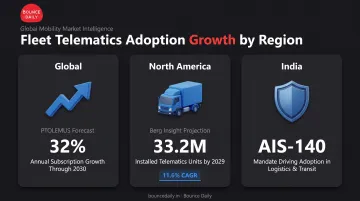
- PTOLEMUS forecasts active telematics subscriptions growing roughly 32% annually through 2030
- Berg Insight projects North America's installed base at 33.2 million units by 2029 (11.6% CAGR)
India tells a similar story, driven largely by regulation rather than convenience. The AIS-140 vehicle-tracking mandate, which requires GPS devices with emergency panic buttons on public transport and commercial vehicles, continues to push adoption across the country's logistics and transit sectors, according to Frost & Sullivan.
The EV Shift Changes the Equation
Electric vehicles are reshaping fleet software too. Many platforms now report charge levels, energy consumption, and charging status alongside traditional diagnostics.
Not every operation needs a full software stack. Some last-mile and gig-delivery operators skip fleet ownership entirely.
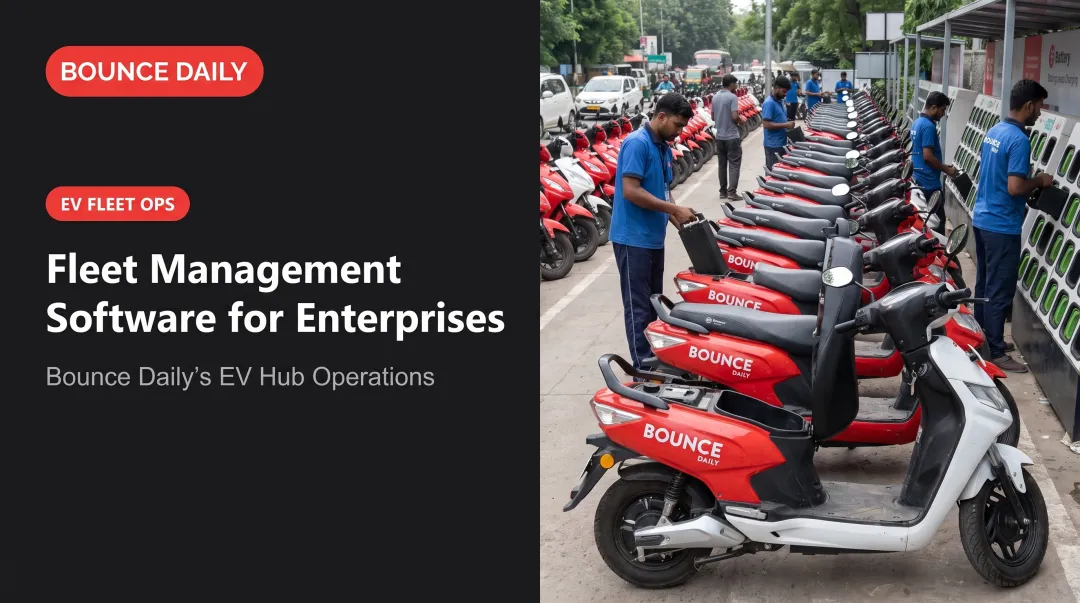
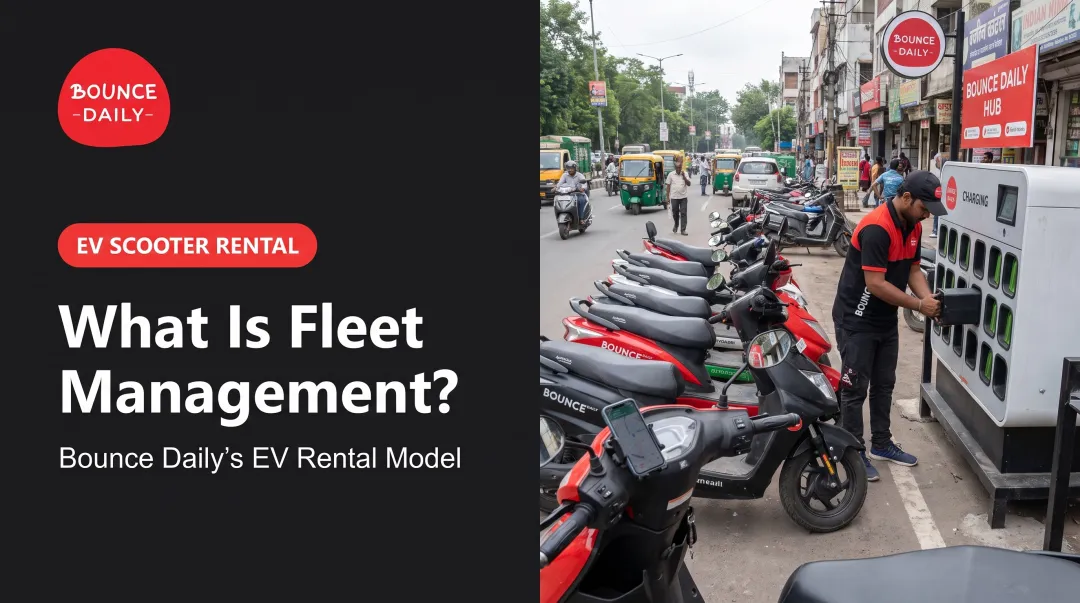
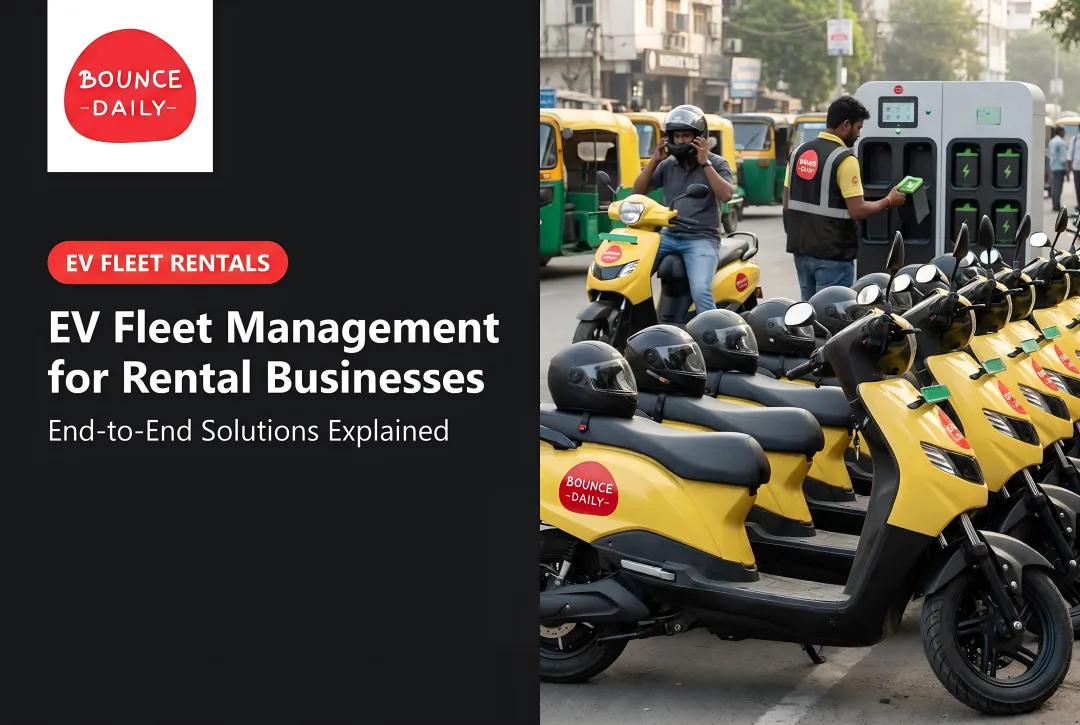
Rental-based EV models — such as Bounce Daily's scooter rentals for gig workers in Bengaluru, Hyderabad, and Delhi NCR — move maintenance, battery swapping, insurance, and anti-theft tracking onto the provider. For an individual rider, that can replace a fleet dashboard altogether.
The rankings below focus on operators who still own and manage their own fleets, scored on feature depth, reliability, and market trust.
Top 20 Fleet Management Software for 2026
We ranked these platforms on feature depth, scalability, compliance support, integration options, and how much trust they've earned from real fleet operators, not marketing claims. Here's how each one stacks up.
1. Samsara
Samsara built its reputation as a cloud-based IoT platform, pairing GPS tracking with AI dash cams and vehicle diagnostics. Its AI-powered safety scoring has driven broad adoption across construction, logistics, and field service industries.
| Key Features | Best For |
|---|---|
| Real-time GPS, AI dash cams, driver safety scoring, fuel and maintenance tracking | Mid-to-large fleets wanting one all-in-one IoT platform |
2. Geotab
Geotab is one of the largest commercial telematics providers globally, built on an open-platform philosophy that lets fleets plug in hundreds of third-party marketplace apps. Strong data security credentials make it a favourite among government and enterprise fleets.
| Key Features | Best For |
|---|---|
| Telematics, predictive maintenance, EV suitability assessment, compliance automation | Enterprises and government fleets needing scalable, data-rich solutions |
3. Verizon Connect
Backed by Verizon's telecom infrastructure, this platform serves commercial fleets of every size with dependable connectivity built into its GPS tracking. Its route optimisation tools and field service management set it apart from smaller telematics-only competitors.
| Key Features | Best For |
|---|---|
| GPS tracking, route planning, field service management, driver scorecards | Fleets that need rock-solid connectivity alongside tracking |
4. Motive
Formerly known primarily for electronic logging device (ELD) compliance, Motive has grown into a full safety and spend-management platform. Its AI dash cams and driver risk detection make it a strong pick for trucking operators under heavy regulatory scrutiny.
| Key Features | Best For |
|---|---|
| ELD compliance, AI dash cams, fuel management, spend management | Trucking and logistics fleets prioritising safety and compliance |
5. Fleetio
Fleetio takes a maintenance-first approach, and it shows in the depth of its work order and parts inventory tools. Small-to-mid fleets like it for the clean interface as much as the functionality. Pricing runs roughly $4 to $10 USD per vehicle monthly, billed annually.
| Key Features | Best For |
|---|---|
| Preventive maintenance, work orders, parts inventory, fuel tracking | Fleets prioritising maintenance and asset lifecycle tracking |
6. Teletrac Navman
Teletrac Navman has carved out a strong position in construction and heavy equipment, where mixed-asset utilisation reporting matters more than pure vehicle tracking. Its TN360 platform bundles compliance and asset monitoring together.
| Key Features | Best For |
|---|---|
| Asset tracking, compliance tools, fuel and idle monitoring | Construction and heavy-equipment fleets |
7. Fleet Complete (Powerfleet Unity)
Now operating under Powerfleet following its 2024 acquisition, Fleet Complete built its name on hardware-agnostic integrations and modular pricing. That flexibility still appeals to SMBs that want to scale tools up gradually rather than buying an entire suite upfront.
| Key Features | Best For |
|---|---|
| GPS tracking, dispatch, dash cams, asset tracking | SMBs seeking modular, scalable fleet tools |
8. Azuga
Azuga leans into driver behaviour and gamification, rewarding safe driving through points and incentives rather than just flagging violations. Fleets focused on retention find the engagement angle genuinely useful. Plans range from about $25 to $35 USD per vehicle monthly.
| Key Features | Best For |
|---|---|
| Driver scorecards, GPS tracking, fuel card integration | Fleets focused on improving driver retention and safety culture |
9. GPS Insight
GPS Insight built its base among utility, field service, and government fleets that need compliance-heavy reporting more than flashy dashboards. Its reports are tailored specifically for industries where audits are routine.
| Key Features | Best For |
|---|---|
| Vehicle tracking, ELD compliance, asset utilisation reports | Utility, field service, and government fleets |
10. Zonar Systems
Zonar specialises in student transportation and heavy-duty fleet safety, with electronic Driver Vehicle Inspection Report (DVIR) tools that dominate the school bus segment. Pupil transportation compliance is where it genuinely outperforms general-purpose competitors.
| Key Features | Best For |
|---|---|
| Electronic DVIR, GPS tracking, maintenance alerts | School bus and heavy-duty fleet operators |
11. Chevin Fleet Solutions
Chevin's FleetWave platform is built for complexity. Large, multinational fleets with dozens of cost centres and compliance regimes rely on its deep configurability. Pricing starts around $5 USD per vehicle monthly for the Core tier.
| Key Features | Best For |
|---|---|
| Lifecycle management, compliance, cost analytics | Large enterprises with complex multi-region fleets |
12. Simply Fleet
Simply Fleet keeps things affordable and straightforward for owner-operators and small businesses that don't need enterprise complexity. Preventive maintenance and inspections are the core strength here.
| Key Features | Best For |
|---|---|
| Preventive maintenance, fuel tracking, inspections, reporting | Small fleets seeking a budget-friendly, simple solution |
13. Blackbox GPS Technology
This India-based provider focuses on AIS-140 aligned GPS tracking for logistics, tankers, and school transport. Its industry-specific solutions make it a familiar name among Indian fleet operators navigating local compliance requirements.
| Key Features | Best For |
|---|---|
| Real-time tracking, fuel monitoring, driver behaviour analysis | India-based fleets needing regulatory-aligned tracking |
14. TrackoBit
TrackoBit built its India-focused platform around flexible geofencing and reporting that scales from small delivery fleets to large logistics operations. Customisation is the main draw for operators with unusual reporting needs.
| Key Features | Best For |
|---|---|
| GPS tracking, geofencing, maintenance alerts | SMB and mid-sized Indian fleets |
15. Fleetx
Fleetx targets India's logistics and freight-heavy operators with supply chain visibility tools that go beyond basic tracking. Strong analytics make it useful for fleets managing complex multi-stop freight routes.
| Key Features | Best For |
|---|---|
| Freight visibility, driver tracking, fuel analytics | Logistics and freight fleets in India |
16. GPSWox
GPSWox combines fleet tracking with workshop management, including integrated inventory and automated invoicing. Service-centric fleets that run their own maintenance bays benefit most from this dual focus.
| Key Features | Best For |
|---|---|
| GPS tracking, maintenance scheduling, automated billing | Fleets combining vehicle service centres with tracking needs |
17. Route4Me
Route4Me is built around route optimisation first, tracking second. Delivery and multi-stop fleets use it to plan efficient routes; one published case study reported over 100,000 miles (about 160,000 km) saved while the client grew 10%.
| Key Features | Best For |
|---|---|
| Route optimisation, real-time tracking, performance analytics | Delivery and multi-stop fleets |
18. Locus
Locus focuses on dispatch optimisation and delivery efficiency for e-commerce and logistics operations, using AI to assign the right vehicle to the right delivery window. Some enterprise deployments report fuel-cost reductions of up to 23%.
| Key Features | Best For |
|---|---|
| Dispatch optimisation, route planning, delivery analytics | E-commerce and logistics fleets needing dispatch intelligence |
19. Odoo Fleet Management
Odoo's fleet module lives inside its broader ERP ecosystem, so vehicle tracking, service scheduling, and cost tracking connect directly to accounting, HR, and inventory. Businesses already running Odoo get this fleet layer without buying separate software.
| Key Features | Best For |
|---|---|
| Vehicle tracking, service scheduling, cost tracking | Businesses already using Odoo ERP wanting integrated fleet tools |
20. Rand McNally Fleet Solutions
Built on decades of mapping expertise, Rand McNally's platform pairs ELD compliance with routing accuracy that trucking fleets have trusted for years. Driver-friendly hardware rounds out the offering.
| Key Features | Best For |
|---|---|
| ELD compliance, routing, driver workflow tools | Trucking fleets valuing routing accuracy and compliance |
How We Chose the Best Fleet Management Software
Many fleets make the same mistake when picking software: they chase the lowest price tag and ignore scalability. A platform that works for 15 vehicles today might buckle at 150, forcing a costly migration later.
Price opacity makes that mistake easier to repeat. Most of these platforms stay quote-based rather than publishing rates outright, so side-by-side comparison takes real work. Ask every vendor for line-item quotes before you sign.
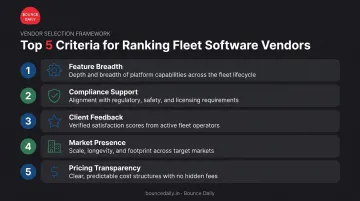
We ranked the 20 platforms above using five criteria:
- Feature breadth: coverage across GPS tracking, maintenance, compliance, and driver safety—not just one slice of fleet operations
- Compliance support: strength of ELD, DVIR, and regional certifications like AIS-140 in India
- Client feedback: real user reviews from platforms such as G2, focused on customer satisfaction
- Market presence: how established and financially stable the provider is
- Pricing transparency: whether published pricing exists or requires a sales call
Better compliance tools mean fewer fines. Stronger maintenance features mean less downtime. Transparent pricing means fewer budget surprises mid-contract.
Conclusion
The right fleet management software matches your fleet size, industry compliance needs, and daily operational goals—not feature count or brand recognition alone.
Before committing, evaluate:
- Total cost of ownership, including hardware, per-vehicle fees, and implementation
- Scalability from 20 vehicles to 200 without a full migration
- Ongoing performance via references from fleets similar in size to yours
Enterprise and mid-size fleets should work through the 20 platforms above and shortlist two or three for demos before deciding.
Individual gig workers and delivery partners face a different choice. If you deliver for Swiggy, Zomato, Blinkit, or Zepto and don't own a fleet, the vehicle matters more than software.
Rental-based EV models like Bounce Daily handle maintenance, battery swapping, insurance, and anti-theft tracking for you. That leaves you free to focus on completing deliveries instead of managing a vehicle.
Frequently Asked Questions
What is a fleet management system?
A fleet management system is an integrated hardware-and-software solution that combines GPS tracking, telematics, and reporting tools to manage a vehicle fleet's entire lifecycle, from acquisition through maintenance to retirement.
What are the key features to look for in fleet management software?
Look for real-time GPS tracking, preventive maintenance scheduling, automated compliance reporting (like AIS-140 or ELD), and customisable dashboards. Driver safety scoring and fuel monitoring are increasingly standard too.
How much does fleet management software typically cost?
Pricing usually follows a per-vehicle subscription model, ranging from roughly $4 to $35 (about ₹350–₹3,000) per vehicle per month depending on features. Fleet size, hardware needs, and contract length all affect the final quote.
Is fleet management software suitable for small fleets?
Yes. Platforms like Fleetio and Simply Fleet offer scaled-down plans built specifically for owner-operators and small businesses, often starting under $10 (about ₹850) per vehicle per month.
What is the difference between telematics and fleet management software?
Telematics is the data-collection layer: GPS, diagnostics, and sensor data pulled from vehicles. Fleet management software is the broader platform that turns that raw data into maintenance schedules, compliance reports, and operational decisions.
Can fleet management software reduce fuel and maintenance costs?
Yes. Route optimisation, idle-time tracking, and predictive maintenance directly cut expenses. Verizon Connect reports fleets averaging a 12% fuel-cost reduction after adopting connected fleet tools.