By 2025, FOCO has gained traction across sectors demanding specialized operational expertise or standardized service delivery: cloud kitchens, convenience retail, education, and EV rental. India's gig workforce grew from 77 lakh in FY2021 to 120 lakh in FY2025, while high-speed electric two-wheeler registrations reached 12.09 lakh in FY2025, up 19.1% year-on-year. These trends create fertile ground for FOCO expansion, particularly in mobility services where fleet management, battery infrastructure, and rider aggregation require centralized operational control.
Key Takeaways
- Own franchise units while the parent company runs day-to-day operations
- Match capital to sector fit—FOCO works best where specialized ops expertise matters
- Compare brand-specific contracts, revenue-share splits, and breakeven timelines before committing
- Vet franchisor financials, track record, and operating depth before you invest
- EV rental, cloud kitchens, and convenience retail currently lead FOCO adoption
Understanding the FOCO Franchise Model
What is FOCO (Franchise Owned, Company Operated)?
In FOCO, the franchisee funds infrastructure, equipment, inventory, and setup. The franchisor runs staffing, supply chain, quality control, customer service, and regulatory compliance.
Unlike traditional ownership, you do not manage day-to-day operations. You sit as a passive investor and receive a contractual return or revenue share.
That split suits people who want brand-backed exposure without hiring staff, managing inventory, or handling customers. Operational control stays with the franchisor.
How Does the FOCO Model Work in Practice?
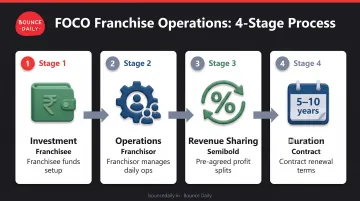
Typical flow:
- Investment: The franchisee funds setup costs, franchise fees, security deposits, and initial working capital.
- Operations: The franchisor takes hiring, training, inventory, marketing, and customer relations.
- Revenue sharing: Profits follow pre-agreed percentages or fixed returns.
- Duration: Contracts typically run 5–10 years, with renewal terms set upfront.
Contract structures:
- Fixed or guaranteed returns for initial periods
- Revenue-sharing arrangements (percentage of gross revenue)
- Profit-sharing after operational expenses
- Minimum-performance guarantees (market-dependent)
- Exit clauses, transfer rights, and asset-disposal provisions
India does not require a statutory franchise disclosure document, making independent contract review especially critical.
Roles and Responsibilities in FOCO
Franchisee responsibilities:
- Capital investment for setup, infrastructure, and initial working capital
- Property or location suitable for operations
- Maintaining infrastructure standards as specified by the franchisor
- Compliance with security-deposit or working-capital top-up requirements
Franchisor responsibilities:
- Hiring, training, and managing staff
- Supply chain and inventory management
- Marketing, brand promotion, and customer acquisition
- Quality control, service delivery, and compliance
- Technology systems (POS, CRM, fleet management)
- Day-to-day operational decisions
Treat the contract as the source of truth: it should name who owns which assets, who bears which expenses, and what happens if performance slips. Verbal assurances and side decks do not protect you.
Financial Structure: Investment and Returns
Investment components:
- Franchise fee
- Setup costs (infrastructure, equipment, signage)
- Security deposits
- Initial inventory and working capital
- Legal, registration, and compliance fees
Return mechanisms:
- Revenue percentage: A fixed percentage of gross revenue paid to the franchisee
- Profit sharing: A share of net operating profit after deducting expenses
- Fixed returns: A guaranteed minimum payout for a specified period
- Hybrid models: Combining fixed minimum plus profit participation
ROI and breakeven:
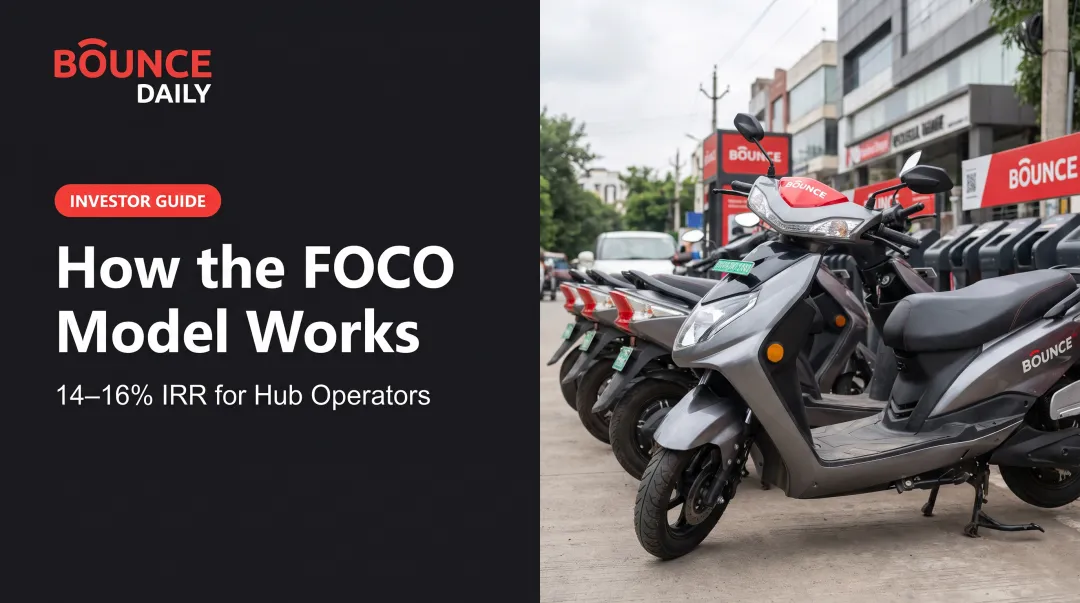
There is no single India-wide FOCO investment band or breakeven timeline. Figures swing with industry, brand strength, location, and capital committed. In EV scooter rental hub programs, some operators quote target IRRs around 14–16%—treat that as a projection to pressure-test, not a guarantee.
Ask for unit-level financials with explicit utilization and cost assumptions, then speak with existing franchisees about cash they actually received before you sign.
FOCO vs Other Franchise Models: A Comparison
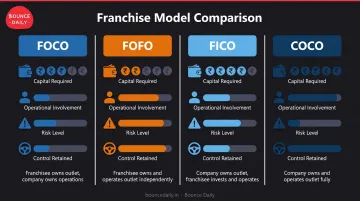
FOCO is one of four ownership models common in Indian franchising. The differences that matter most to investors are capital outlay, who runs day-to-day operations, and how returns are structured.
| Model | Capital Requirement | Operational Involvement | Risk Level | Profit Potential | Brand Control | Scalability |
|---|---|---|---|---|---|---|
| FOCO | Moderate to High | Minimal — passive investor | Low ops risk; higher franchisor dependency | Contractual return / revenue share | Full control with franchisor | Fast, standardized expansion |
| FOFO | Moderate to High | High — franchisee operates | Higher ops risk; more local control | Variable — tied to franchisee execution | Franchisor standards; franchisee executes | Slower, more customized |
| FICO | Moderate | Minimal — passive investor | Low ops risk; contract-dependent | Contract-dependent | Full control with franchisor | Fast, standardized expansion |
| COCO | High — company-funded | None (not a franchise model) | Company bears all risk | N/A for external investors | Full company control | Fully controlled by company |
Why brands choose FOCO:
- Central control protects service quality and brand reputation
- Retains specialized ops (fleet, compliance, supply chain) with the franchisor
- Faster expansion without relying on franchisee operational expertise
- Standardized systems and processes across all outlets
Example: EV scooter rental
Fleet deployment, rider allocation, insurance, IoT tracking, and maintenance need centralized specialists most franchisees do not have. Under a FOCO-style hub model—such as Bounce Daily’s hub-operator program—the company keeps those functions and still scales with investor capital. Investors fund the hub; the brand runs the fleet.
Industries and Sectors Thriving with FOCO
Food and Beverage: The Original FOCO Territory
India's food services sector reached USD 80 billion in 2024, with projected 10-11% CAGR through 2030. Cloud kitchens, valued at ₹9,747 crore (USD 1.13 billion) in 2024, pioneered the FOCO model by allowing investors to fund ghost kitchen infrastructure while franchisors manage operations, menus, quality, and delivery partnerships.
Why FOCO works in food:
- Centralized quality control and menu consistency
- No showroom or customer-facing seating required
- Franchisor manages aggregator partnerships (Zomato, Swiggy)
- Lower operational complexity for franchisees
Example:
The Rolling Plate markets a company-operated cloud-kitchen franchise, where the franchisee funds setup and the company handles daily operations.
EV Rental and Mobility Services: A Growing FOCO Opportunity
India recorded 12.09 lakh high-speed electric two-wheeler registrations in FY2025, up 19.1%, while the gig economy expanded from 77 lakh workers in FY2021 to 120 lakh in FY2025. EV rental services targeting delivery partners for Swiggy, Zomato, Blinkit, Zepto, Amazon, and Flipkart are expanding rapidly through FOCO partnerships.
Why FOCO suits EV rental:
- Fleet management complexity (GPS tracking, maintenance, battery health)
- Battery-swap infrastructure requires centralized operations
- Rider acquisition, verification, and onboarding are tech-enabled
- Specialized expertise in insurance, IoT, and compliance
Example:
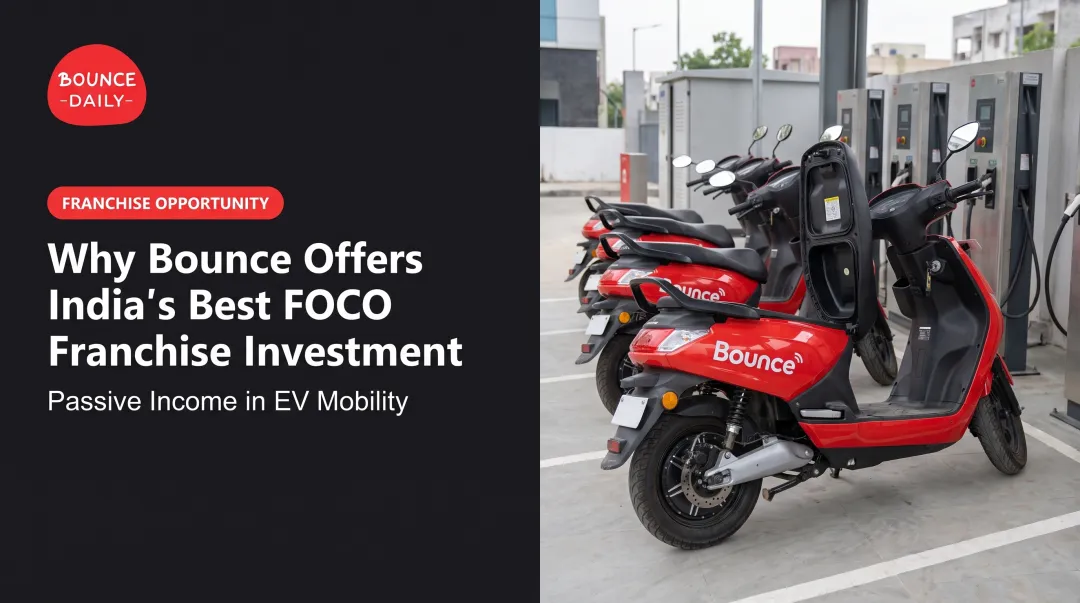
Bounce Daily runs a FOCO-style hub-operator program: investors fund capital and a hub location, and Bounce handles fleet operations, maintenance, GPS tracking, rider onboarding, and customer acquisition. The program advertises a 14-16% IRR for partners serving delivery riders, students, and commuters.
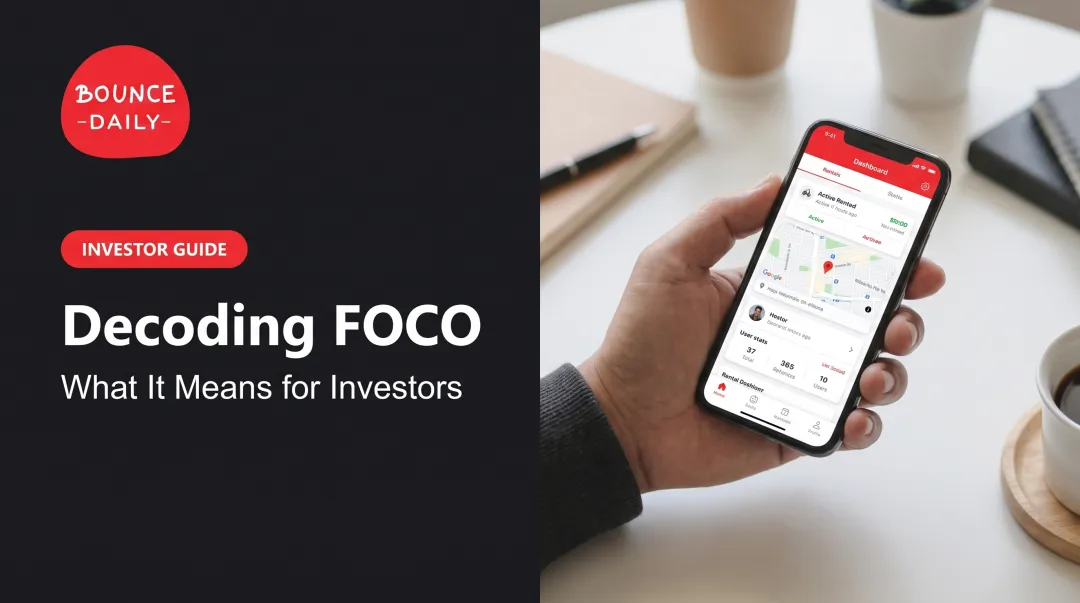
FleetOS manages vehicles, KYC, billing, and repairs, with hub battery swaps supporting all-day shifts. The network has driven 30M+ kilometres and avoided 10,000+ tonnes of CO₂.

Zypp Electric similarly deployed 500 EVs under a FOCO model for enterprise clients including Zomato, Zepto, Swiggy, and Amazon, handling rider allocation, insurance, and operations centrally.
Retail and Convenience Stores
Organized retail chains use FOCO to expand into new markets while maintaining brand standards and operational consistency. Yatrikart, a convenience-retail brand, operates a FOCO program where investors own the business and Yatrikart manages day-to-day operations.
Why FOCO works in retail:
- Standardized product mix, pricing, and merchandising
- Centralized supply chain and inventory management
- Uniform customer experience across locations
- Reduced operational burden on franchisees
Health and Wellness Services
CRISIL forecasts 10-11% diagnostics-company revenue growth in FY2025. Gyms, diagnostic centres, and wellness clinics increasingly use FOCO to scale while holding service standards, regulatory compliance, and care quality steady.
Licensing, medical equipment, and staff certifications add complexity that favors centralized operations.
Why FOCO works in health and wellness:
- Consistent clinical or service protocols across sites
- Central handling of licensing and compliance
- Shared staffing standards and equipment upkeep
- Lower day-to-day burden on the investor
Education and Skill Development
Coaching centres, skill training institutes, and edtech companies use FOCO to scale while ensuring curriculum consistency and teaching quality. Learning Curve operates a FOCO program where the investor funds the centre and the company manages operations, including curriculum delivery, faculty training, and student onboarding.
Why FOCO works in education:
- Standardized curriculum and teaching methods
- Faculty recruitment, training, and quality control
- Regulatory compliance (local education boards, safety)
- Centralized technology platforms for online-offline hybrid delivery
How to Evaluate FOCO Investment Opportunities
FOCO puts day-to-day operations in the franchisor's hands. Focus diligence on who runs the outlets, how returns are calculated, and what protections you have if performance slips—then work through the checks below before you commit capital.
Assess the Franchisor's Track Record and Brand Strength
Research the franchisor's operating history, number of existing outlets, brand reputation, and proven ability to run locations day to day. Check for:
- Audited entity financials
- Outlet openings and closures by cohort
- Legal disputes, franchise failures, or negative reviews
- References from current and former franchisees
- Media coverage and customer testimonials
Avoid franchisors with limited operating history, undisclosed closure rates, or unverifiable claims.
Understand the Financial Projections and Contract Terms
In FOCO deals, management fees and the profit-share formula carry extra weight because the franchisor controls revenue and costs.
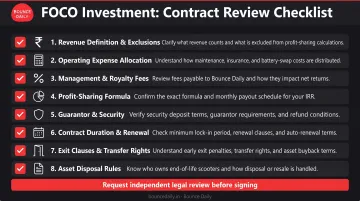
Key contract elements to scrutinise:
- Gross-revenue definition, exclusions, and taxes
- Operating-expense allocation (who pays for what)
- Management fees, royalty fees, and marketing contributions
- Profit-sharing formula or fixed return guarantee
- Guarantor identity, balance-sheet capacity, and security/escrow
- Contract duration, renewal terms, lock-in periods, and notice requirements
- Exit clauses, transfer rights, buyback formula, and asset-disposal rules
Request detailed financial projections with realistic assumptions and speak with existing franchisees about actual returns. SEBI advises investors to be highly suspicious of guaranteed high-return opportunities; verify all payout claims independently.
Evaluate Market Demand and Location Viability
Conduct independent market research on local demand for the franchise's products or services. Analyse:
- Target customer density and purchasing power
- Competition (direct and indirect)
- Accessibility, parking, and visibility
- Alignment with the brand's customer profile
- Seasonality, delivery radius, or enterprise-client concentration
- Cannibalization risk from existing outlets
Don't rely solely on franchisor-provided projections; verify demand through field visits and third-party data.
Review Operational Support and Infrastructure
Operational support should include:
- Training programs for staff, partners, and customers
- Supply chain management and inventory systems
- Technology platforms (POS, CRM, fleet management, KYC)
- Marketing support, brand promotion, and customer-acquisition assistance
- Ongoing operational guidance and troubleshooting
Visit existing franchise locations to verify the franchisor's operational capabilities firsthand. Ask current franchisees about response times, system uptime, and quality of support.
Check Legal and Regulatory Compliance
Consult a franchise attorney to review the franchise agreement before signing. Research necessary licences and registrations:
- Food: FSSAI registration/licence; confirm the responsible food-business operator
- EV rental: State/RTO treatment, commercial registration, permits, insurance, and operator responsibility. MoRTH's Rent-a-Motorcycle Scheme (SO 375(E), 12 May 1997) may apply; verify with the franchisor
- Retail: GST registration, trade licenses, municipal approvals
- Health & Wellness: Medical licences, staff certifications, safety compliance
- Education: Local education-board approvals, safety standards
Confirm who is responsible for obtaining and maintaining licences—franchisee or franchisor.
Frequently Asked Questions
What is the typical investment range for a FOCO franchise in India?
Investment varies by industry and brand. Cloud kitchens or kiosks may need ₹5-10 lakh; larger retail, mobility, or service franchises often range from ₹50 lakh to ₹2 crore. Request a full cost schedule covering setup, working capital, fees, and ongoing expenses.
How does profit-sharing work in a FOCO franchise model?
Common structures include revenue-sharing, profit-sharing after expenses, or fixed returns for an initial period. The formula, payout timing, audit rights, and expense allocation must be spelled out in the contract. Verify all claims with existing franchisees.
What are the main risks for FOCO franchise investors?
Key risks include franchisor operational mismanagement, market demand fluctuations, brand reputation damage, and limited control over daily operations. The FOCO trade-off is lower operating involvement but higher dependency on company execution and franchisor credit risk.
How long does it take to break even on a FOCO franchise investment?
Break-even timelines are contract-specific and depend on industry, brand strength, location, and investment size. Model them from cash flows, fees, taxes, working-capital calls, and exit value. Request projections from the franchisor and verify with existing franchisees.
Can I own multiple FOCO franchises simultaneously?
Many FOCO agreements allow multi-unit ownership, and successful franchisees often expand to multiple locations for economies of scale. Verify territory rights, portfolio concentration, and any restrictions during partner onboarding.
What support does the franchisor provide in a FOCO model?
Support usually covers recruitment and training, supply chain, marketing, technology platforms, quality control, and compliance. Confirm the exact scope and service-level agreements in writing.