Introduction
India's gig economy has grown fast in recent years, and bike delivery jobs are now a primary income source for millions of riders. Food, groceries, medicine, and parcels all keep two-wheeler demand high across major cities.
The draw is clear: flexible hours, quick onboarding, and pay tied to your effort—not a fixed 9-to-5. Pay rates, incentives, and peak demand still vary widely from one platform to the next.
This Bounce Task roundup compares the best bike delivery jobs in India so you can match a platform to your city, schedule, and earning goals.
Key Takeaways
- Major platforms like Swiggy, Zomato, Amazon Flex, and Flipkart are actively hiring delivery riders across India
- Basic requirements: valid two-wheeler licence (some platforms), smartphone, and a bike—owned or rented
- Part-time riders earn ₹12,000–₹25,000/month; full-time metro riders can hit ₹25,000–₹45,000 with incentives
- Fuel and maintenance cut into net pay—EV rentals are a practical way to lower operating costs
Overview of Bike Delivery Jobs in India
Bike delivery jobs involve transporting food, groceries, medicines, parcels, or e-commerce packages from businesses to customers on a two-wheeler. These roles are a core part of India's logistics and quick-commerce ecosystem.
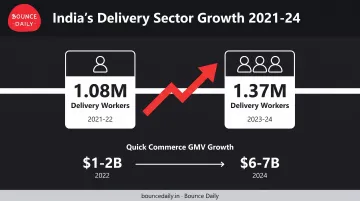
The sector has grown quickly. Direct food-delivery platform employment rose from 1.08 million in 2021-22 to 1.37 million in 2023-24, driven by post-pandemic shifts in consumer behaviour. Quick commerce reached $6-7 billion in GMV during 2024—roughly five times its 2022 level.
Below, we profile the top platforms offering bike delivery opportunities across India, selected based on market presence, rider earnings potential, onboarding ease, and support infrastructure.
Best Bike Delivery Job Platforms in India
The platforms below were chosen based on nationwide reach, transparent incentive structures, rider welfare provisions, ease of onboarding, and consistent feedback from delivery-partner communities.
Swiggy
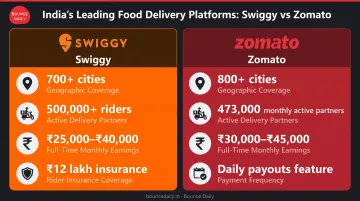
Swiggy operates as one of India's largest food-delivery platforms, now serving 700+ cities according to its FY2024-25 annual report, with a delivery-partner base exceeding 500,000 riders. It backs riders with insurance coverage, training programmes, and dedicated support centres.
Flexible shifts, high order density in metros, and peak-hour incentives help full-time and part-time partners. Helplines and physical hubs let riders resolve issues, rest, and train on site.
| Eligibility Requirements | Valid driving licence, smartphone with 4G, bike (owned or rented), minimum age 18 years |
|---|---|
| Average Earnings Potential | Part-time: ₹15,000–₹25,000/month; Full-time: ₹25,000–₹40,000/month depending on city and hours |
| Key Benefits | Peak hour incentives, insurance coverage up to ₹12 lakh, referral bonuses, access to rider hubs and support centres |
Zomato
Zomato's delivery network spans 800+ cities with 473,000 average monthly active delivery partners in FY2024-25. Its Quick Commerce vertical (Blinkit) adds grocery and essentials orders beside food, which widens earning windows.
Riders get daily or weekly payouts, gamified weekly and monthly bonuses, safety training at onboarding, and a formal grievance redressal path. The company reported average rider earnings of ₹28,000 per month in 2024, though that figure is company-supplied and excludes operating costs like fuel.
| Eligibility Requirements | Two-wheeler with valid documents, smartphone, driving licence, basic English/Hindi communication skills |
|---|---|
| Average Earnings Potential | Part-time: ₹18,000–₹28,000/month; Full-time: ₹30,000–₹45,000/month in Tier-1 cities |
| Key Benefits | Fast daily payouts, accident insurance, fuel assistance programmes, milestone bonuses, flexible login/logout |
Amazon Flex
Amazon Flex is Amazon's gig delivery programme for packages on pre-scheduled blocks rather than on-demand food orders. Each block lasts 2–6 hours, with pay shown upfront and routes that are usually less traffic-heavy than restaurant runs.
Riders claim a block in the app, pick up a batch of parcels, and finish drops inside the window. The model fits anyone who wants a predictable schedule and a set payout per block, backed by Amazon's logistics network.
| Eligibility Requirements | Valid two-wheeler licence, bike/scooter, smartphone (Android 13+, 3GB RAM), age 18+, background verification, bank account for direct deposits |
|---|---|
| Average Earnings Potential | Up to ₹140/hour per delivery block; monthly earnings ₹20,000–₹35,000 depending on blocks completed |
| Key Benefits | Predictable block schedules, no customer ratings pressure, fuel reimbursement for some blocks, weekly payments |
Flipkart
Flipkart's Delivery Partner Programme, run through Ekart Logistics, ramps up hard during sales like Big Billion Days. It covers both e-commerce parcels and quick-commerce (Flipkart Quick/Minutes). The platform reports 120,000+ active delivery partners across India, with planned routes and etiquette training.
Festive volume and surge bonuses are the main draw. Partners also get package-handling training, dedicated support teams, and work across large parcels and hyperlocal grocery drops.
| Eligibility Requirements | Bike with valid RC and insurance, smartphone, age 18+, ability to lift/carry packages |
|---|---|
| Average Earnings Potential | ₹15,000–₹30,000/month; significantly higher during festive sale periods with surge bonuses |
| Key Benefits | Sale season bonuses, package handling training, life/medical/accident insurance, referral incentives, flexible delivery slots |
How We Chose the Best Platforms
We evaluated each platform against criteria that matter most to delivery riders in India:
- Rider earning potential
- Onboarding simplicity
- Incentive transparency
- Insurance and safety provisions
- Geographic reach
- Feedback from online rider communities
The platforms in this roundup are among the most accessible and reliable options for delivery riders in India as of 2025.
Common mistakes when choosing delivery platforms include:
- Focusing only on base pay without considering peak incentives and bonuses
- Ignoring insurance coverage and accident protection
- Not factoring in vehicle maintenance, fuel, and smartphone data costs
- Choosing platforms with poor rider support infrastructure or delayed payouts
The best platform depends on your situation: city of operation, whether you own a vehicle, part-time versus full-time hours, and whether you want steady income or flexible scheduling.
Riders in metro cities with high order density often earn more on food-delivery apps during peak hours. Those in Tier-2 cities, or anyone who prefers structured shifts, may find Amazon Flex's block system a better fit.
Getting Started: Vehicle and Requirements
One of the biggest barriers to entry for delivery work is vehicle ownership. Most platforms require a functional two-wheeler, valid registration and insurance, and safety gear including a helmet.
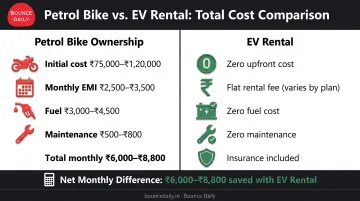
For riders who already own a bike, costs still add up fast: ₹75,000–₹1,20,000 upfront for a new scooter (e.g. 2025 Honda Dio), EMIs of ₹2,500–₹3,500 a month, plus fuel and maintenance.
Ownership versus rental cost comparison:
- Petrol fuel: ₹3,000–₹4,500/month (50–80 km/day, ~₹100–₹110/litre, 40–45 km/L)
- Servicing and wear: ₹500–₹800/month on top of fuel
- Total petrol operating cost: ₹3,500–₹5,300/month, before purchase price or EMI
- EV rental: No upfront capital, fuel, or maintenance; battery swap, insurance, GPS, and breakdown cover handled by the provider
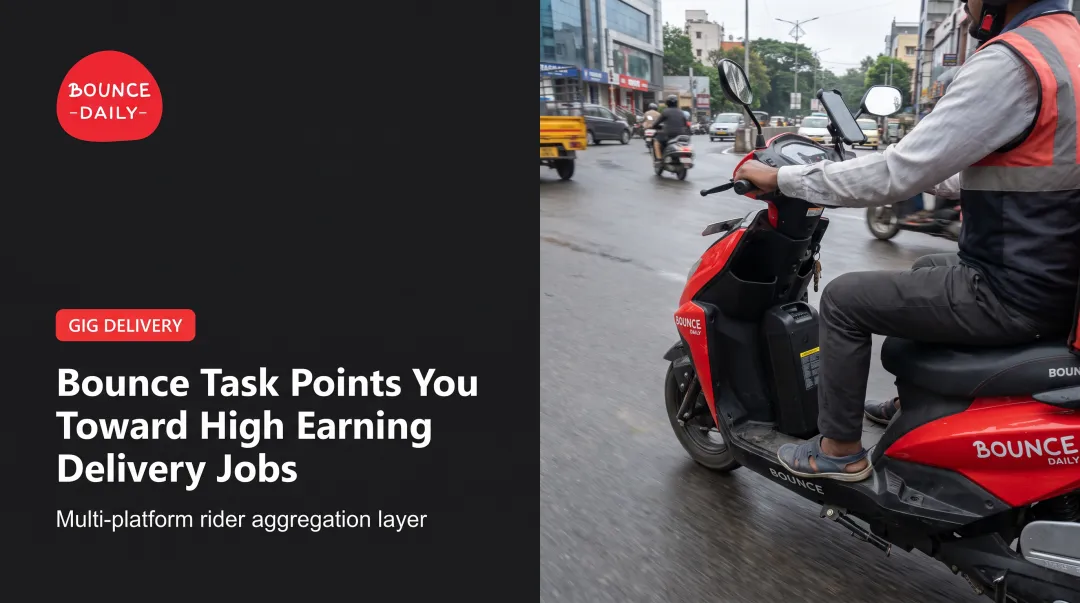
In Bengaluru, Bounce Daily rents EVs built for gig shifts, so riders skip purchase cost and day-to-day vehicle admin.
What you get on the bike:
- Battery swaps at Bounce hubs in a few minutes (enough range for 8–12 hour shifts)
- No fuel spend and no DIY servicing
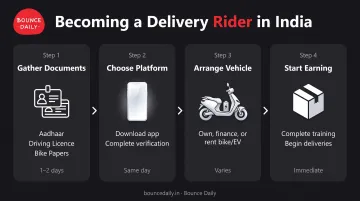
- Same-day Aadhaar onboarding and fleet management by the provider
Choose a High Speed scooter (55 km/h, 70 km range, DL required) or a Low Speed model (25 km/h, 85 km range, no DL; hub licence help for ₹200–₹230). Daily, weekly, and monthly plans include maintenance, insurance, and GPS.
Other essential requirements beyond the vehicle:
- Two-wheeler licence: Needed on most apps (Amazon Flex, Swiggy, Zomato) for motorized vehicles. Learner licences last six months; permanent applications open after 30 days (~₹500 in cities like Delhi)
- Smartphone: Solid battery, 4G data; Android 13+ for Amazon Flex
- Navigation: Comfortable with Google Maps and in-app routing
- Background checks: Identity and background verification at onboarding on most platforms
Conclusion
Bike delivery jobs can pay well if you put in the hours. Platforms differ by city, schedule, and delivery type—food, parcels, or quick commerce—so you can match one to part-time side income or full-time primary work.
Before you commit, weigh these factors:
- Vehicle access and running costs
- Hours you can give each week
- Delivery type you prefer
- Platform demand in your city
Start part-time first. Learn order flow patterns and measure net earnings after costs before you go full-time.
If vehicle costs are holding you back, Bounce Daily EV rentals lower the entry barrier. Zero fuel spend, maintenance and insurance included, and battery-swap support for long shifts—without buying a bike or covering petrol and servicing yourself.
Frequently Asked Questions
What is the highest-paying bike delivery job?
Earnings vary by city, platform, and effort, but Swiggy and Zomato typically offer the highest potential in metro cities during peak hours with performance incentives, while Amazon Flex provides predictable per-block payments. Full-time dedicated riders in Tier-1 cities can earn ₹30,000–₹45,000 monthly before costs.
What are the basic requirements to start bike delivery work in India?
You need a valid two-wheeler driving licence (for most platforms), a functional bike (owned or rented), a smartphone with internet, and a minimum age of 18. Platforms also run background verification and document checks during onboarding.
Do I need to own a bike to work as a delivery rider?
No, bike ownership is not mandatory. Many riders rent bikes daily or monthly from rental services, and some platforms have tie-ups with rental providers. EV rentals like Bounce Daily cut fuel costs and remove maintenance burdens.
Which delivery platform offers the best incentives and bonuses?
Swiggy and Zomato are known for strong peak-hour and milestone-based incentives, while Amazon Flex offers predictable block payments with upfront earnings visibility. Incentive structures change frequently and vary by city, so check current offers in your area through the rider apps.
How much can a delivery rider earn per month in India?
Part-time riders typically earn ₹12,000–₹25,000 monthly; full-time metro riders can reach ₹25,000–₹45,000 depending on platform, hours, and incentives. NCAER found long-shift riders averaged ₹20,744 gross but ₹13,581 after fuel, so factor in running costs.
Is bike delivery work suitable as a part-time opportunity?
Yes. Most platforms let you log in and out on your schedule, so you can work evenings, weekends, or around studies or a primary job. Part-time riders often earn ₹12,000–₹20,000 monthly.